
Smart Electrical Panel vs. Conventional Panel: Which Is Right for Your Home?
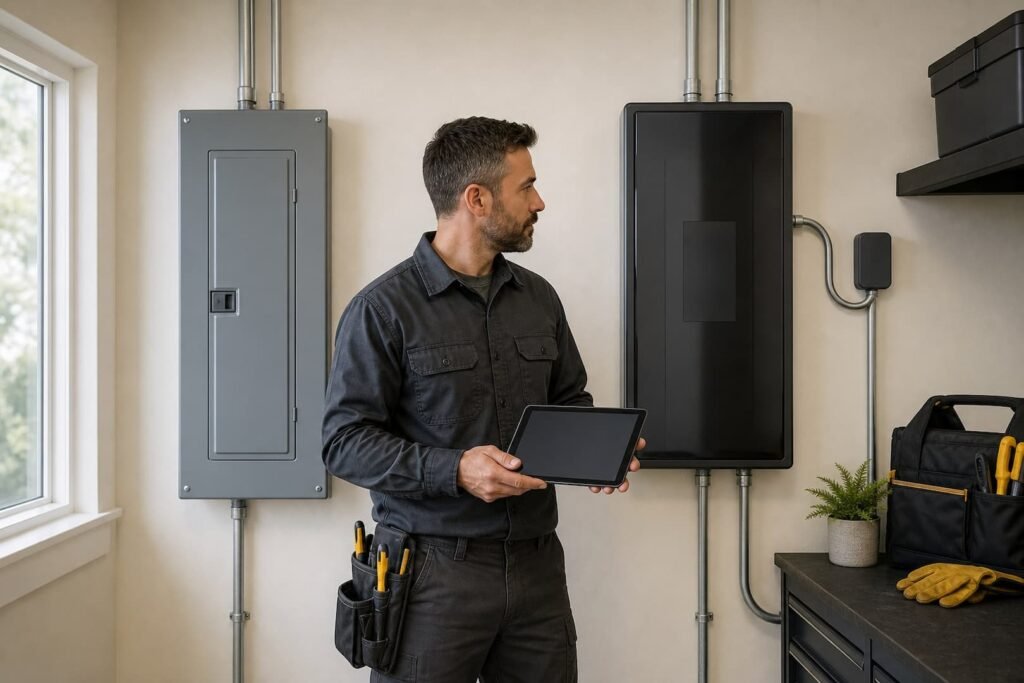
A conventional electrical panel uses circuit breakers to distribute power and protect branch circuits. A smart panel performs those core jobs and adds electronic metering, controllable circuits, software, and—in supported designs—automatic energy management.
That does not make the smart option universally better. A sound conventional panel is often the right answer when the project needs safe distribution without circuit-level control. It is simpler and widely serviceable. A smart panel earns its added cost when its monitoring or control solves a defined problem: limited service capacity, EV charging, whole-home electrification, or backup-load priorities.
Begin with the condition and capacity of the electrical system. Then decide what the homeowner needs the panel to do after installation. Buying an app without a use case is an expensive way to replace a breaker box.
Side-by-side comparison
| Feature | Conventional panel | Smart panel |
|---|---|---|
| Branch-circuit protection | Standard listed breakers | Standard breakers plus electronic sensing and controls, depending on model |
| Energy visibility | Utility meter or added monitoring equipment | Built-in circuit-level or panel-level data |
| Remote circuit control | Not built in | Available for supported circuits |
| Automatic load management | Requires separate compatible equipment | Available on models and configurations that support it |
| Battery backup priorities | Usually handled by a critical-load panel or backup system controls | Can prioritize circuits with a compatible integrated battery |
| Internet and software | Not required for basic operation | Needed for full app, data, update, or remote functions |
| Initial equipment cost | Lower in like-for-like applications | Higher, plus commissioning and possible ecosystem costs |
| Service familiarity | Broad electrician and parts familiarity | May require authorized installers, software access, or manufacturer support |
Both choices require a load calculation, correct service and panel ratings, suitable fault-current rating, proper grounding and bonding, working clearances, permits, inspection, and circuit documentation. “Smart” does not relax ordinary electrical requirements.
What a conventional panel does well
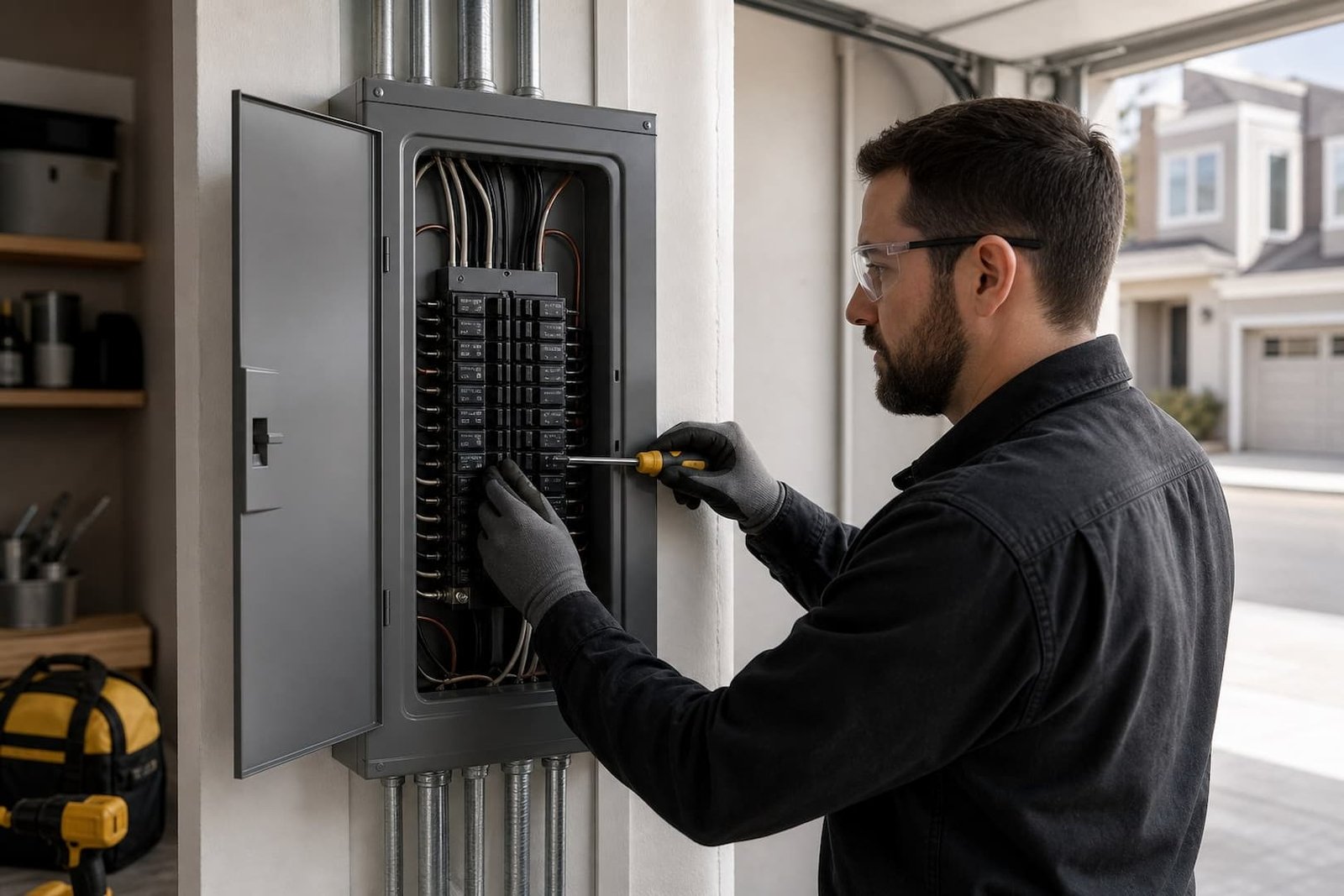
A conventional panel is a mature, modular platform. It provides spaces for approved breakers, distributes the service or feeder to branch circuits, and gives electricians a familiar system to test, alter, and repair. It does not become obsolete because a mobile operating system changes.
Choose conventional when simplicity is the feature
- The old panel needs safe replacement, but the service has adequate calculated capacity.
- The homeowner does not need remote control or circuit-level data.
- Backup power will use a separate, straightforward critical-load design.
- Broad parts availability and familiar field service are priorities.
- The budget is better spent on branch-circuit correction, grounding, or added capacity.
- A separate listed device already handles the one flexible load that needs management.
A conventional panel can still support solar, batteries, EV charging, heat pumps, and generator transfer equipment when the complete system is designed accordingly. It is not an “old technology” choice. It is a distribution choice without integrated circuit controls.
What a smart panel adds
Circuit-level energy monitoring
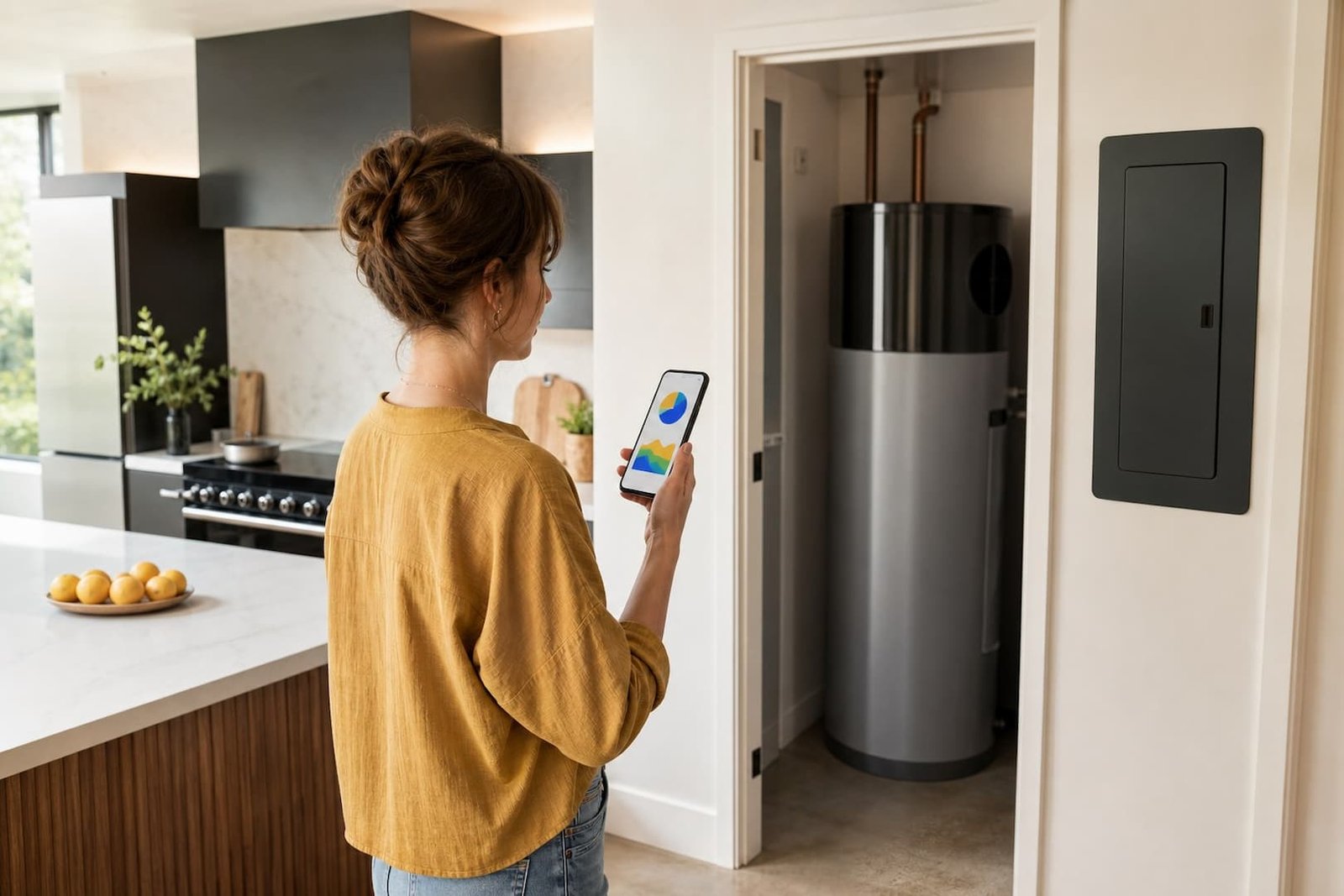
A smart panel can show how much power selected circuits are using now and how consumption changes over time. It may reveal a cycling water heater or compare EV charging with other loads. During backup planning, the same data helps an owner decide which circuits matter. The data is only as useful as the breaker map and commissioning accuracy.
Remote circuit control
Supported circuits can be switched through the panel’s interface. That can help with noncritical loads or a device left on. Life-safety equipment and loads with special switching requirements need appropriate configuration; some circuits must remain energized. An app is not a replacement for a local disconnect or safe maintenance procedure.
Energy management under a service limit
A listed energy-management function can keep demand below an approved setpoint by managing selected loads. This may allow an EV charger, electric water heater, induction range, or other controllable equipment to coexist on a service that cannot support every load at once under an unmanaged design.
SPAN describes its PowerUp function as an embedded energy-management system that keeps power below a configured setpoint and lets owners prioritize how managed appliances respond. The permitted configuration still comes from the project’s load calculation, equipment ratings, manufacturer documentation, and local review.
Backup-load prioritization
With a compatible integrated battery, a smart panel can group circuits by backup priority and shed less important loads as energy or power becomes limited. This can make a battery more useful than a static critical-load panel when the household wants to change priorities over time.
The panel does not provide backup energy on its own. SPAN’s current support guidance states that a panel without a compatible battery behaves as a normal panel during a grid outage: the circuits lose power until utility service returns. Solar alone also requires an outage-capable system to energize the home safely.
What a smart panel does not automatically solve
- Utility service size: the equipment can manage selected loads; it does not physically increase service capacity.
- Damaged branch wiring: old or unsafe circuits require their own repair or replacement scope.
- Every backup source: battery and generator integrations have model-specific limits.
- Loads outside the monitored panel: downstream and parallel panels must be evaluated in the system architecture.
- Communications coverage: app and remote functions need the manufacturer’s supported connectivity.
- Unlimited circuit spaces: panel dimensions, breaker types, bus ratings, and approved positions still constrain the layout.
- Permanent product support: electronic features depend on firmware, servers, replacement components, and vendor support over time.
SPAN-specific questions to answer before purchase
SPAN is the smart-panel product Max Electric installs, so the comparison should use the exact current model rather than a generic feature list. SPAN’s product and support materials change as models are introduced.
- Which SPAN model and main or main-lug configuration fits the service?
- Are the existing and planned breaker types and circuit count compatible?
- Will all circuits be inside the monitored panel or will subpanels remain?
- Which circuits can PowerUp manage, and which must stay always on?
- Is a compatible battery planned now or later?
- How will solar production be connected and monitored?
- What happens during internet, local-network, or cellular loss?
- Who can update the breaker map after future electrical work?
- Does a standby generator limit the desired smart features?
- What working space, wall area, conduit, meter, and utility changes are required?
SPAN’s connectivity documentation says the panel continues operating under its last settings during a temporary internet or cellular outage, while app control and energy-flow data require connectivity. Confirm that behavior for the selected product at installation.
Service capacity: replacement, management, and upgrade are separate decisions
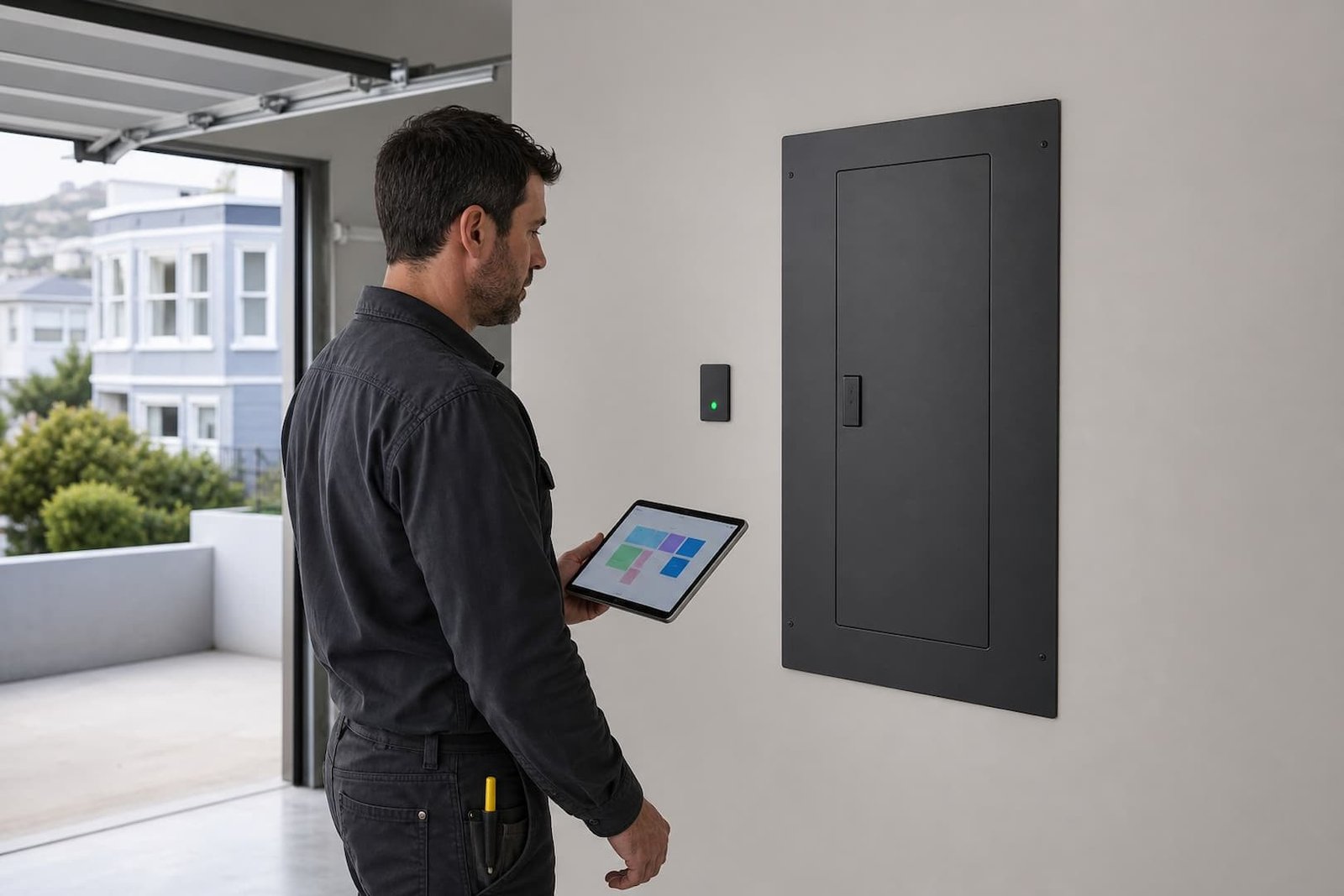
Panel replacement changes the distribution equipment. A service upgrade changes the capacity available from the utility. Energy management controls selected loads to stay within a defined capacity. One project can include all three, but they should not be treated as synonyms.
| Observed need | Likely path to evaluate |
|---|---|
| Damaged or obsolete panel, adequate service | Conventional or smart panel replacement |
| Healthy equipment, one flexible EV load | Separate dynamic load management may be enough |
| Several planned loads, limited service | Smart energy management versus service upgrade |
| Utility service and conductors undersized for the long-term plan | Electrical service upgrade, with either panel type |
| Battery backup with changeable circuit priorities | Compatible smart panel and storage architecture |
For a narrow EV constraint, read our guide to dynamic load management for EV charging. For added utility capacity, see electrical power increase in San Francisco.
Cost and ownership over time
The smart-panel premium includes more than the enclosure. Design may require an authorized installer, model-specific equipment, communications setup, circuit mapping, firmware updates, and commissioning. Battery, solar, generator, or multiple-panel integrations add engineering and field time.
Compare these items over the expected ownership period:
- Panel, breakers, gateway, meters, and accessory hardware
- Permit, utility, and plan-review scope
- Installation labor and finish restoration
- Network or subscription costs, if any
- Authorized service and replacement-part availability
- Value of avoided service work or separate monitoring hardware
- Battery integration and future expansion costs
- Warranty duration and what happens after it ends
A conventional panel plus one purpose-built load controller may cost less and be easier to service. A smart panel may be more coherent when several controllable loads and backup priorities are part of the same electrification plan.
Which homeowner is each panel for?
A conventional panel is likely the better fit if:
- You need dependable replacement distribution without app features.
- The service calculation already supports planned loads.
- A simple critical-load backup panel meets the outage plan.
- You favor broad field familiarity and minimal electronic dependence.
- The available budget should first correct branch wiring or add required circuits.
A smart panel deserves a close look if:
- You will use circuit-level data to manage an electrified home.
- Automatic load management may avoid or defer a difficult service upgrade.
- You plan a compatible battery and want adjustable backup priorities.
- Remote control of selected loads has a real operational use.
- EV charging, solar, storage, and new electric appliances are being designed together.
Frequently asked questions
Does a smart panel save electricity by itself?
No. It provides data and controls. Savings require a change in equipment operation, scheduling, load management, or rate use. Monitoring alone does not reduce consumption.
Will a SPAN panel keep the house on during an outage?
Not by itself. Backup requires a compatible energy source and system architecture. Without an integrated battery, a grid outage de-energizes the home as it would with a conventional panel.
Can a smart panel replace a 100-amp service with 200 amps?
No. It may manage selected loads so they operate within the existing limit, but increasing service capacity requires approved utility and electrical service work.
What happens if the manufacturer stops supporting the app?
Basic listed panel and breaker functions should be distinguished from connected features. Ask the manufacturer about local control, offline behavior, warranty, software support, data export, replacement parts, and service procedures before purchase.
Can a conventional panel be made smart later?
Energy monitors and load controllers can be added when listed and compatible, but the result may not offer the same circuit-level switching or integrated backup controls. Plan wall space, panel capacity, communications, and future conduit before installation.
Compare the systems around your actual load plan
Max Electric installs both conventional replacement panels and SPAN systems. For a smart-panel assessment, visit SPAN smart panel installation in San Francisco. For a standard replacement, see outdated electrical panel replacement. Call (415) 867-7006. We will compare the load calculation with the equipment scope and future plan.
Last reviewed August 2026. Product models, integrations, software features, listings, and support policies can change.