
Plumber in San Francisco for Repairs, Drains, Pipes & Water Heaters
One call should lead to the right kind of help. Max Electric handles everyday repairs, urgent water problems, drain and sewer work, pipe diagnosis, repiping, water heaters, sump systems and commercial plumbing across San Francisco.
Plumbing work in San Francisco rarely happens in a blank, open room
A repair in a detached house may have a nearby shutoff and open basement access. The same leak in a condominium can involve a shared riser, a building manager, an occupied unit below and a narrow window for shutting down water. Those details are not paperwork around the job; they determine how the plumber should approach it.
Older flats and Victorians add their own mix of materials. A visible copper line may transition to galvanized pipe behind the wall. A remodeled kitchen may connect to an original branch drain. We ask about the building, prior work and affected units because a clean repair starts with the system that is actually there—not the system someone expected to find.
Start with the symptom—not a guess about the solution
A slow kitchen drain, a ceiling stain and a failed water heater are all plumbing problems, but they need different tools and different first decisions. This page routes each problem to the most relevant service instead of forcing one generic “plumbing repair” answer.
If the source is unclear, describe what you can see, hear or smell and when it started. Photos of the affected fixture, nearby shutoff, water heater label or accessible piping can help us prepare without asking you to dismantle anything.
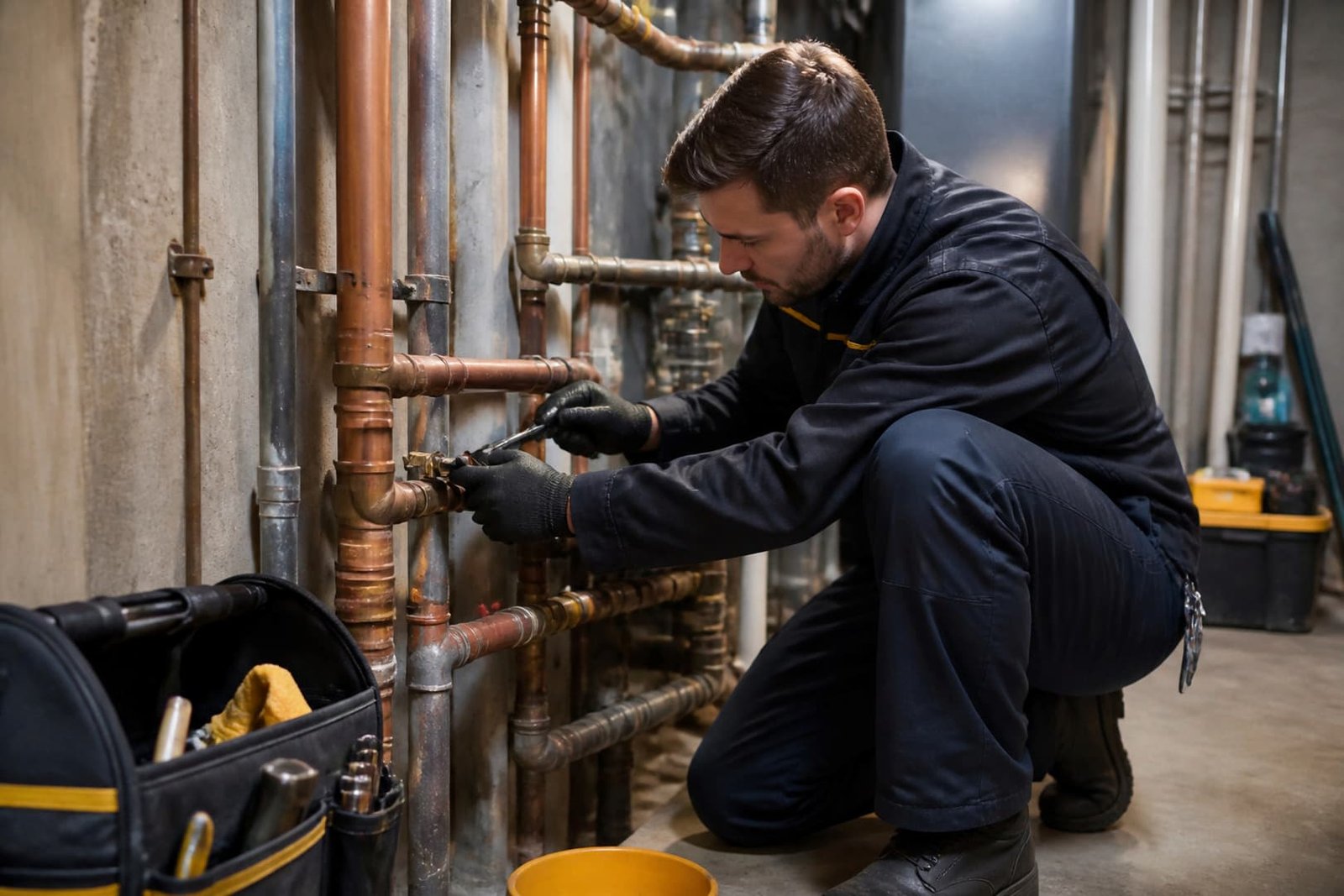
Choose the plumbing service that matches the job
Leaks & piping
Find the source when water appears away from an obvious fixture.→Leak repair
Repair a known pipe, valve, connection or fixture leak.→Pipe repair & repiping
Address recurring failures, corrosion, low flow or aging supply piping.→Emergency burst pipe
Stop active water release and repair a broken supply pipe.→Pipe tracing
Map concealed pipe routes before repair, drilling or remodeling.→
Drains & sewer
Restore flow in sinks, tubs, toilets, floor drains, branches and mains.→Hydro jetting
Clean compatible lines when grease, sludge, scale or roots call for wall-to-wall cleaning.→Sewer camera inspection
See and locate conditions inside an accessible drain or sewer line.→Sewer line repair
Repair or replace structurally damaged sewer piping after diagnosis.→
Water heaters
Diagnose an installed tank, tankless, gas or electric unit.→Emergency water heater repair
Respond to an active leak, unsafe condition or abrupt loss of hot water.→Water heater replacement
Replace a failed or aging existing unit.→Water heater installation
Plan a new unit, relocation, ADU or remodel installation.→Tankless installation
Size and install a tankless system or plan a tank-to-tankless conversion.→
Property & protection
Scheduled repairs for fixtures, valves, supply and waste connections.→Commercial plumbing
Service for businesses, property managers, HOAs and multifamily buildings.→Emergency plumbing
Urgent response when water, sewage or lack of essential service cannot wait.→Sump pump installation
Plan a pit, pump, discharge and backup strategy.→Sump pump repair
Test and restore an existing sump system.→Backflow testing
Test, report, repair or replace a backflow prevention assembly.→
What to do with the symptom you have now
| What you see | Best starting point |
|---|---|
| Water is actively spreading | Use the accessible shutoff only if it is safe; move people and valuables away; request emergency service. |
| The source is hidden | Start with leak detection. A repair scope should follow evidence, not a speculative wall opening. |
| One drain is slow | Drain cleaning is usually the relevant starting point. Several affected fixtures may indicate a branch or main-line problem. |
| A clog keeps returning | Restore flow, then inspect the line. Camera findings determine whether cleaning, jetting or repair is justified. |
| The water heater has failed | Repair may suit a serviceable component; a leaking tank body or unsafe, poor-value condition often changes the decision. |
| Pipes fail repeatedly | Compare another spot repair with a defined partial or full repipe based on material, failure history and access. |
The best starting service depends on the unanswered question
Some calls begin with a known failed part. Others begin with a symptom that could have several causes. This distinction keeps a routine repair from turning into an open-ended search—and keeps diagnostic work from being sold as a repair before the source is known.
| What you know now | Start here | What the visit should establish |
|---|---|---|
| A valve, trap or exposed pipe is visibly leaking | Leak repair | Whether the failure is local and the nearby connections are sound |
| Water appears away from any fixture or exposed line | Leak detection | A defensible source area and a practical access plan |
| One sink, tub or toilet drains slowly | Drain cleaning | The local obstruction and whether normal flow returns |
| Several fixtures back up or the problem keeps returning | Drain or sewer diagnosis | Which shared line is affected and whether inspection is warranted |
| The water heater has a fault but the tank body is dry | Water-heater repair | The failed component, safety condition and repair value |
| Pipes have failed in several rooms over time | Repiping assessment | Material, failure pattern, access and a defined replacement boundary |
If the information changes during the visit, the scope should change with it. A plumber may start at a fixture and discover a branch-line problem; that is the point to pause, explain the finding and agree on the next step.
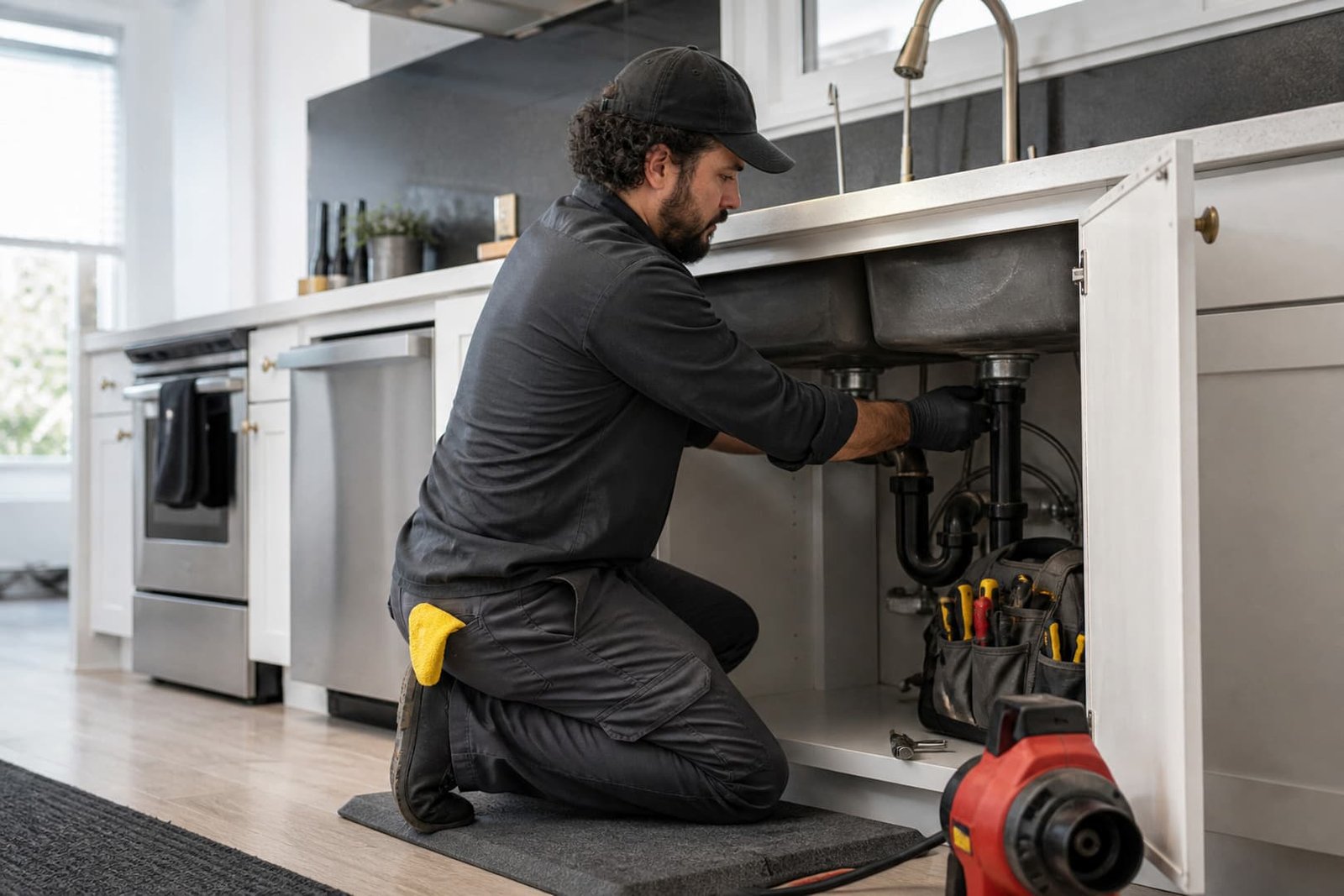
Access and building context shape the first useful decision
The technician needs more than a service label. Property type, affected areas, shutoffs, prior work, active conditions and access shape the visit. Those details reduce avoidable return trips and keep the approved scope separate from optional future work.
A little access preparation can save a surprising amount of time
No one needs to dismantle cabinets or diagnose the plumbing. A few practical details are enough.
- Clear ordinary stored items from the affected sink, water heater, cleanout or shutoff area when it is safe to do so.
- Keep photos of previous repairs, inspection footage or building notices available if they relate to the same symptom.
- Identify the person who can approve work and, in a shared building, the person who can authorize a shutdown.
- List every affected fixture. A second slow drain or a pressure change in another room can alter the diagnosis.
- Mention pets, parking limits, elevator rules, tenant notice and finish-sensitive areas before the visit is scheduled.
Good preparation does not predetermine the answer. It simply lets the field work begin at the plumbing instead of at a locked door, packed cabinet or missing building contact.
Plumbing Services in San Francisco FAQ
Do I need to know which plumbing service to book?
No. Tell us the symptom, affected fixtures, timing and property type. We can route the request without expecting you to diagnose the system.
Do you work in condos, TICs and apartment buildings?
Yes. Shared shutoffs, unit access, building management, occupied spaces and neighbor coordination are considered when they affect the work.
Are permits always required?
No. Requirements depend on the scope and jurisdiction. If the selected work requires a permit or inspection, that path should be identified before work begins.
Can several plumbing problems be assessed in one visit?
Yes. List every symptom when scheduling so the visit can be planned with the right access, equipment and time.
What should I send with my request?
Send the address, property type, affected fixture or equipment, when the problem began, any active water or sewage, safe-to-take photos and access constraints.
Describe the symptom and the building around it
Include the address, property type, affected fixture or equipment, when the issue began, whether water or sewage is active, and any safe-to-take photos. You do not need to diagnose it first.