
Sewer Line Repair in San Francisco, CA
A sewer repair should begin with a visible or otherwise well-supported defect. We match the scope to the damaged section, pipe material, access, grade and the condition of the remaining line.
A sewer repair can mean one fitting, one reach or a complete route
The least invasive option is not automatically the smallest repair, and the largest proposal is not automatically the most durable. Start with location, material, access and the condition on both sides of the defect.
| Possible scope | Often considered when | Questions before approval |
|---|---|---|
| Localized spot repair | One confirmed break, offset or failed connection has serviceable pipe around it | Can the defect be reached without damaging a larger area than the repair saves? |
| Section replacement | Several nearby joints or a defined reach are deteriorated | Where should the new section begin and end, and how will transitions be made? |
| Longer route replacement | Failures repeat, material is broadly deteriorated or the route no longer serves the property well | Does the proposed route address access, grade, cleanouts and future service? |
| Cleaning and monitoring | The pipe is structurally usable and the primary issue is removable buildup or roots | What recurrence would trigger another inspection or a repair decision? |
A proposal should tie its length and method to visible findings. “Old pipe” alone is not a complete diagnosis; neither is one bad frame enough to describe the entire sewer.
Recurring backups do not automatically mean the whole sewer needs replacement
Roots, scale and debris may be managed with cleaning when the pipe remains serviceable. A separated joint, collapse, severe corrosion, poor grade or repeated structural failure points toward repair. Camera footage, locating and site access help distinguish those cases.
The proposal should identify the affected section, access assumptions, restoration responsibility, permit or inspection path when applicable and how the completed line will be verified.
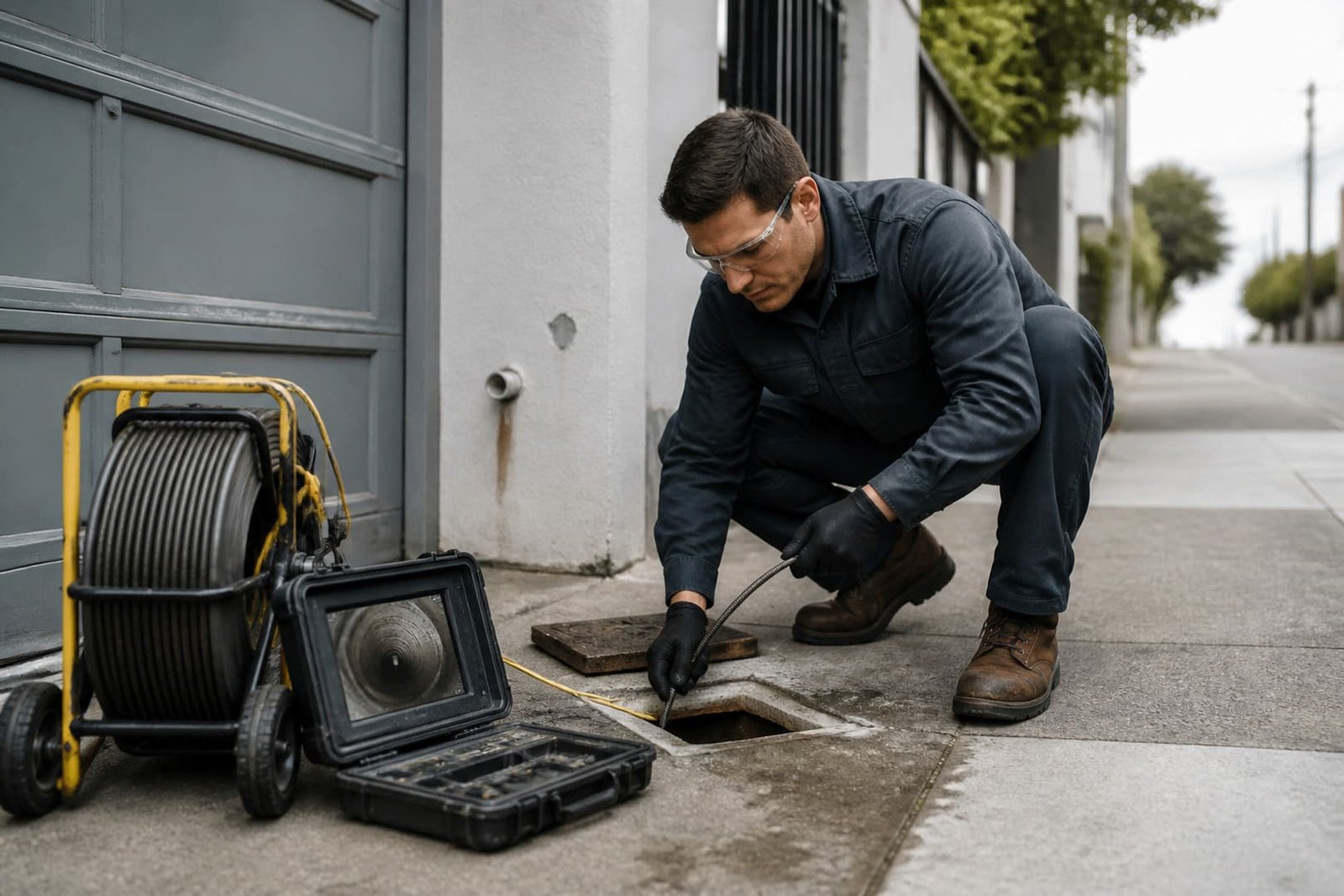
Patterns that justify looking beyond another clearing
Broken or collapsed section
Replace or reconstruct the failed segment and confirm connections to sound piping.
Offset or separated joint
Evaluate spot repair against the condition and alignment of adjacent sections.
Root entry at damaged joints
Remove obstruction for access, then address the opening that allows roots to return.
Corroded cast iron or deteriorated material
Compare a limited repair with a broader scope based on remaining pipe condition.
Standing water or poor fall
Confirm the extent and cause before proposing regrading or replacement.
Failed cleanout or inaccessible line
Include access improvement when it materially affects future serviceability.
Match the repair length to the confirmed defect
| Path | When it fits |
|---|---|
| Cleaning only | Appropriate when obstruction or buildup is the main problem and the line remains structurally serviceable. |
| Spot repair | Useful when damage is localized and sound pipe exists on both sides. |
| Larger sectional replacement | Consider when defects repeat, material is broadly deteriorated or grade must be corrected. |
| Trenchless approach | May reduce surface disruption when the line, access, route and chosen system are suitable; it is not universal. |
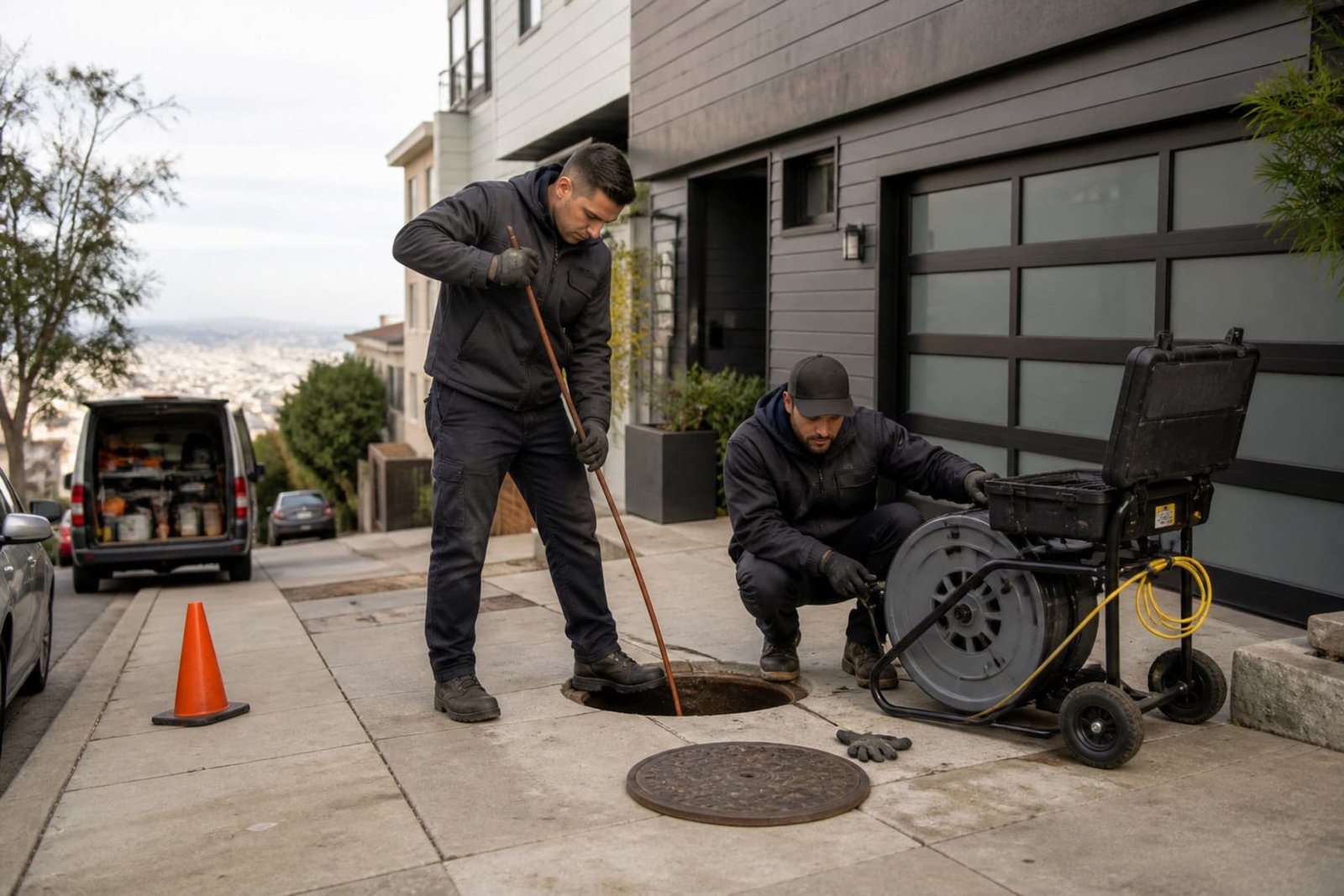
Access, occupants and restoration can decide which repair is practical
A defect below an open yard is a different construction problem from one beneath a finished slab, stair, storefront or shared passage. Before work begins, the repair plan should identify the route, excavation or access area, protection for occupied spaces, soil or water conditions that are visible at the site and how the line will remain out of service.
Restoration deserves its own boundary. Plumbing work may include pipe bedding, backfill and functional surface patching, while specialty flooring, landscaping, cabinetry or finish matching may belong to another trade. In a multifamily property, notice and temporary fixture restrictions matter too. These details are not add-ons; they affect schedule, cost and whether the repair can be tested cleanly.
From footage and location to a flowing repaired line
Review symptoms and prior service history
Inspect, clear if required and locate the defect
Compare repair methods and access impacts
Complete the approved permitted scope
Verify flow and accessible line condition
What to verify before the repair area disappears
Once a trench, wall or slab closes, several useful observations become expensive to recover.
- Confirm the replacement limits and transitions match the approved scope.
- Check alignment, support and visible drainage path before concealment.
- Run water from relevant fixtures and observe the repaired reach under normal flow.
- Capture post-repair camera footage when the route and access make it useful.
- Record the repair location, material and accessible cleanouts for future service.
The final record does not need to be elaborate. It needs to show what changed and that the repaired line carried flow before the access area was restored.
Sewer Line Repair in San Francisco FAQ
Do you repair private sewer laterals?
We assess the relevant private-side piping and define the scope. Ownership, permit and connection requirements depend on the exact location and jurisdiction.
Is trenchless repair always better?
No. Suitability depends on pipe condition, transitions, grade, access and the defect. The lowest-disruption method is useful only if it reliably solves the actual problem.
Will landscaping or concrete be restored?
The proposal should state excavation limits and who handles each restoration item before work starts.
Should the line be camera-inspected after repair?
Post-work verification is useful when the line is accessible and the repair scope calls for it. The closeout method should be agreed in advance.
Send the footage, location and access constraints
Include the address, property type, affected fixture or equipment, when the issue began, whether water or sewage is active, and any safe-to-take photos. You do not need to diagnose it first.