
Pipe Tracing in San Francisco, CA
Pipe tracing answers a route question: where does an accessible line travel, and where can it be marked with reasonable confidence? It helps plan access and reduce blind cutting before plumbing, construction or investigation.
Pipe tracing works by combining signals with what the building reveals
A tracer, locator or acoustic method can narrow the route of a concealed line, but the instrument reading is only part of the picture. Pipe material, depth, nearby metal, reinforcement, wall thickness and access all affect the signal. We compare the reading with visible risers, fixture locations, shutoffs and the way older San Francisco buildings were commonly altered.
That produces a marked route with a stated level of confidence—not an x-ray. When a reading fades near a turn or transition, the uncertainty should be marked instead of filled in with a straight line. For drilling, coring or a high-consequence cut, exploratory access or another verification method may still be appropriate.
A traced route narrows the work area; it is not an x-ray of the building
Concealed plumbing can change direction at framing, chases, slab penetrations and old alterations. We combine accessible endpoints, fixtures, shutoffs, cleanouts, visible piping and appropriate locating methods to build a practical route picture.
Results depend on pipe material, depth, access, signal continuity and surrounding construction. The service should state what was traced, how the route was marked and where confidence is limited.
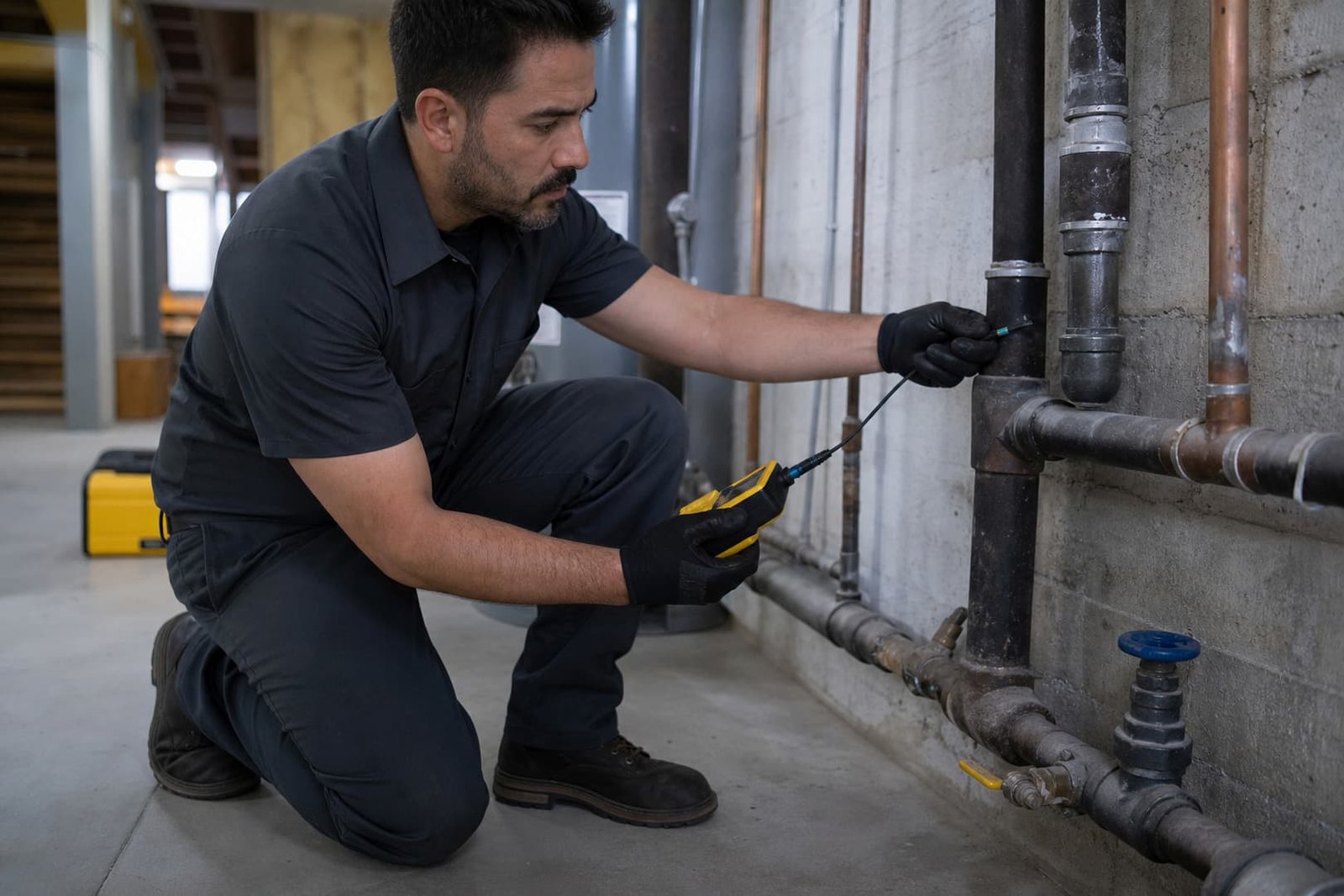
Projects that benefit from a narrower route estimate
Before drilling or coring
Identify likely pipe routes near planned penetrations and define remaining uncertainty.
Targeted wall or floor access
Reduce exploratory openings when a repair point or connection must be reached.
Remodel and fixture relocation
Understand how supply and waste lines approach the work area.
Unknown cleanout or sewer route
Trace an accessible line and locate a camera or transmitter where conditions allow.
Conflicting old plans
Compare field conditions with drawings that may not reflect later alterations.
Shared or multi-unit piping
Clarify routes and shutoff relationships before work that could affect neighbors.
Signals, visible anchors and uncertainty we record
- Accessible endpoints and fixtures
- Visible pipe material and direction
- Building levels, chases and likely transitions
- Locating equipment suitable for the line
- Surface marks and reference points
- Areas that could not be verified
- Photos or sketch needed for the project team
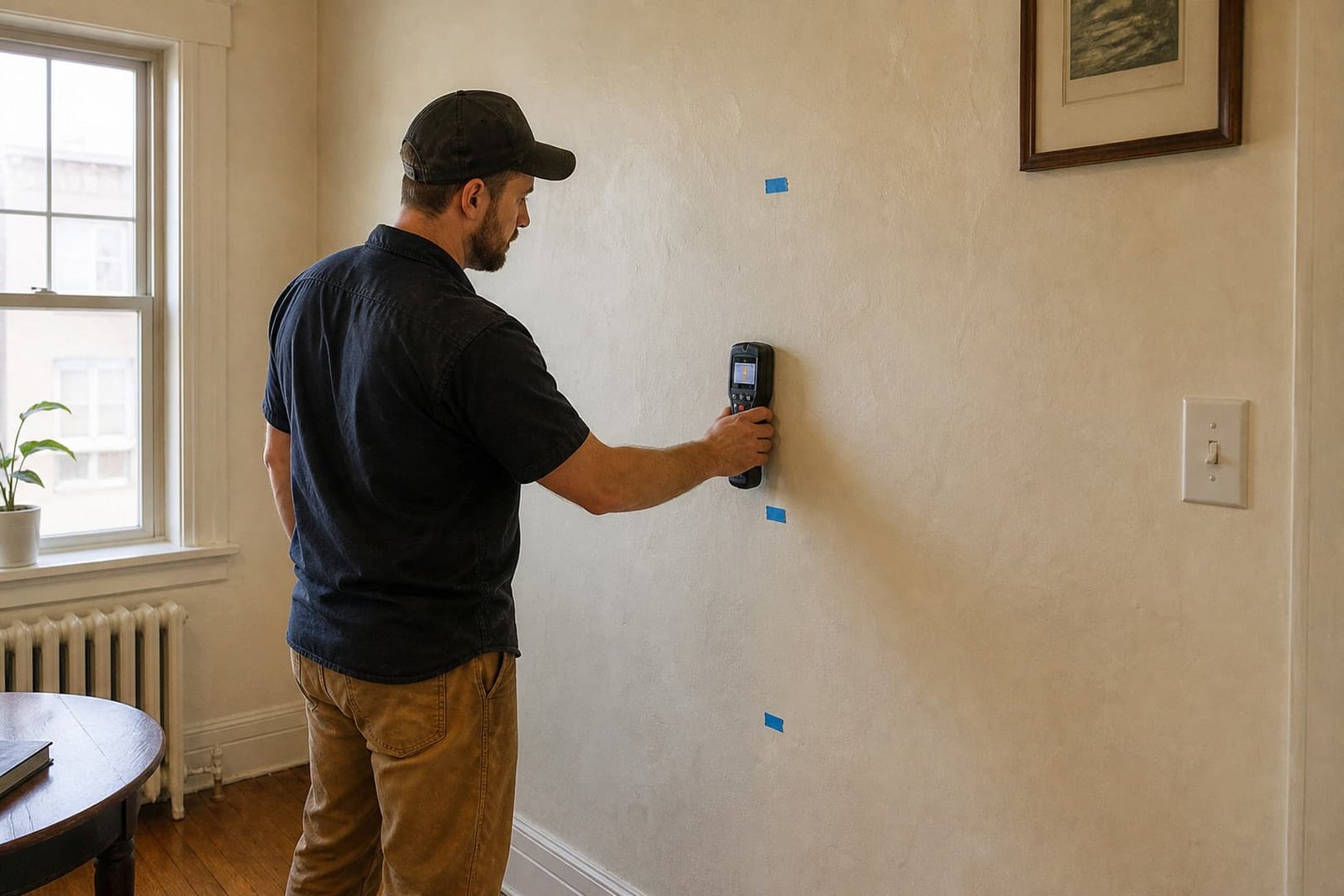
Use the trace according to its confidence
| Finding or need | Practical direction |
|---|---|
| Need to know where a pipe runs | Choose pipe tracing. |
| Need to know why water is appearing | Choose leak detection. |
| Need to see roots or damage inside a sewer | Choose sewer camera inspection. |
| Need excavation layout or legal utility mapping | Confirm whether a survey, utility-location service or engineering scope is required beyond plumbing tracing. |
Four projects where a better route estimate changes the plan
The value is not a colored line on the wall. It is the ability to reduce unnecessary openings and choose a safer work area.
Remodel planning
Map likely supply or drain paths before cabinets move, walls open or a new fixture route is chosen.
Targeted access
Narrow the opening area when a known section needs repair but the concealed route is uncertain.
Core drilling and fastening
Flag plumbing routes before higher-risk penetrations, then use the project’s required verification before cutting.
Building documentation
Create a usable field sketch when original plans are absent or no longer match years of alterations.
How a concealed route becomes a usable field mark
Review the route question and planned work
Identify usable access and endpoints
Trace with field observations and suitable equipment
Mark and document the practical route
Explain limitations before cutting or drilling
A trace should show where confidence changes
For a contractor or owner to use the result, the markings need context.
- Identify the visible starting and ending points that anchor the route.
- Mark the likely centerline and distinguish solid readings from inferred connections.
- Note material transitions, inaccessible areas and nearby conditions that may distort the signal.
- Photograph the markings with fixed room features in view so they can be understood later.
- State whether the result is sufficient for planning or whether exploratory verification is still recommended.
A cautious trace is more useful than a precise-looking line that hides uncertainty. That matters most when someone will cut, drill or price a project from the result.
Pipe Tracing in San Francisco FAQ
Can every pipe be traced?
No. Material, depth, lack of access, discontinuities and dense construction can limit results. The useful outcome is a documented route with stated confidence and limitations.
Does tracing guarantee it is safe to drill?
No locating method removes all risk. Tracing informs the drilling plan; the contractor performing the penetration remains responsible for safe verification and execution.
Can you trace sewer lines?
Often, when a suitable access allows a camera or transmitter to move through the line. A blockage may need to be cleared first.
Is pipe tracing the same as leak detection?
No. Tracing maps a route. Leak detection investigates the source of water loss or moisture.
Show us the endpoints and the work you are planning
Include the address, property type, affected fixture or equipment, when the issue began, whether water or sewage is active, and any safe-to-take photos. You do not need to diagnose it first.