
Hydro Jetting in San Francisco
Hydro jetting cleans across the pipe wall with controlled water pressure and the right nozzle. It is valuable for suitable lines with heavy buildup—but it is not the automatic answer to every clog or every old pipe.
Hydro jetting cleans a line only when water, nozzle and access are matched to it
Hydro jetting sends controlled high-pressure water through a purpose-built nozzle to scour buildup and move debris toward a recovery or discharge point. The operator chooses the nozzle, hose direction and working pressure for the pipe size, material, access and type of deposit. More pressure is not automatically better; control and repeated cleaning passes matter.
Before jetting, we need a route for the hose, a place for released material to go and enough confidence that the line is structurally suitable. A camera inspection may be useful when failures recur, the pipe is old or a structural problem is possible. A collapsed or badly separated line needs repair, not a more aggressive cleaning attempt.
The method comes after the line assessment
We review symptoms, access, pipe material, visible condition and prior service. A camera may be used before or after flow is restored when it will change the method. Fragile, collapsed or severely separated piping may need repair rather than aggressive cleaning.
Nozzle, pressure, flow and direction are selected for the line and material. The goal is to remove grease, sludge, scale and manageable root intrusion while maintaining control of debris and downstream flow.
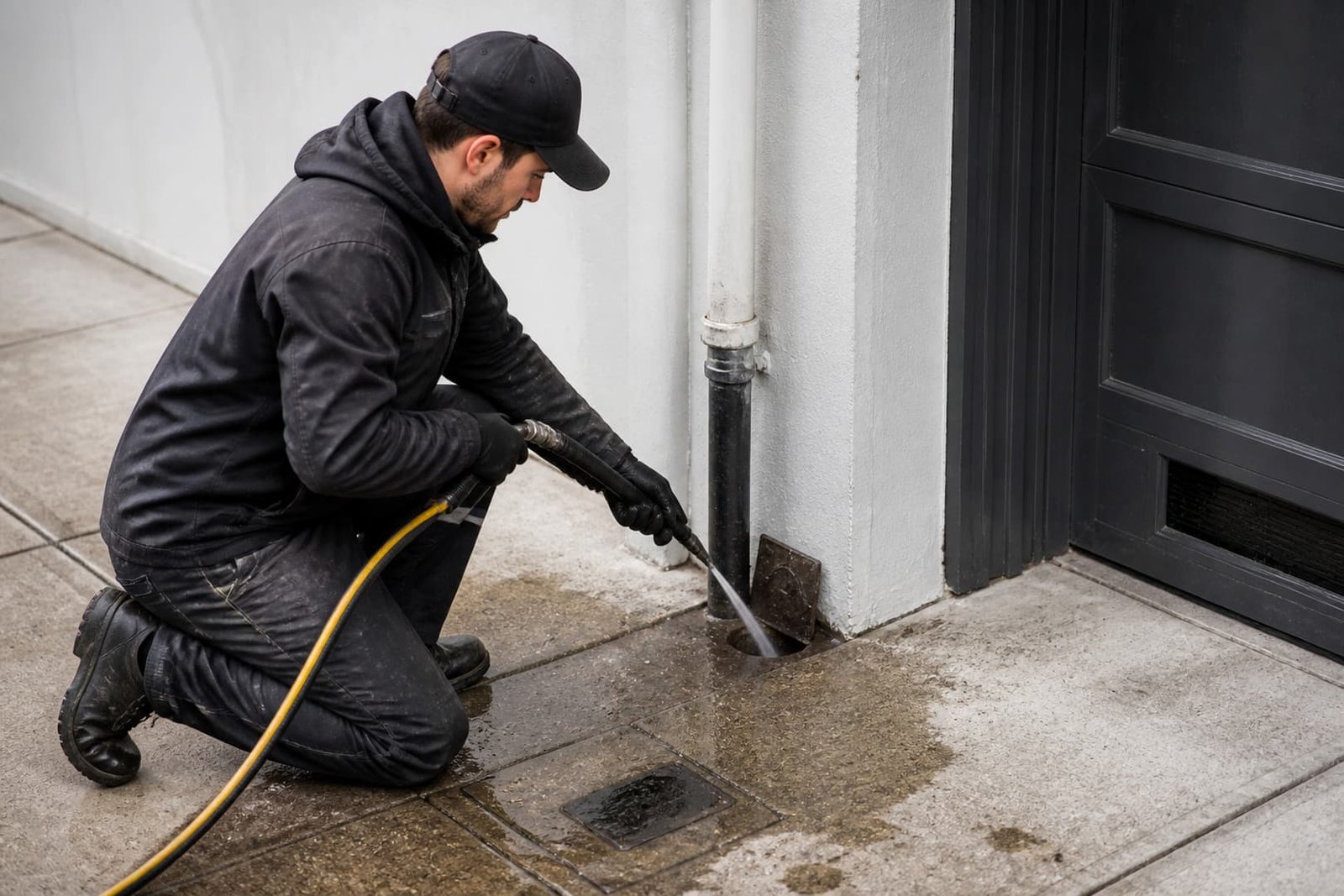
Buildup patterns that may justify wall-to-wall cleaning
Grease-heavy kitchen line
Remove adherent buildup that a cable may only open through the center.
Recurring main-line restriction
Inspect for roots, scale or structural defects before treating cleaning as the final answer.
Commercial maintenance
Plan access, wastewater conditions, operating hours and a useful service interval.
Scale in compatible piping
Use suitable cleaning equipment after checking material and wall condition.
Roots entering at joints
Jetting may restore flow, but damaged joints can allow recurrence and may need repair.
Preparation for inspection or repair
Clean the line when residue prevents useful camera footage or interferes with the approved next step.
Pipe, access and debris conditions reviewed before jetting
- Cleanout size, location and safe hose access
- Pipe material, diameter and known condition
- Downstream path and debris control
- Prior camera footage or service history
- Appropriate nozzle, pressure and flow
- Nearby fixtures and occupied areas
- Post-cleaning flow and camera verification when included
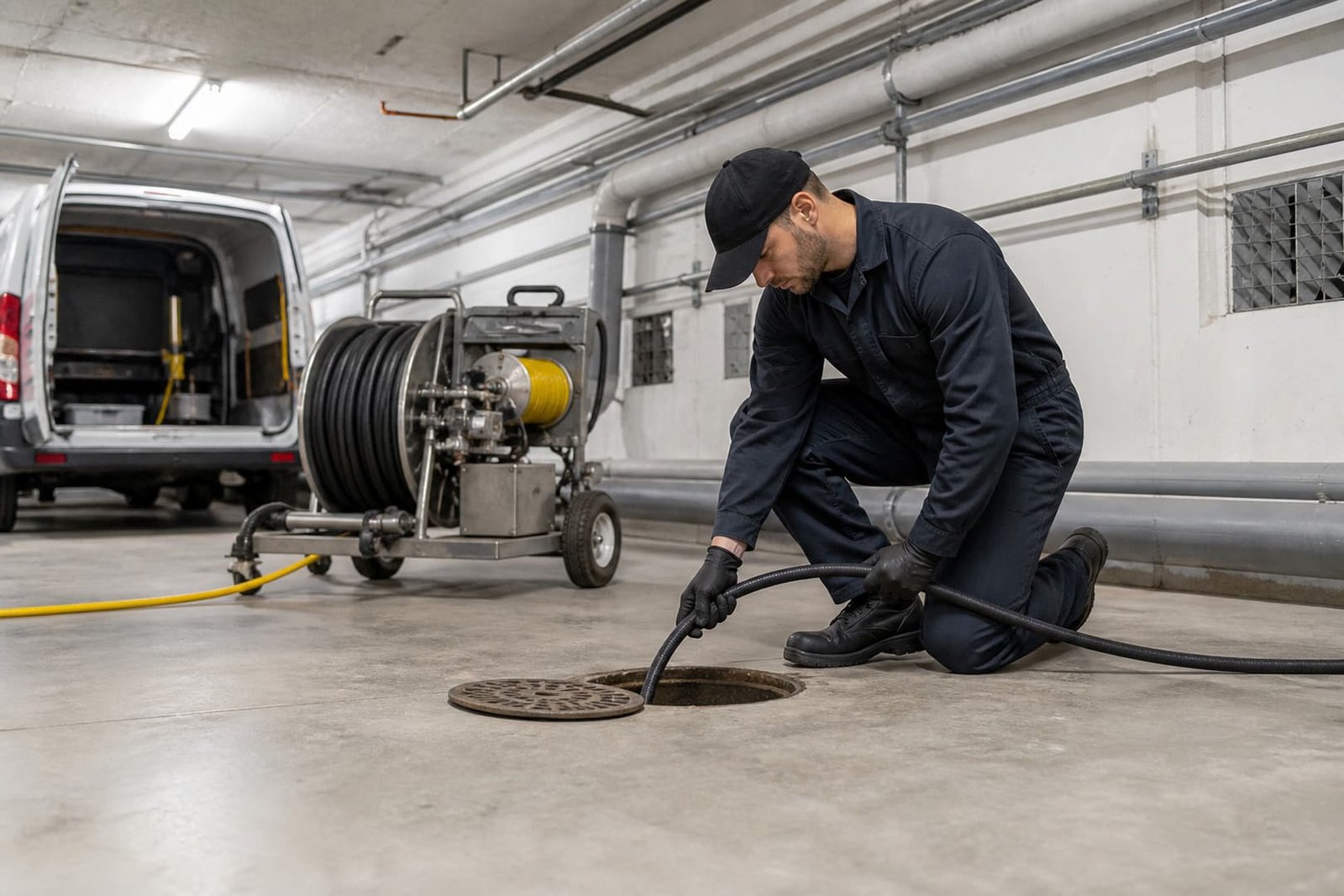
Clean, inspect or repair according to what the line can support
| Finding or need | Practical direction |
|---|---|
| Cable or auger first | Often appropriate for a localized fixture or soft obstruction. |
| Hydro jetting | Useful for distributed wall buildup in a suitable accessible line. |
| Camera inspection | Needed when recurrence or symptoms suggest an unknown structural condition. |
| Sewer repair | Required when a break, collapse, severe offset or failing material—not removable buildup—is the problem. |
Use the blockage pattern and pipe condition to decide
A single small trap clog and a long commercial grease line should not receive the same treatment.
| Situation | Jetting may be useful when | Choose another path when |
|---|---|---|
| Recurring grease or sludge | The accessible branch or main has distributed wall buildup | The restriction is local to a removable trap or failed fixture connection |
| Root intrusion | The line is passable enough to clean and the goal includes restoring flow for inspection | The pipe is collapsed, severely offset or cannot contain the cleaning process |
| Mineral or scale buildup | The material and condition can tolerate the selected nozzle and pressure | The pipe wall is heavily deteriorated or the deposit requires a different mechanical method |
| Preventive commercial cleaning | Service history shows a repeatable buildup interval and safe access is available | There is no evidence of buildup and routine cleaning would add cost without a defined risk |
| Active complete blockage | A safe access and debris path can be established | Standing sewage, uncertain route or structural failure makes initial clearing or inspection safer |
The correct result is not merely “water runs.” A cleaning visit should state what material came out, whether full passage was restored and whether the remaining condition warrants footage or repair.
Set up a controlled route, clean in passes and verify flow
Assess symptoms, line and access
Restore minimal flow if the line is fully blocked
Inspect when findings will guide the method
Jet with controlled equipment and debris management
Verify flow and explain any visible defects
How a professional jetting visit develops
The line should be treated as a route with a known direction, not as a hole that accepts a hose.
Protect the opening and downstream area
Confirm hose entry, expected flow direction, nearby fixtures and where loosened material can travel.
Review material, symptoms and available footage
Select a starting nozzle and operating approach that fit the condition.
Work in deliberate passes
Advance and withdraw the nozzle while monitoring resistance, flow and debris rather than forcing it blindly.
Move loosened material out of the working reach
A line can feel open while debris remains downstream. Confirm sustained movement.
Observe flow and inspect when warranted
Post-cleaning footage can reveal defects or remaining deposits that were hidden before the line opened.
Hydro Jetting Services in San Francisco FAQ
Is hydro jetting safe for old pipes?
Age alone does not answer the question. Material, corrosion, joints, damage, access and operating settings must be assessed before jetting.
Does hydro jetting remove roots permanently?
It can remove intruding roots and restore flow, but it does not close the joint or break that allowed entry.
Is hydro jetting better than snaking?
They solve different conditions. A cable may be right for a localized obstruction; jetting is stronger for adherent buildup across a suitable pipe wall.
Do you camera-inspect every line?
Inspection is used when it is needed to choose or verify the work and when access and visibility allow useful footage.
Tell us which fixtures back up and how often it returns
Include the address, property type, affected fixture or equipment, when the issue began, whether water or sewage is active, and any safe-to-take photos. You do not need to diagnose it first.