
Backflow Testing & Prevention in San Francisco
Backflow testing verifies whether a specific prevention assembly holds the required pressure relationships at the time of test. If it fails, the result should identify the failed portion and the practical path to repair, replacement and retest.
Backflow testing is a measured field procedure, not a visual sticker check
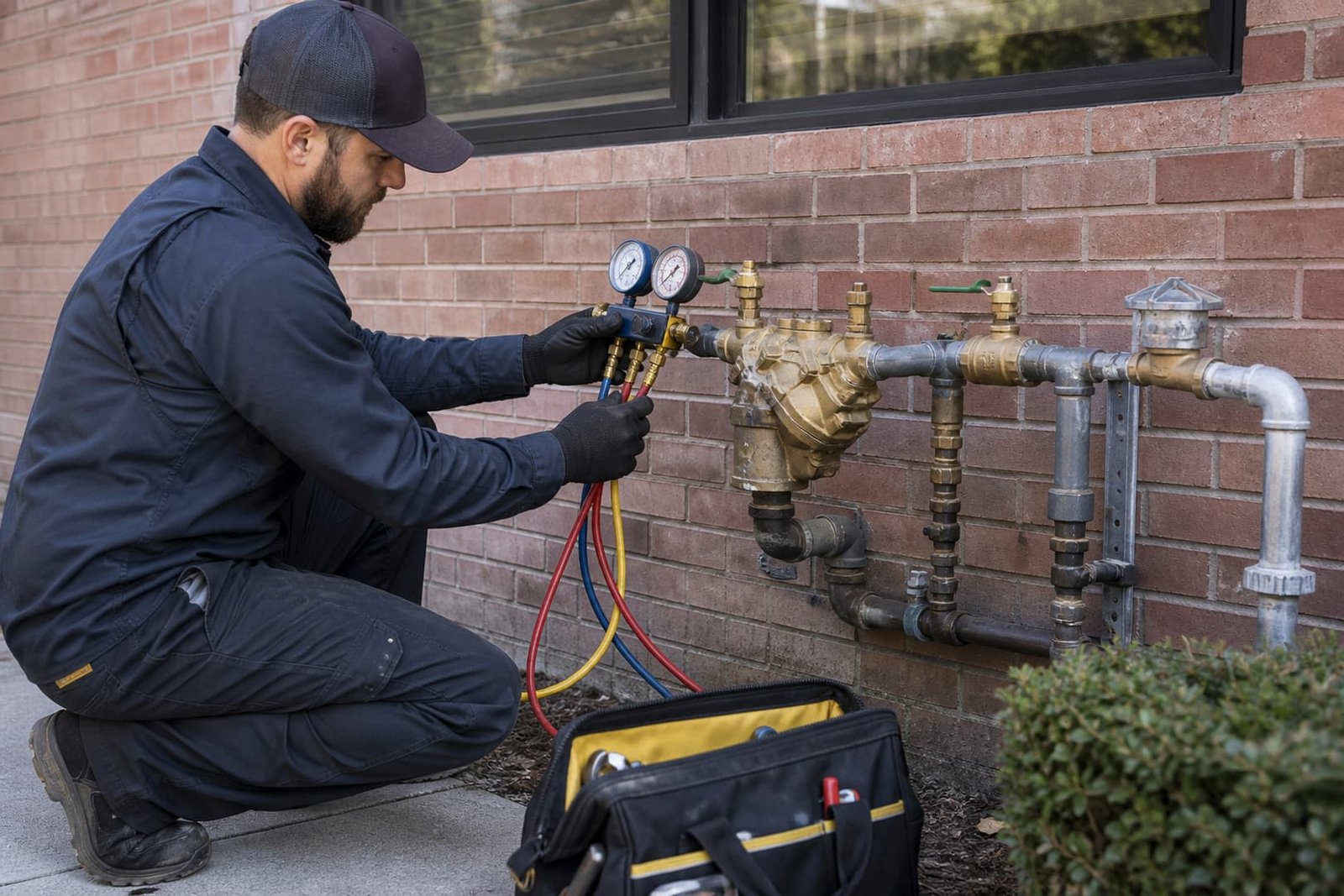
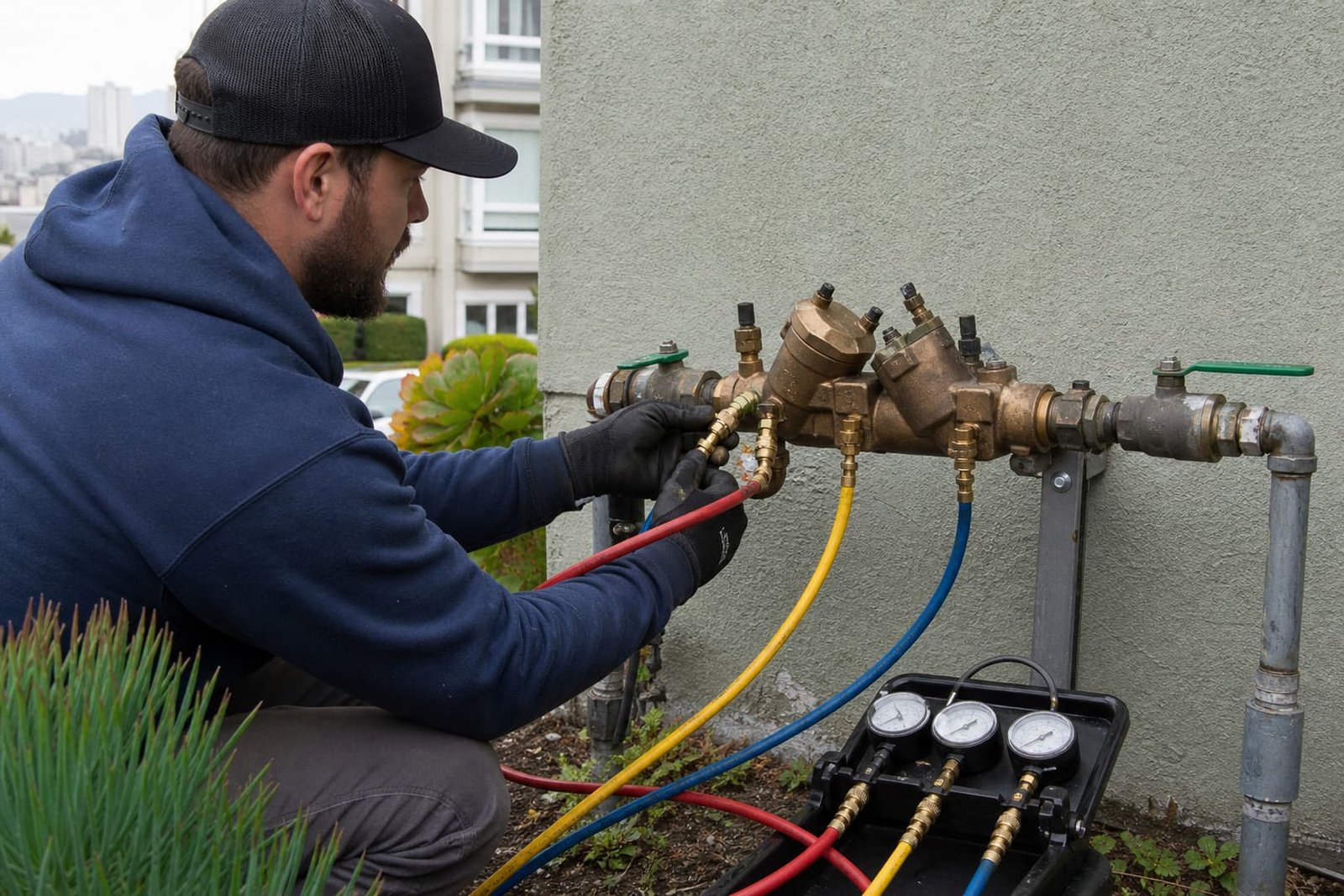
A backflow prevention assembly protects a potable supply from reverse flow at a specific connection. During a test, the technician identifies the assembly, checks accessible condition and uses calibrated test equipment to measure how its internal checks or relief components respond. The exact sequence depends on the installed assembly type.
A clean exterior does not guarantee a passing result, and a failed test does not by itself say which internal part is defective. The report should connect the measured result to the assembly information and location. If repair is practical, the device is serviced and tested again; the passing retest is what closes the loop.
A test result should be usable—not just “pass” or “fail”
Before the appointment, we confirm the device location, type, access, water-interruption implications and reporting information. The tester operates the assembly and test cocks using calibrated equipment and records the required readings for the applicable process.
A failed test does not always require a new assembly. Cleaning, seals, springs, checks, relief components, shutoff condition, freeze or corrosion damage and parts availability all affect the repair decision. Retesting verifies the corrective work.
Notices, due dates and field conditions we handle
Scheduled compliance test
Identify the assembly and account information before testing and submission.
Failed prior test
Review recorded failure, assembly condition, parts availability and shutoff function.
New or replaced assembly
Coordinate installation, initial test and required documentation.
Change in property use or equipment
Review whether the existing protection still matches the hazard and service configuration.
Commercial or multifamily property
Plan the interruption, access, tenant or operations notice and responsible contact.
Visible leak or discharge
Diagnose the assembly and system conditions instead of ignoring active water loss.
What the test measures and the report identifies
- Assembly type, size, make, model and serial when readable
- Location, access and safe test conditions
- Upstream and downstream shutoff operation
- Recorded field-test readings
- Pass/fail result and failed component where identifiable
- Repair or replacement options
- Retest and reporting requirements
Pass, repair, replace or restore access
| Finding or need | Practical direction |
|---|---|
| Passes the field test | Complete the required record or submission for the service scope. |
| Fails but is serviceable | Repair the identified component, restore the assembly and retest. |
| Corroded, damaged or obsolete | Compare replacement with a poor-value repair and plan any required interruption. |
| Protection no longer matches the use | A design or compliance review may be needed beyond the routine test. |
A failed test should lead to a specific next step
Not every failure requires a complete assembly replacement. Age, part availability, body condition, installation defects and the measured problem all influence the decision.
| Test outcome or field condition | Likely next action | What gets documented |
|---|---|---|
| Assembly passes | Return valves to the correct operating position and complete the required record | Assembly identity, location, readings, date and tester information |
| Internal check does not hold | Inspect for debris or worn service parts; repair if the body and parts are serviceable | Failed reading, work performed and passing retest |
| Relief component does not perform correctly | Service or replace the affected component according to the assembly design | Initial result, corrected result and any observed discharge |
| Body, shutoffs or test points are damaged | Evaluate repairability and whether replacement or piping correction is safer | Physical condition and why a normal test could not be completed |
| Assembly is inaccessible or cannot be isolated | Correct access or shutdown planning before testing | Reason the test stopped and what is needed for a return visit |
Requirements and submission procedures can depend on the property and responsible authority. The practical first step is to share the notice or form you received so the correct assembly and reporting path can be confirmed.
From assembly identification to a completed test record
Confirm device and reporting details
Prepare for the water interruption
Perform and record the field test
Explain pass/fail and corrective options
Repair or replace when approved, then retest
Small identification details matter
A technically sound test can still create delay when the record cannot be matched to the right property or device.
- Property
- Use the service address and any account, unit or site identifier shown on the notice.
- Assembly
- Record the accessible manufacturer, model, size, serial information and device type without guessing at unreadable markings.
- Location
- Describe where the assembly sits on the property so another person can find the same device.
- Readings
- Enter the measured results and the pass/fail outcome from the actual test procedure.
- Correction
- If service was needed, distinguish the initial failure, the work and the final retest.
Backflow Testing and Prevention in San Francisco FAQ
Will water be shut off during the test?
Testing commonly requires operating assembly shutoffs, so a brief interruption may occur. The impact depends on the configuration and should be planned with the property contact.
What happens if the assembly fails?
You receive the result and corrective options. Repair or replacement is separately approved, followed by a retest when required.
Can any plumber submit the test?
Authorization and reporting requirements depend on the local program. Confirm the tester and submission requirements for the property before scheduling.
Is backflow testing the same as inspecting all plumbing?
No. It verifies the field performance of the identified backflow prevention assembly.
Send the notice and a clear photo of the assembly
Include the address, property type, affected fixture or equipment, when the issue began, whether water or sewage is active, and any safe-to-take photos. You do not need to diagnose it first.