
Drain Cleaning in San Francisco
A single slow fixture and a building-wide backup should not receive the same treatment. We identify which part of the drainage system is affected, restore flow and explain when recurring symptoms justify a camera or a different method.
Which fixtures are affected is the fastest useful clue
One sink or tub often points to a trap or nearby branch. A toilet plus a low shower may indicate a shared branch. Several fixtures, gurgling or wastewater at a low drain can point toward the main line. Tell us the full pattern before anyone selects equipment.
Avoid adding chemical drain opener before professional service. It may not solve a structural or deep blockage and can expose occupants and the technician to caustic liquid. If sewage is entering the space, stop using connected fixtures and keep people away.
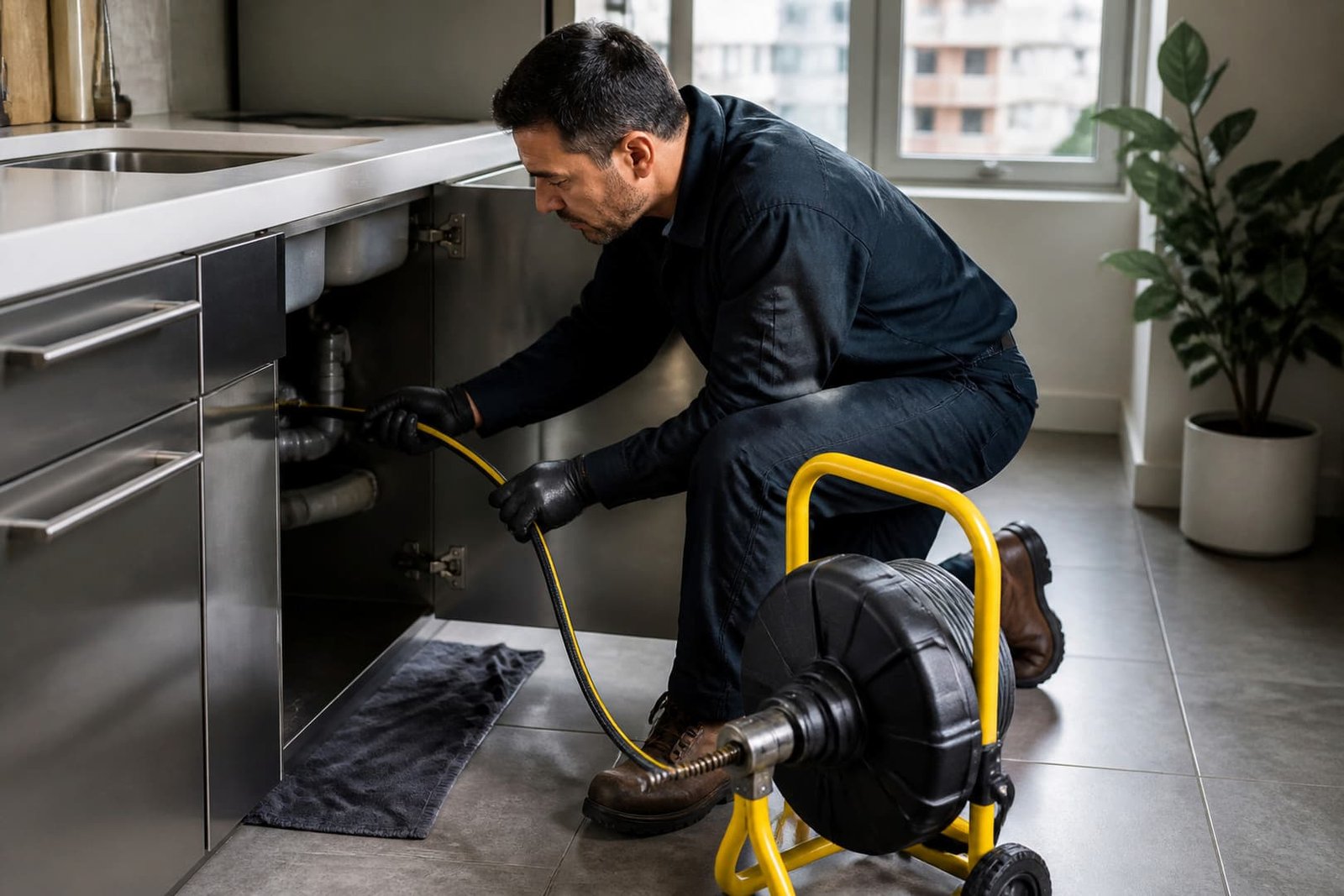
The fastest clue is often what still drains normally
If one bathroom sink is slow while the tub, toilet and kitchen work normally, the obstruction likely sits close to that sink. When a toilet flush makes the tub gurgle, the shared branch becomes more likely. If fixtures on the lowest level back up when water runs elsewhere, stop using the system and treat it as a larger drainage problem.
This map prevents random cleaning. The plumber can choose the closest useful access and avoid pushing a cable through a delicate fixture when a cleanout serves the affected line. It also reveals when clearing the first blockage should be followed by a camera inspection because several fixtures, repeated failures or a main-line symptom suggest more than a local clog.
The fixture pattern points toward the blocked reach
Kitchen sink clog
Grease, food residue, disposal connections or a restricted branch may be involved.
Tub or shower drains slowly
Hair, soap residue, trap or branch buildup commonly affects local flow.
Toilet backs up
Check whether the obstruction is in the fixture, branch or farther downstream.
Floor drain receives wastewater
Stop water use and treat it as a possible branch or main-line backup.
Several fixtures gurgle
Investigate shared drainage and venting relationships rather than clearing each fixture blindly.
Clog returns after service
Use history and camera findings to look for roots, scale, offsets, poor grade or damaged pipe.
Choose access and equipment for this line—not a generic clog
| Path | When it fits |
|---|---|
| Manual or cable clearing | A focused starting point for many local blockages. |
| Fixture removal or trap access | Useful when the obstruction or failed connection is local and accessible. |
| Hydro jetting | Consider for suitable lines with distributed grease, sludge, scale or roots. |
| Camera inspection | Use when recurrence, several fixtures or main-line symptoms raise a structural question. |
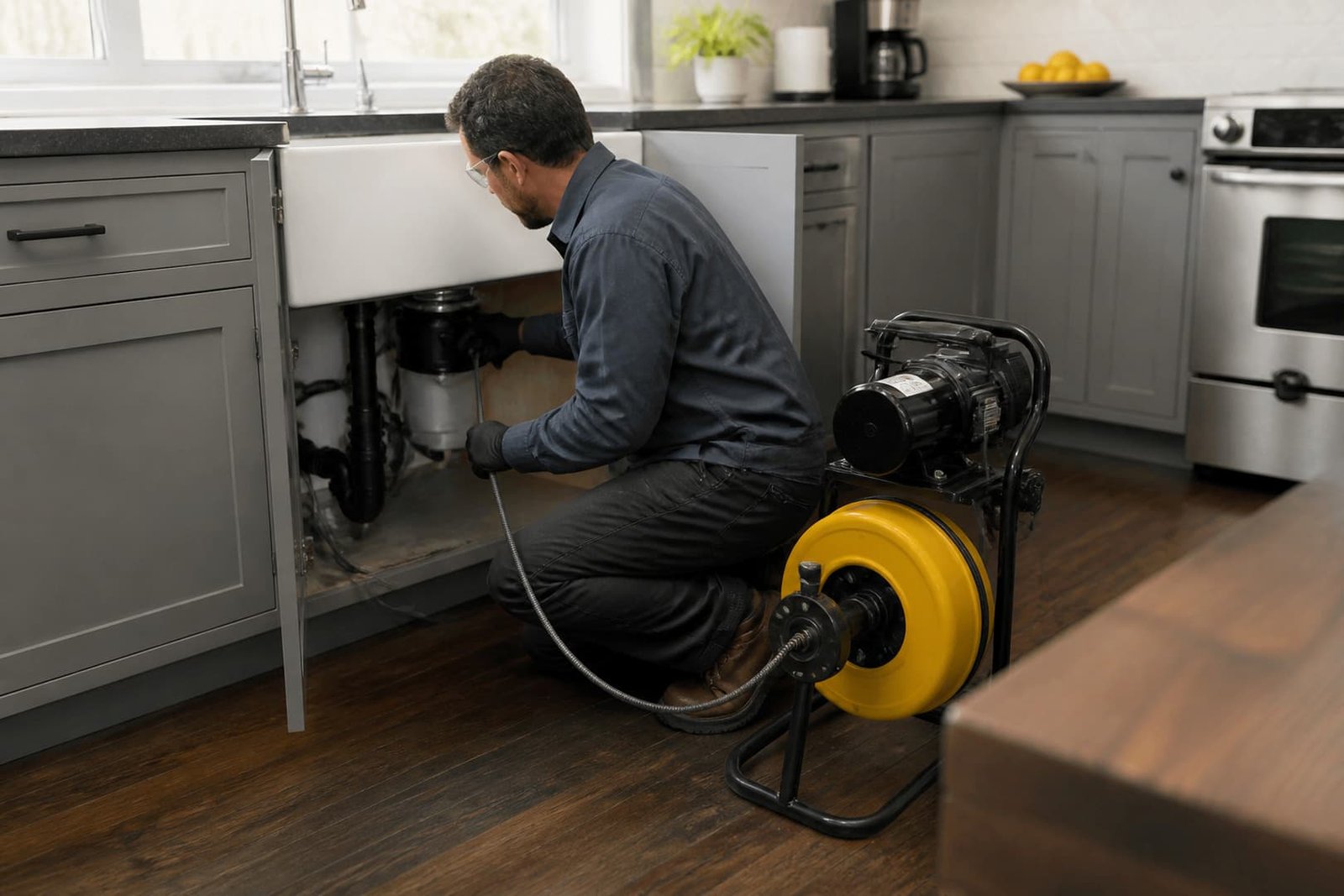
Drain cleaning is not one tool for every pipe
Access, obstruction type and pipe condition guide the method. The first objective is to restore usable flow without damaging the fixture or line.
| Starting condition | Typical first approach | Reason to escalate |
|---|---|---|
| One sink or tub drains slowly | Inspect the stopper, trap and local branch; use matched cable access if needed | The local line clears but slows again quickly |
| One toilet repeatedly clogs | Check fixture operation and use appropriate toilet clearing equipment | Normal paper and waste continue to cause failure or nearby fixtures react |
| Several nearby fixtures are affected | Work from a branch cleanout or other safe common access | The cable meets a hard stop, roots or heavy recurring buildup |
| Lowest fixtures back up | Stop water use and assess the building drain or sewer route | Flow cannot be restored or footage shows structural damage |
| Commercial line with distributed grease | Restore access and evaluate wall-to-wall cleaning such as hydro jetting | The line is fragile, collapsed or lacks a controlled debris path |
A cable can make an opening through a blockage without cleaning every deposit from the wall. That may be completely adequate for a local soft clog—or temporary when the line has a broader condition.
Restore flow, observe the result and decide whether to inspect
Map affected fixtures and stop risky use
Select the safest practical access
Clear the obstruction with a matched method
Run and observe water through the line
Recommend inspection or repair only when findings justify it
Recurrence is information, not just bad luck
The timing and location of the next slowdown help separate use-related buildup from a line defect.
The same fixture slows within days
The opening may have been partial, the trap or branch may retain buildup, or an object remains close to the fixture.
Several fixtures begin reacting together
The problem may sit in a shared branch or main. Map the fixtures again before repeating a local clearing.
The line runs well for months, then repeats
Roots, grease or scale may rebuild on a predictable interval. Camera findings and service history help decide between maintenance and repair.
A hard stop appears at the same distance
Do not keep forcing equipment. Locate and inspect the area for an offset, collapse, foreign object or pipe transition.
Odor remains after flow returns
Check traps, venting symptoms, seals and any overflow residue. A cleared line does not explain every odor source.
Drain Cleaning Services in San Francisco FAQ
Why did the clog come back?
The opening may have been temporary, or roots, scale, grease, poor grade or damaged piping may remain. Recurrence is a reason to diagnose, not simply repeat the same step.
Can you clear a drain through any fixture?
Access choice depends on the affected line and setup. A proper cleanout is often preferable, but fixture or trap access may be used when appropriate.
Do chemical drain cleaners work?
They may not reach or remove the cause and can create a hazardous work condition. Tell the plumber if any chemical was used.
When is hydro jetting needed?
When the accessible line is suitable and wall buildup calls for more complete cleaning than a localized cable opening.
List every affected fixture and what happens during use
Include the address, property type, affected fixture or equipment, when the issue began, whether water or sewage is active, and any safe-to-take photos. You do not need to diagnose it first.