
Sewer Camera Inspection in San Francisco
A camera shows what is inside an accessible drain or sewer line and where a visible condition occurs. It replaces assumptions with footage—but it cannot see through standing dirty water or prove every leak outside the pipe.
Use a camera when the question is inside the line
Recurring backups, several affected fixtures, a pre-purchase concern or a repair proposal may justify a video inspection. A camera can reveal roots, scale, corrosion, offsets, cracks, separated joints, foreign objects and a section holding water when visibility is adequate.
If the line is fully blocked, cleaning may be needed before useful footage can be captured. The camera identifies visible conditions; it does not measure pipe-wall thickness or guarantee that a line without a visible defect will never fail.
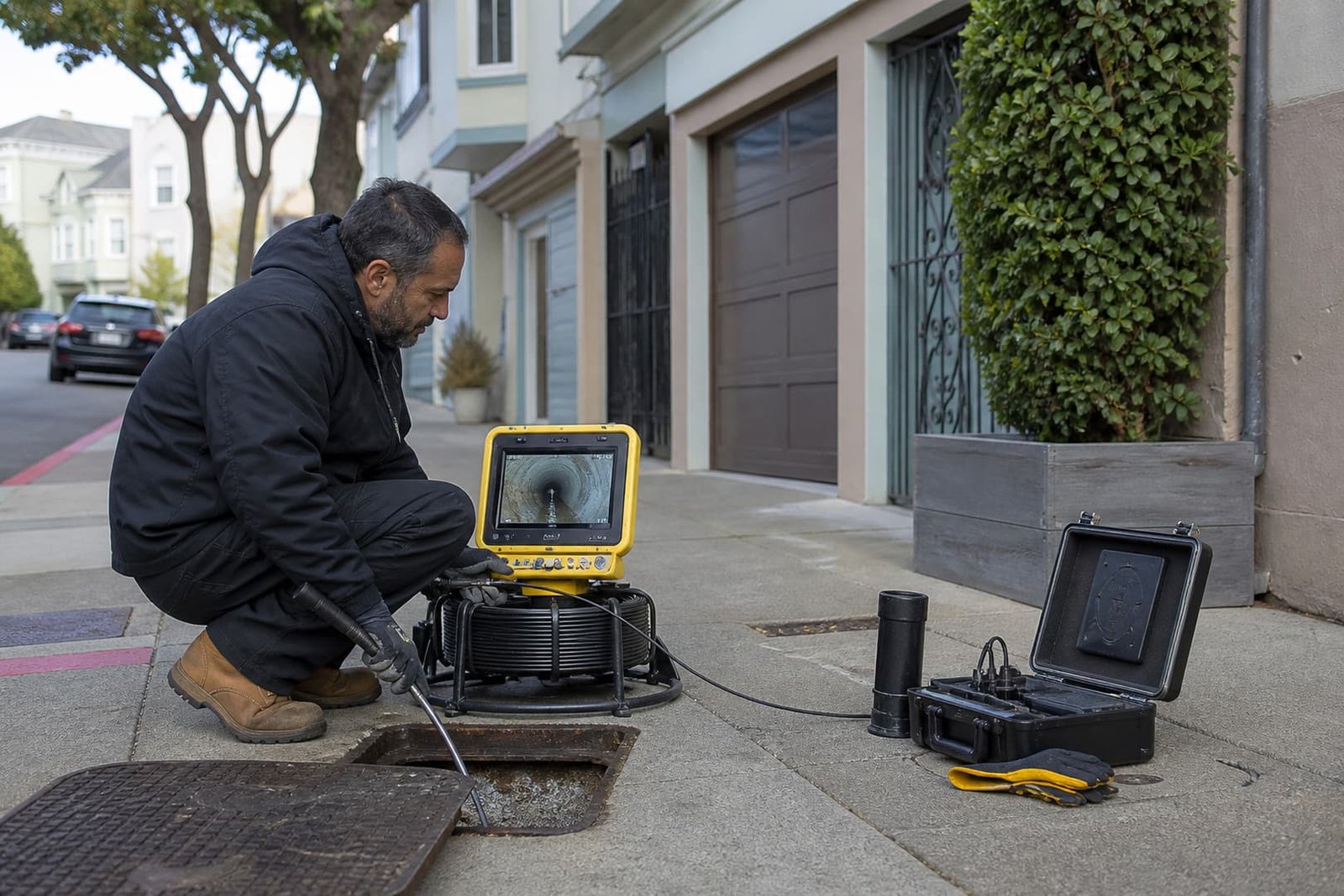
A sewer camera records visible conditions—not every condition
With adequate access and a passable line, the camera can show roots entering a joint, an offset, a crack, corrosion, accumulated debris or a section holding water. The distance counter and surface locator may help relate that condition to the property. Footage is strongest when the operator slows down, keeps orientation clear and records the approach to the defect instead of showing a single frozen frame.
There are limits. Dirty standing water can hide the pipe wall. A camera cannot see through soil, measure remaining wall thickness or prove why a low section developed. It also cannot certify every joint that passes quickly through the frame. If the line is blocked, flow may need to be restored first; otherwise the inspection ends at the obstruction and the conclusion remains incomplete.
When footage can settle the next question
A clog returns after clearing
Look for roots, scale, a structural defect or a section that is not draining properly.
Several fixtures back up together
Inspect the shared branch or sewer route rather than treating each fixture independently.
Before buying or remodeling
Document accessible sewer condition and locate areas that may affect project planning.
Before excavation or lining
Confirm the defect, distance and route before selecting a repair method.
After repair or cleaning
Verify the accessible line and record the completed condition when the scope calls for it.
Odor without an obvious fixture cause
Use inspection as one part of diagnosis when symptoms point toward the drainage system.
What gets observed, located and qualified
- Suitable cleanout or access point
- Whether flow must be restored first
- Image clarity and direction of travel
- Visible pipe material and transitions
- Distance and approximate defect location
- Root entry, buildup, offsets, cracks or standing water
- Need for locating from the surface
- Whether cleaning, monitoring or repair is the logical next step
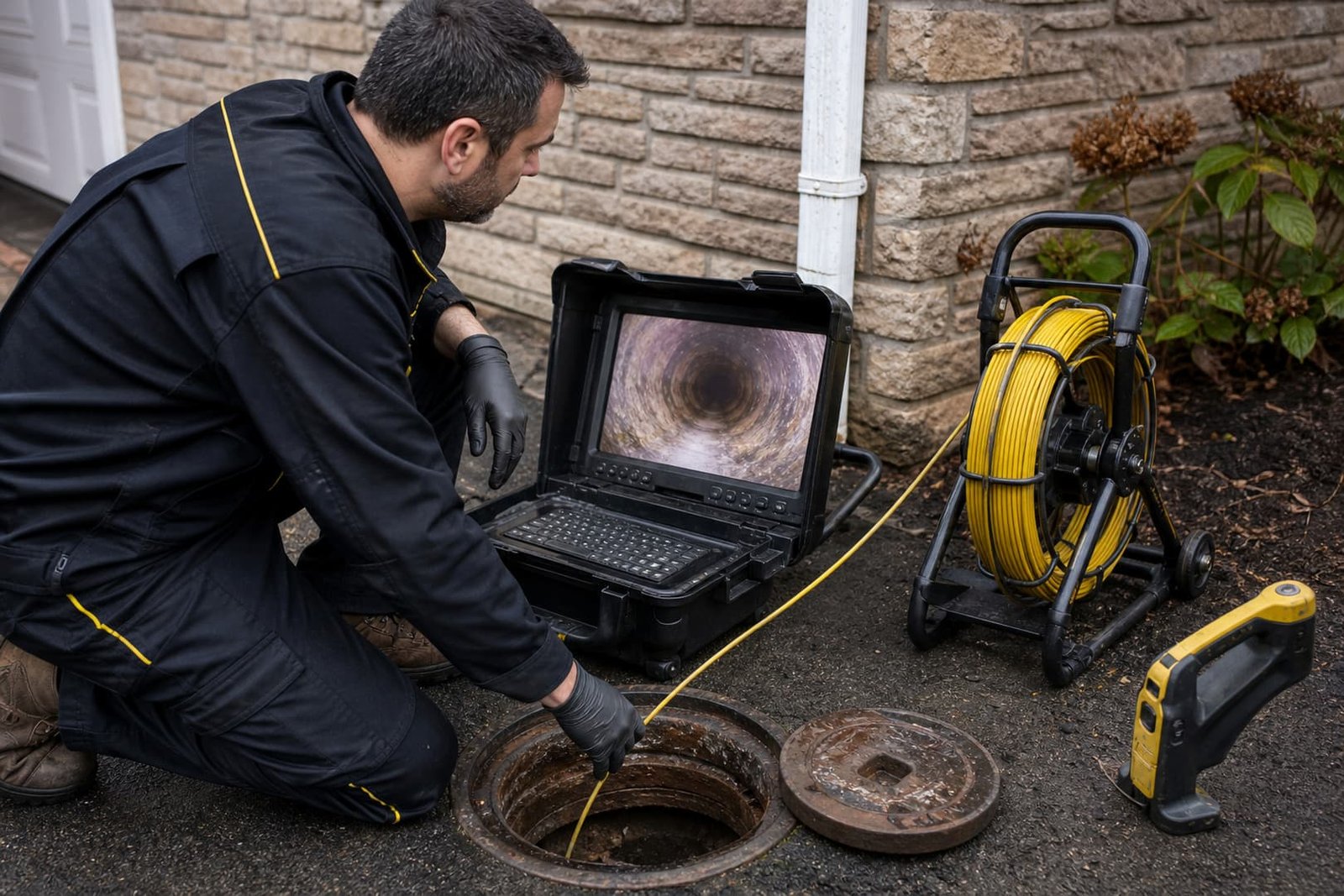
Turn a visible condition into a proportionate next step
| Finding or need | Practical direction |
|---|---|
| Soft blockage with no visible structural defect | Cleaning may be sufficient; method depends on location, material and buildup. |
| Grease, sludge or wall buildup in a suitable line | Hydro jetting may be considered after access and pipe condition are assessed. |
| Roots, offset joint, break or collapse | A repair or replacement scope should be based on the visible defect and location. |
| Camera cannot pass or visibility is poor | Restore access or flow first, then inspect again rather than over-interpreting incomplete footage. |
Common observations and the questions they raise
Camera findings are not interchangeable. Two lines can both back up and still need different next steps.
| Visible condition | What it may explain | What to confirm next |
|---|---|---|
| Roots at a joint | Recurring obstruction at a point of entry | Joint condition, pipe material, location and whether cleaning restores a usable opening |
| Offset or separated connection | Debris catching or leakage around a joint | Degree of displacement, access and the affected length |
| Standing water | A low section, obstruction or poor flow through that reach | Line condition after cleaning and whether the camera can pass beyond it |
| Heavy grease or scale | Reduced inside diameter and repeat slowdowns | Suitability for cable cleaning or hydro jetting |
| Crack, hole or collapse | Structural failure rather than a soft blockage | Exact location, route, repair access and adjacent pipe condition |
The camera should narrow a decision. When it cannot, the honest result is an inspection limitation and a defined way to obtain better evidence—not a confident guess.
From cleanout access to usable findings
Confirm symptoms and access
Run and observe the camera
Locate relevant visible conditions
Explain footage and limitations
Define the next step without bundling an unnecessary repair
What you should be able to use after the visit
A practical sewer inspection leaves enough context for an owner, buyer, contractor or property manager to understand what was seen.
- Access point
- Where the camera entered and which direction it traveled.
- Reach
- How far the camera traveled, where visibility or access stopped and whether the target section was reached.
- Finding
- The visible condition, approximate distance and—when located—its relationship to the surface.
- Limits
- Anything that reduced confidence: dirty water, a blockage, bends, inaccessible branches or an uncertain route.
- Next decision
- Monitor, clean, inspect again, expose a section or develop a repair scope. The choice should follow the footage.
Sewer Camera Inspection in San Francisco FAQ
Can a sewer camera find a water-supply leak?
No. It views the inside of accessible drain and sewer piping. Hidden pressurized-water leaks require a different diagnostic approach.
Do you always need to clean the line first?
No. Cleaning is needed when blockage or dirty standing water prevents the camera from reaching or seeing the area of concern.
Can the camera determine exact pipe depth?
The camera head can be located from the surface where conditions allow. Depth and route readings have practical limitations and should be treated as field findings, not a surveyed utility map.
Does a camera inspection include repair?
No. The inspection establishes findings. Any cleaning or repair should be separately scoped and approved.
Share the backup pattern and available cleanout
Include the address, property type, affected fixture or equipment, when the issue began, whether water or sewage is active, and any safe-to-take photos. You do not need to diagnose it first.