
Emergency Water Heater Repair in San Francisco
A water-heater emergency is not only “no hot water.” Active leakage, steam, combustion odor, repeated safety shutdowns or water near electrical components calls for prompt, careful triage.
Do not relight, reset or reopen a leaking unit repeatedly
If you smell gas, hear abnormal combustion, see steam or find water near electrical equipment, keep away and follow the appropriate utility or emergency guidance. Use only an accessible, clearly identified water or energy control that can be operated safely.
Tell us the unit type, fuel, visible model information, symptoms, error code and whether leakage continues. A failed serviceable component may be repaired; a leaking tank body, unsafe venting or a poor-value condition may require a replacement plan.
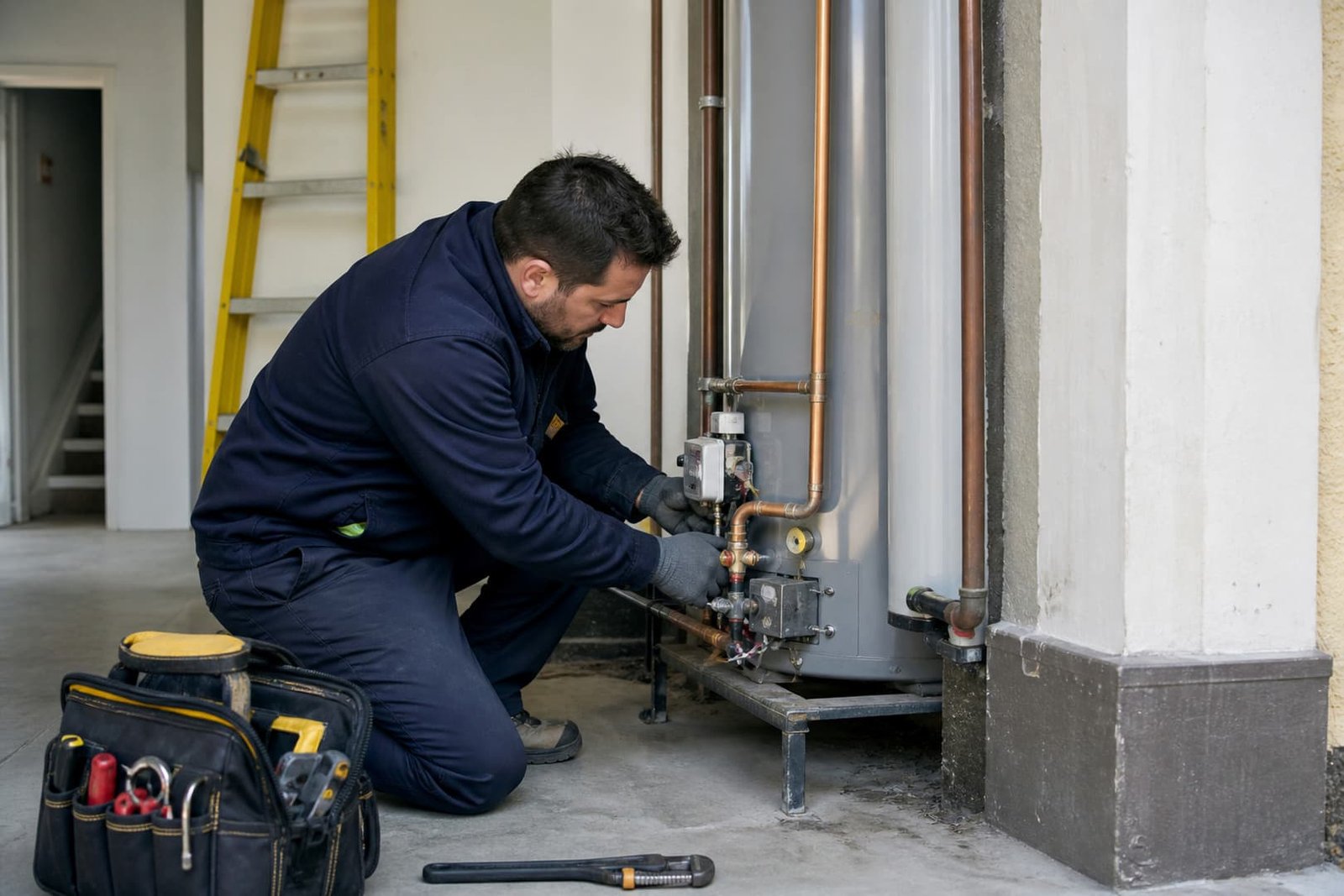
Different water-heater emergencies require different first decisions
Loss of hot water is inconvenient. Active leakage, uncontrolled temperature, combustion concerns or water near electrical parts can make the same appliance unsafe to keep operating.
| What you observe | Safer immediate response | What the technician needs to determine |
|---|---|---|
| Water leaking from the tank body or base | Keep clear of hot water; isolate the unit only if controls are safely accessible | Whether the tank has failed and how to restore or replace service |
| Leak at a visible valve or connection | Avoid tightening hot or corroded parts; contain drips only from a safe distance | Whether the connection is repairable and the tank remains sound |
| Gas odor, soot or abnormal flame behavior | Leave the area and follow emergency utility guidance; do not relight the appliance | Gas, venting and combustion condition before any return to service |
| Breaker trips or water reaches electrical components | Do not reset repeatedly or touch wet equipment | Electrical fault, leak source and whether the unit can be isolated safely |
| No hot water without visible hazard | Note error codes or control behavior without repeated resets | Power or gas supply, controls, heating components and repair value |
If you are unsure whether the condition is safe, stop using the appliance and keep the area clear. Phone triage can help identify what information to provide, but it cannot replace an on-site safety assessment.
Respond according to water, heat, gas and electrical conditions
| Condition | First action |
|---|---|
| Active tank or connection leak | Use an accessible water shutoff only if safe; keep clear of hot water and unstable equipment. |
| Gas odor or combustion concern | Leave the area and follow gas utility or emergency instructions before requesting repair. |
| Water near electric controls | Do not touch the unit, disconnects or wet surfaces. Keep the area clear. |
| Repeated reset or lockout | Stop repeated resets. Record the code or indicator and leave diagnosis to the visit. |
| No hot water but no hazard | Share unit type, age, symptoms and whether other gas or electrical equipment works. |
| Multifamily or commercial outage | Identify affected units, central equipment, building contact and access restrictions. |
Details that identify the heater and the immediate risk
- Tank, tankless, heat-pump, gas or electric type
- Model/serial photo if safely accessible
- Leak location and whether it continues
- Error code, indicator or sound
- What controls were used
- Property and utility-room access
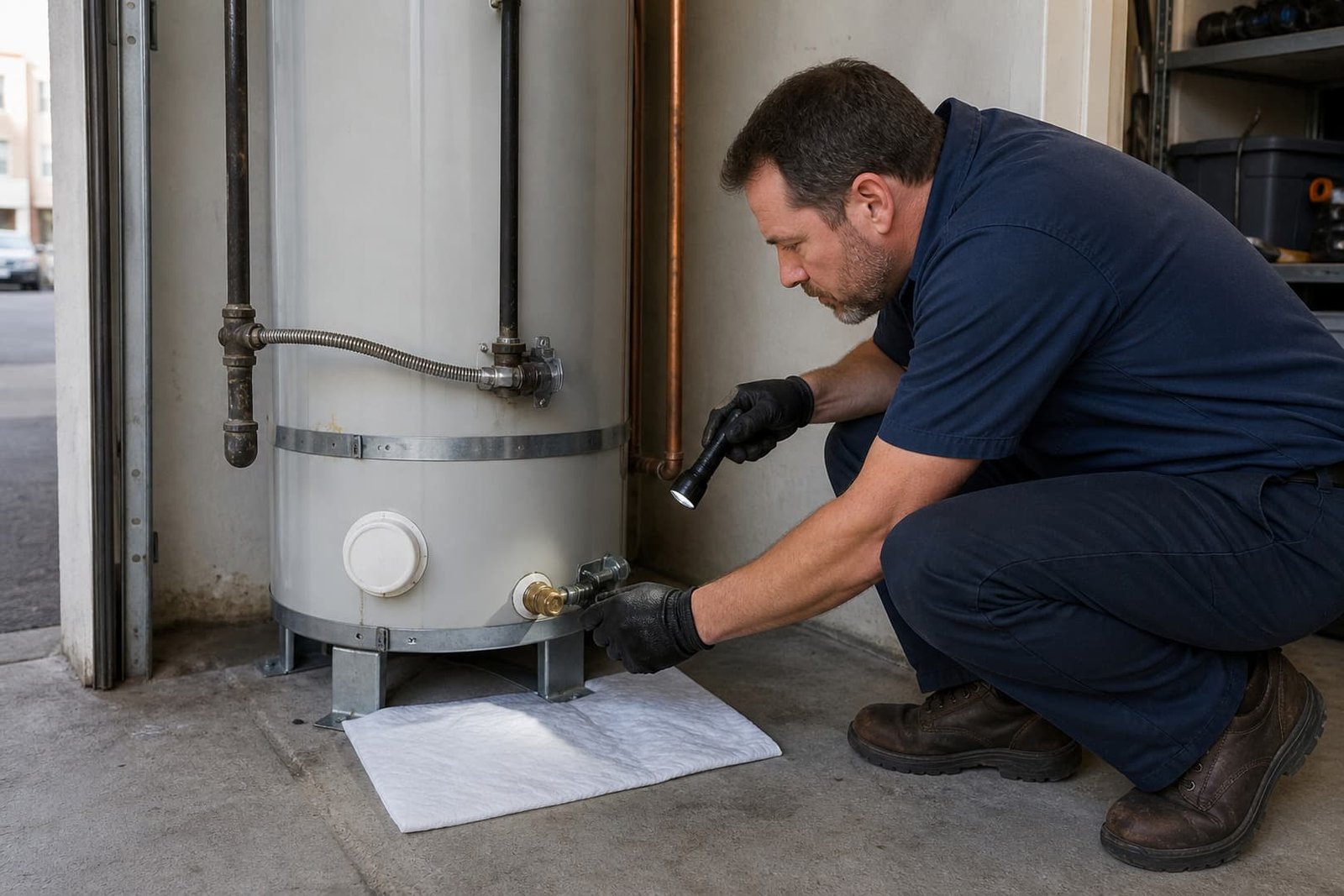
Restore operation only when the unit can be tested safely
The fastest outcome is not always to make the burner or element turn on. A damaged tank, compromised vent or wet electrical compartment may need isolation and replacement planning instead.
Repair and return to service
The tank or heat exchanger is intact, the failure is serviceable and the complete operating cycle can be observed safely.
- Accessible valve or connection repair
- Serviceable control, ignition or heating component
- Clear venting and combustion condition after repair
- Dry electrical area and stable power supply
Make safe and plan replacement
The pressure vessel has failed, safe operation cannot be confirmed or the repair would leave an unreliable system.
- Tank body or seam is leaking
- Serious corrosion affects the vessel or connections
- Required safety or venting correction exceeds an emergency repair
- Parts, access or system condition prevent reliable testing
Make the unit safe, diagnose the fault and choose the recovery path
Triage immediate safety and isolation
Inspect water, energy, venting and controls
Diagnose the failure and unit condition
Compare safe repair with replacement when relevant
Restore and test, or leave safely isolated with a plan
Photos and details that make water-heater triage more useful
Only collect information you can reach without entering water, touching hot piping or opening appliance panels.
- A wide photo showing the whole unit, surrounding floor and nearby shutoffs.
- A close photo of the rating label when it is readable from a safe position.
- The exact place water first appears and whether it continues with the unit off.
- Any displayed error code, unusual sound, odor or breaker behavior.
- Whether the unit serves one residence, several units or a commercial operation.
- Access restrictions, parking, building contact and the earliest safe service window.
Do not remove covers, relight a gas unit or keep resetting a breaker for the photo. The service call starts with the condition as it is.
Emergency Water Heater Repair in San Francisco FAQ
Is no hot water always an emergency?
Not always, but it can be urgent for essential household or business needs. Leakage, combustion concerns, steam and electrical exposure raise the safety priority.
Can you repair the heater the same visit?
Common serviceable faults may be repairable when compatible parts and safe conditions allow. Tank failure, special-order parts or installation deficiencies may require follow-up.
Should I keep resetting the unit?
No. Repeated resets can obscure the failure and may be unsafe. Record the code or symptom and stop operating a unit that shows a hazardous condition.
Will you replace the unit during an emergency call?
We can explain the replacement path when repair is not viable. Equipment, permitting, venting, power, gas and access requirements determine timing.
Describe the leak, code, odor or loss of hot water
Include the address, property type, affected fixture or equipment, when the issue began, whether water or sewage is active, and any safe-to-take photos. You do not need to diagnose it first.