
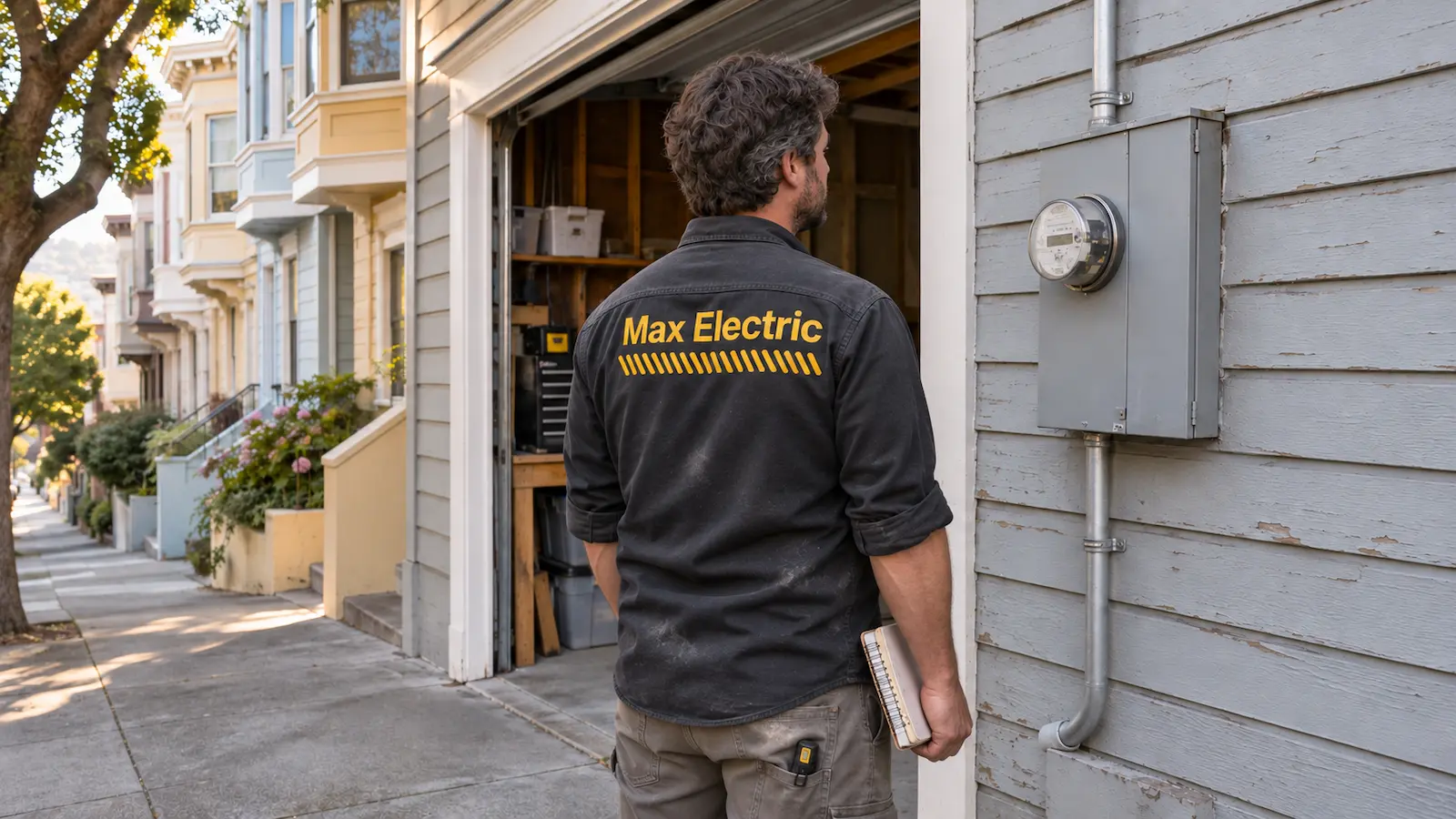
San Francisco Bay Area electricians
About Max Electric
We’ve been working in Bay Area homes since 2017. Some calls start with one outlet that’s gone dead. Others come from an owner who needs to rewire an entire apartment building while people are living there.
Licensed and insured CA contractor license #1148391
Who you’ll work with
Seven technicians and five helpers make up our field crew. Four managers coordinate the work, and four people in the office handle calls and scheduling. We work directly with homeowners, property managers, real estate agents and general contractors.
It helps to know who will actually be at the property. On a repair call, that’s often the person who first noticed the problem. On a remodel, it may be the contractor who knows when the walls will be open. We ask for that contact early so an electrician can get into the right room and hear what happened firsthand.
Our electricians go through background checks and take part in ongoing training. If you want to know what we found in your home, ask us to show you. It’s much easier to discuss a repair when you can see the equipment we’re talking about.
Meet our electricians


The electrical work we do
If you know what you want to install, we can work from the equipment and the space you have. If something has stopped working, a description of the problem is enough to get started.
Troubleshooting and repairs
A breaker that trips when you use the microwave gives us a different starting point from a row of outlets that all went dead overnight. Tell us what was running and which rooms lost power. We trace the fault and explain the repair. We also correct electrical issues identified in home inspections and take urgent repair calls.
Knob-and-tube and whole-house rewiring
Some older houses have new wiring in the kitchen and original knob-and-tube circuits upstairs. Before quoting a rewire, we look at which circuits are still in use and how we can reach them. If an insurer has asked about the wiring, bring the letter so we can address the specific questions in the report.
Panels, meters and building service
We replace main panels, subpanels and older Federal Pacific equipment. An owner who wants more power for a remodel may also need a service upgrade. In an apartment building we look at the individual units, the meter bank and shared loads such as laundry or hallway lighting before defining the scope.
EV charging and appliance circuits
Where you park matters. A charger on a driveway wall needs to reach the car without leaving a cable across the path to the front door. We plan Tesla and other home charging installations around the parking space, the route back to the panel and the capacity available. We also run dedicated circuits for new electric appliances.
Lighting, switches and controls
We install indoor and landscape lighting, ceiling fans, dimmers and smart controls. Some of the most useful changes are small, like giving a staircase a switch at both ends or moving a fixture so it lights the dining table. We also handle outlets, smoke detectors, security systems and low-voltage wiring.
Backup power for the home
Some homeowners want to keep the refrigerator, Wi-Fi and a few lights running in an outage. Others need backup for heating or more of the house. We go through those loads with you before sizing a generator or home battery, and we check how it will work with any solar panels already in place.
Planning work around the people who live there
In a house with finished plaster or a building with tenants, access can shape the job as much as the electrical equipment does. These are the conversations we have before work starts.
Discuss your projectWhat will need to be opened?
For a rewire, we look for routes through an attic, basement or existing opening. We walk through the rooms with you, discuss where access is needed and identify the surfaces and furniture that need protection.
Who needs to know about an outage?
A main panel can serve more than the room where it sits. In an occupied building, we review which units and common areas share equipment so the property manager can give residents notice.
Who handles permits and inspections?
When the scope calls for a permit, we coordinate the electrical permit and inspections. If you already have an inspection report, share it with us. We can go through the items together and identify which ones need electrical work.
What should I send before the first visit?
Tell us which rooms or units are affected, when the problem started and who can let us in. If you already have an inspection report or a list from your property manager, mention it when you request the visit.
Photos from our jobs
Some of our work is easy to see when it’s finished. Some disappears behind plaster. These photographs follow eight jobs and groups of installations, from a protected room in an Alameda house to the bank of meters that serves an apartment building.
Alameda
A 1920s house with knob-and-tube wiring
This 1920s house in Alameda needed a full rewire. We covered the finished floors and screened off the work area before making openings in the walls and ceilings. In the last photograph, you can see the new yellow cable running between the studs. It’s a part of the job that disappears once the wall is closed.


Whole-house rewiring
Getting new cable through old plaster
The bed and bathtub stayed in place during this rewire. We covered them and opened the wall where we needed access to the framing. In the close-up, you can see new cable passing behind the plaster through a circular opening. The wider shots show how much of the finished room remained in place around the work.


San Francisco
A 400-amp service for a home
For this house we upgraded the main electrical service to 400 amps. The meter and service equipment occupy one side of the installation. Outside, metal conduit follows the wall to the enclosure. Taken together, the two views show how the service enters the house and where the owner can find the main equipment.


San Francisco
Replacing a Federal Pacific panel
In the first photo, the old panel is still recessed in the wall. The second shows the replacement breakers and the circuit directory inside the new door. That directory matters long after we leave. It gives the next person working in the house a way to identify the circuit that serves a room.


Multi-unit building
New panels beneath a shared meter bank
Here, several apartments had their own panels beneath one row of meters. We replaced the older Federal Pacific equipment along the meter wall. The first photograph shows the original arrangement. The other two show the replacement enclosures straight on and from the passageway, where the length of the installation is easier to see.


Home charging
EV chargers in garages and driveways
These jobs range from a garage installation to a charger mounted outdoors beside the meter. A wall-mounted holder gives the driver a place to hang the cable between charges. On the exterior walls, you can follow the short conduit runs between the charger and its supply. Each layout reflects where the car actually parks.


San Francisco
Upgrading power for an apartment building
Part of this service upgrade took place in the electrical room. We ran conduit along the ceiling and installed the service equipment on the meter wall. Another part took place outside with the utility crew. For the property manager arranging an outage, both locations matter. The utility needs access from the street, and our electricians need a clear path to the equipment serving the apartments.


Residential lighting
Light where people cook, walk and sit
In the kitchen, concealed lighting picks out the edge of the island. On the stairs, a continuous line of light follows the wall down to the landing. The two dining rooms called for different fixtures. One has a slim pendant centered on the table, while the other pairs a hanging fixture with wall lights around the room.


Gladys Street, San Francisco
Five apartments, six meters and a 400-amp service
At this five-unit building, we replaced the knob-and-tube wiring and upgraded the electrical service from 60 to 400 amps. Five meters serve the apartments. A sixth measures power for the common areas.
The full project took about six months. We rewired the apartments in stages so residents could move into a finished unit while work continued elsewhere. We also built a new electrical room and coordinated the overhead service work with PG&E.
Where we work
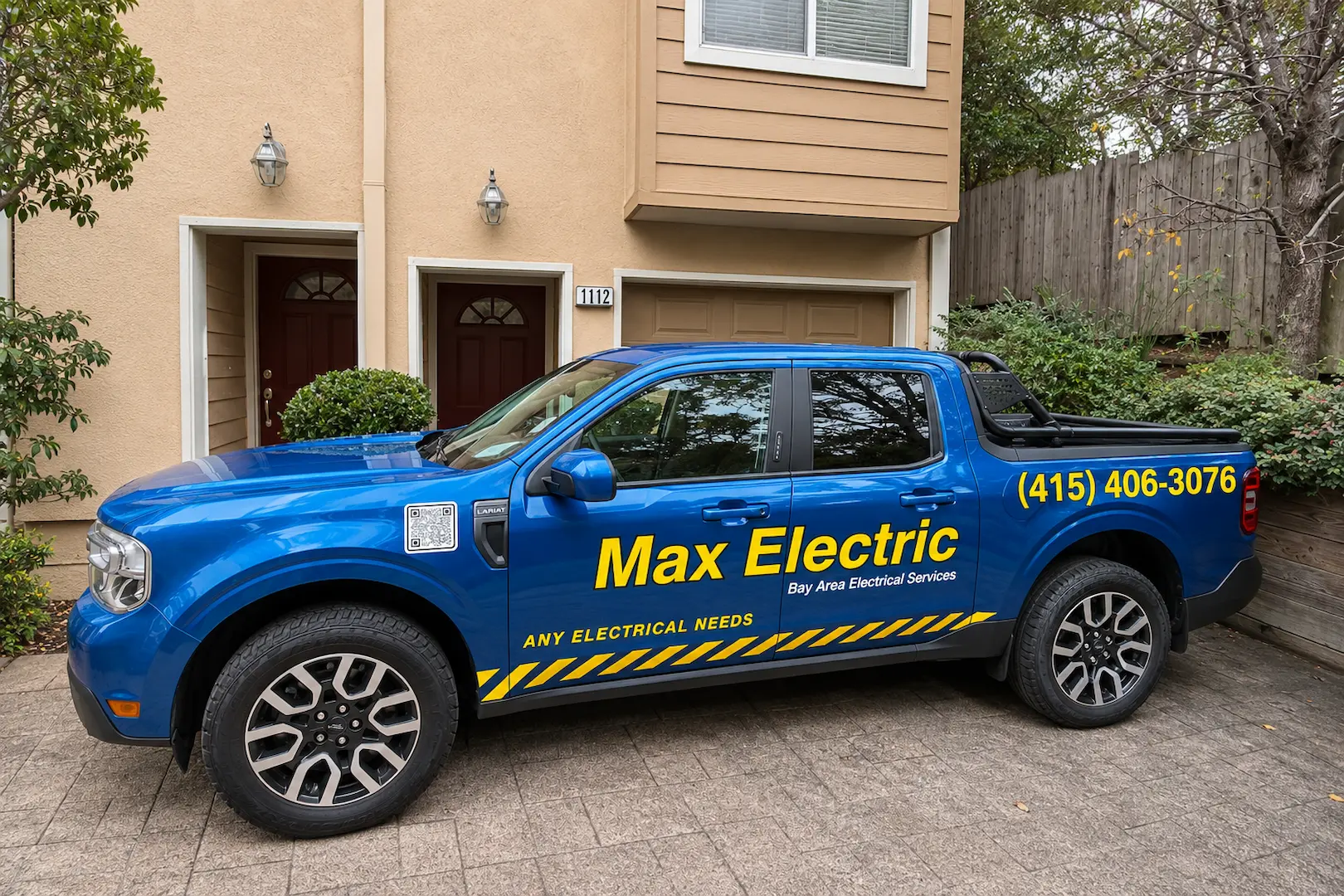
We take calls across San Francisco, the Peninsula, Marin County and the East Bay. Give us the address when you call so we can check availability for your property.
- San Francisco and the Peninsula
- San Francisco, Daly City, South San Francisco, San Mateo and nearby communities.
- Marin County
- Sausalito, Mill Valley, San Rafael and the towns in between.
- East Bay
- Oakland, Berkeley, Alameda and surrounding neighborhoods.
Hear from our customers
Hear about a San Francisco service call and a project that paired a panel upgrade with an EV charger. You can also read written reviews from people who hired our team.
Request a free estimate
Tell us where the job is and what you’ve noticed or want to change. For an installation, the make and model of the equipment are helpful. For a building with tenants, let us know how many units are involved and who can arrange access.
- San Francisco
- (415) 406-3076
- Sunnyvale
- (415) 406-3234
- info@maxelectric.us
Our locations
San Francisco, CA 94108San Rafael1112 Mission Ave
San Rafael, CA 94901Sunnyvale777 S Mathilda Ave, Ste 284
Sunnyvale, CA 94087Brisbane304 Industrial Way
Brisbane, CA 94005