
Emergency Plumber in San Francisco
When water or sewage is moving, the first goal is containment and a safe diagnosis. Tell us what is happening now, what you have already shut off and whether other units or common areas are affected.
What matters before tools come out
An emergency call has two tracks: keep people away from the immediate hazard, then isolate the smallest part of the system that will stop the damage. The order may change in a multifamily building or when water is near electrical equipment.
Describe what is still moving
Is clean water spraying, is sewage rising, or has the flow stopped after a valve was closed? This tells us whether containment is still active.
Use only a safe, known control
A fixture stop or labeled unit shutoff may help. Do not force a corroded valve, enter standing water or operate equipment you cannot reach safely.
Protect access and people
Keep occupants away from contaminated water, a swollen ceiling and wet electrical equipment. Notify the building contact if a shared line or shutoff may be involved.
Confirm the failure before expanding work
Containment can begin quickly, but the permanent repair still depends on the failed pipe, connection, fixture or drain section.
First, reduce immediate damage without taking a risk
Keep people away from sewage, sagging ceilings, electrical equipment exposed to water and slippery areas. If an accessible fixture or unit shutoff can be operated safely, close it. Do not enter a flooded area to reach a valve or electrical panel.
If the problem involves a multifamily building, notify building management or the responsible contact because the correct shutoff may serve more than one unit. Do not use drain chemicals in an active backup; they add a chemical hazard for occupants and the plumber.
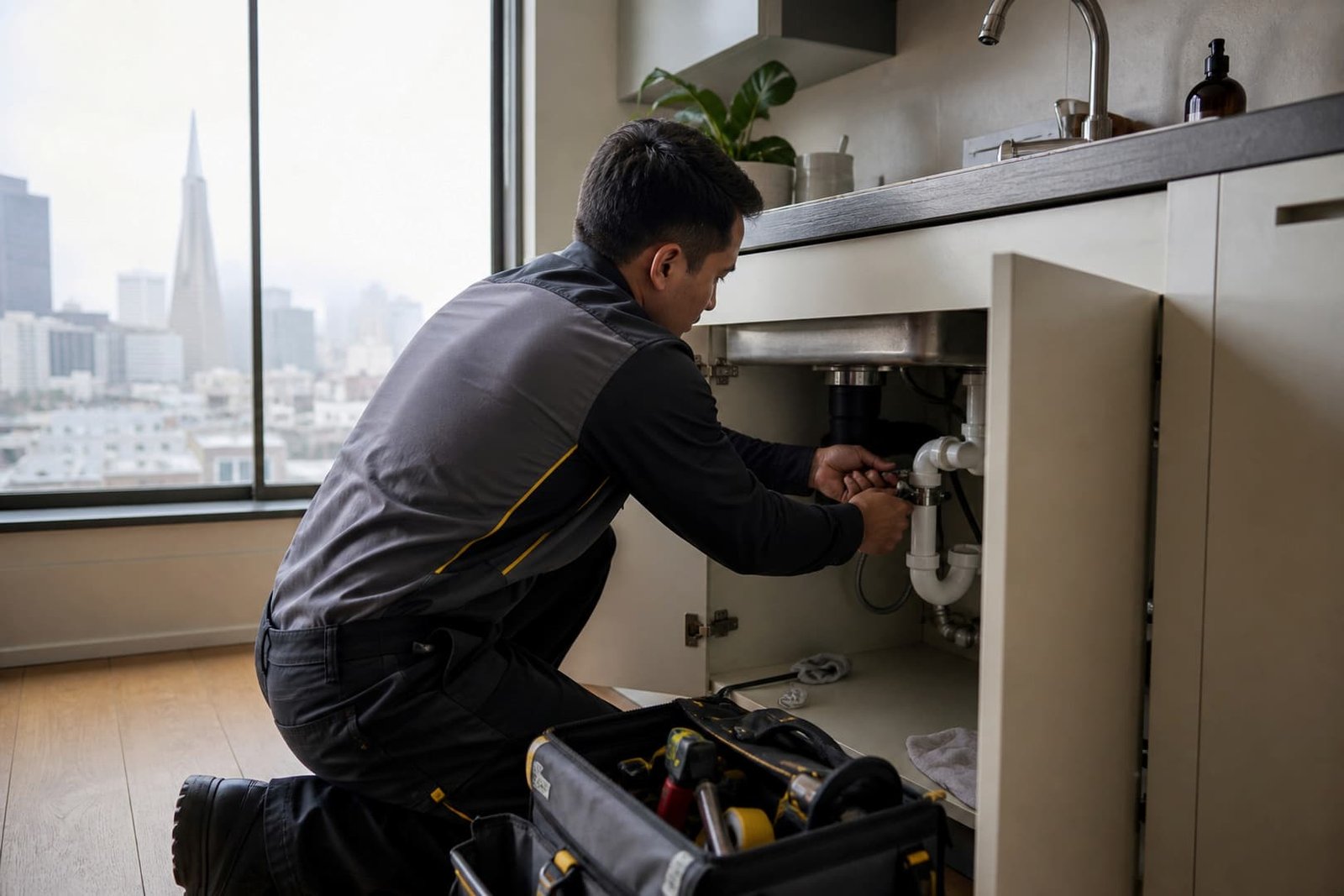
Choose the safest action for the condition in front of you
| Condition | First action |
|---|---|
| Active supply leak | Close the nearest safe, known shutoff. If water continues, the building or service shutoff may be involved. |
| Sewage backup | Stop using all fixtures that may feed the affected line. Keep people and pets away from contaminated water. |
| Overflowing toilet | Stop the fixture supply if accessible and stop flushing. A downstream blockage may affect more than the toilet. |
| Water near electricity | Do not touch wet electrical equipment or stand in water to reach controls. Keep the area clear and report the condition. |
| Water-heater leak or unsafe operation | Move away from hot water, steam, combustion odor or a visibly unstable tank. Use only controls you can reach safely. |
| Ceiling swelling or collapse risk | Keep everyone out from beneath the area. Water source control comes before opening the ceiling. |
Details that change an emergency response
- Property address, unit and best access route
- Whether water or sewage is still moving
- Which fixtures, rooms or units are affected
- What shutoff was used and whether flow stopped
- Photos or short video taken from a safe position
- Building contact, gate, parking or after-hours access
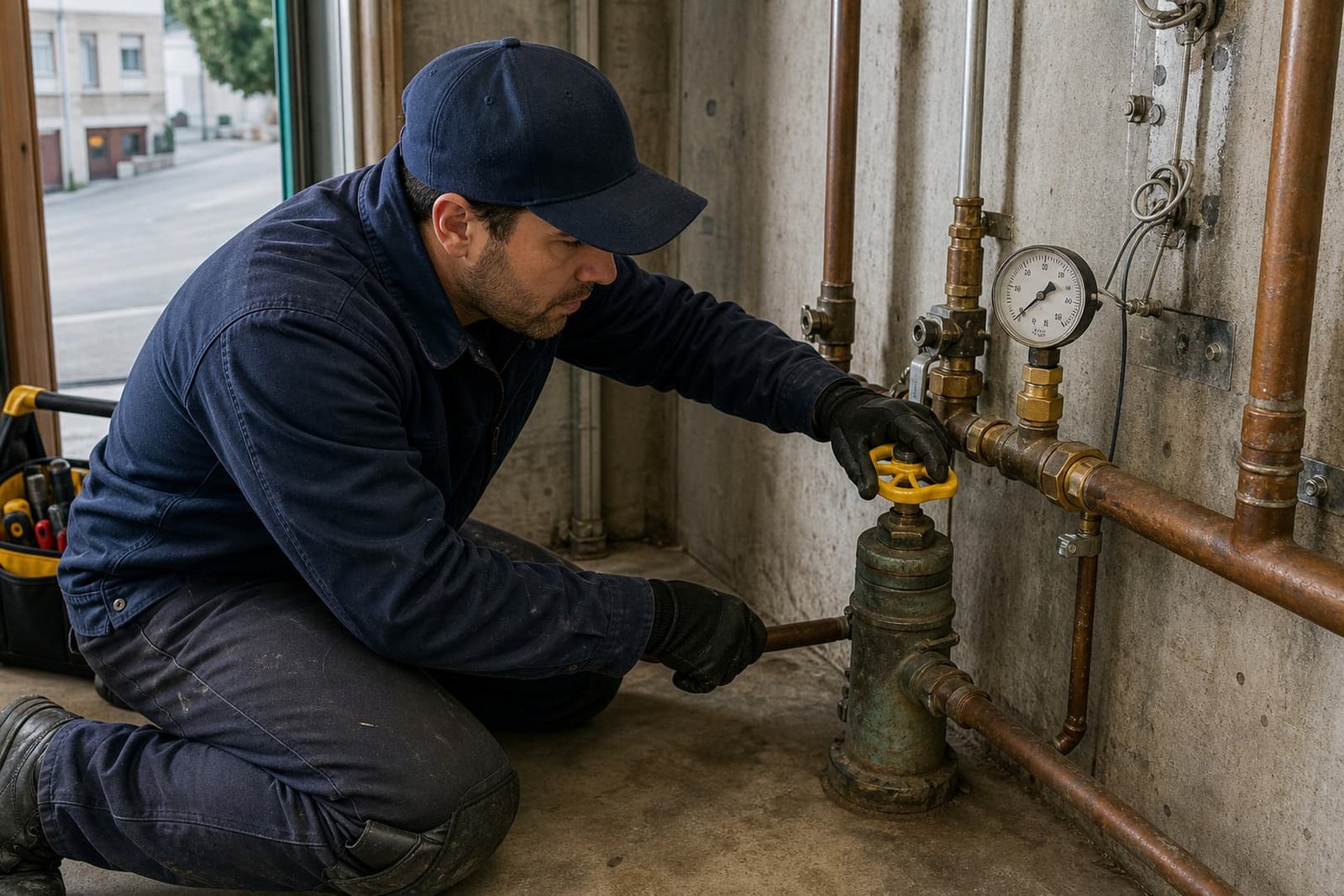
Stopping the damage is not always the same as completing the repair
Some emergencies end with a permanent repair in one visit. Others need a safe temporary condition because the failed section is concealed, parts are unavailable, the line serves several units or a larger approved scope is required.
Containment or stabilization
The immediate objective is to stop flow, prevent unsafe operation and preserve access for the next step.
- Isolate a fixture, branch or appliance
- Cap or bypass a failed accessible connection where appropriate
- Clear enough blockage to stop an active overflow
- Document concealed or shared-system follow-up
Permanent corrective work
The failed component is accessible, the repair boundary is known and the system can be tested before service returns.
- Replace the damaged pipe section or valve
- Restore a serviceable drain connection
- Repair an appropriate water-heater component
- Pressure, flow or drainage test the completed work
From active damage to a tested or safely isolated system
Phone triage and access planning
Contain or isolate the active condition
Identify the failed component or blocked section
Present the immediate repair and any temporary-safe option
Test, document and explain follow-up work
Emergencies get complicated when one shutoff serves more than one home
Apartment, condominium and TIC buildings often require decisions beyond the room where water appears.
Who can authorize a shared shutdown?
Have the manager, HOA contact or owner representative available. A plumber should not guess whether a valve can interrupt neighboring units or building equipment.
Where is water traveling?
The visible stain may sit one floor below and several feet away from the source. Note every affected unit and the timing of fixture use upstairs.
How will occupants regain service?
If the final repair cannot happen immediately, the plan should state which fixtures remain isolated, who needs notice and what follow-up access is required.
What belongs to plumbing versus restoration?
Pipe repair, water extraction, drying, finish repair and contents handling are different scopes. Clarifying the boundary early prevents a gap after the leak stops.
Emergency Plumbing Services in San Francisco FAQ
What counts as a plumbing emergency?
Active uncontrolled water, sewage entering occupied space, loss of an essential water service, an unsafe water-heater condition or a failure affecting several units usually deserves urgent attention.
Should I open a wall to find the leak?
No. Control water if safe, protect the area and leave concealed-source diagnosis to the service visit. Unplanned opening can damage utilities and finishes.
Can you repair everything during the emergency visit?
The immediate goal is to make the condition safe and restore service where practical. Hidden damage, unavailable parts, permits or extensive piping work may require a planned follow-up.
What if the leak stops after I close a valve?
Keep the valve closed and still arrange diagnosis. A stopped leak usually means the source has been isolated, not repaired.
Tell us what is still happening right now
Include the address, property type, affected fixture or equipment, when the issue began, whether water or sewage is active, and any safe-to-take photos. You do not need to diagnose it first.