
Commercial Plumbing Services in San Francisco
Commercial plumbing is an operations problem as much as a pipe problem. We coordinate access, water shutdowns, occupied units, business hours, approval limits and closeout information around the repair itself.
Keep the property operating while the cause is corrected
A restaurant drain, an office restroom, an apartment riser and a retail water heater carry different consequences when they fail. We identify who can authorize work, what must remain online, where shutoffs are located and how occupants or tenants will be notified.
For recurring issues, service history matters. A useful maintenance plan targets real failure patterns—grease, scale, high-use fixtures, aging valves, shared drains or equipment—not a generic checklist that ignores the building.
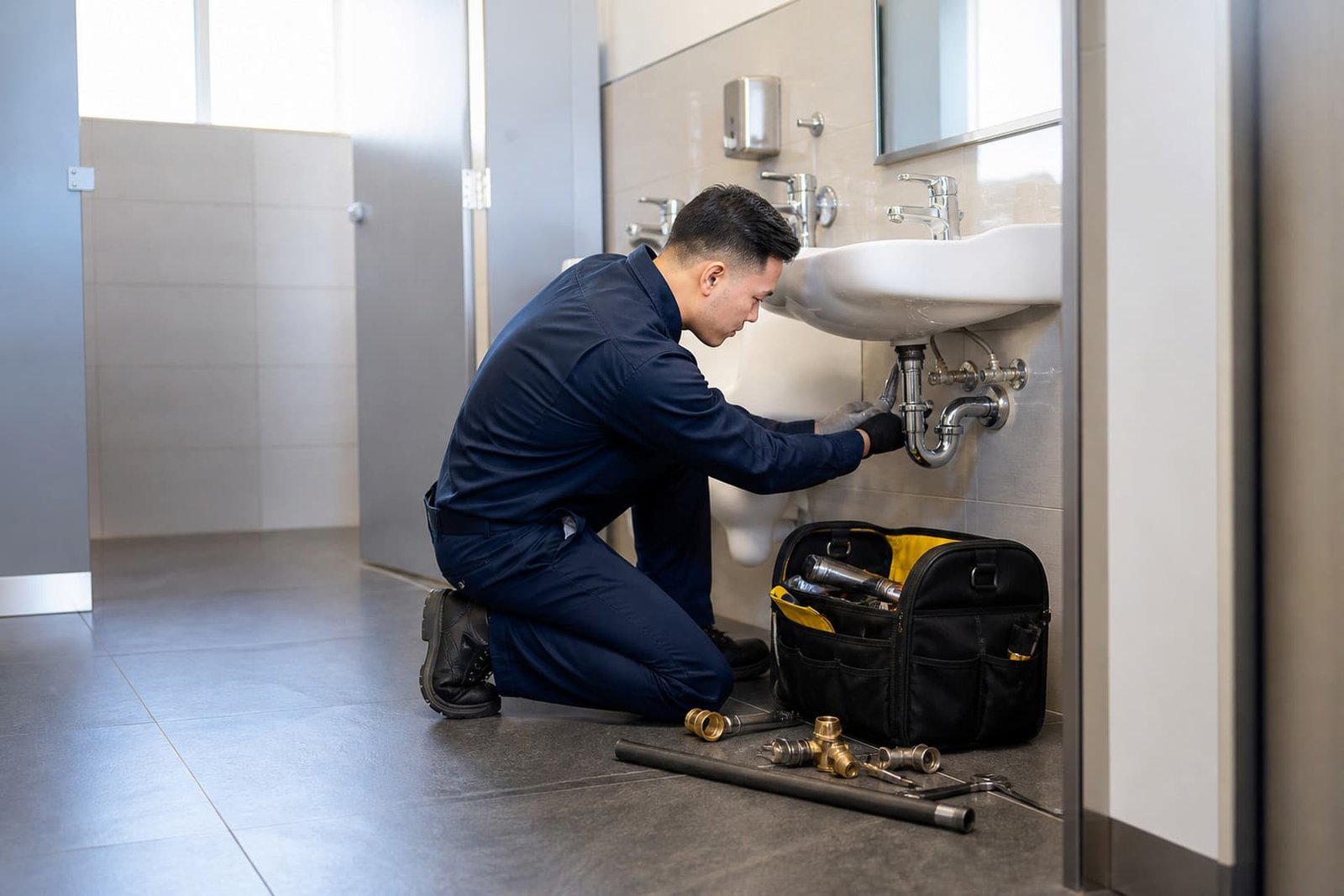
Commercial plumbing has to account for the people using the building right now
A blocked restroom in a small office may be isolated while the second restroom stays open. The same blockage in a restaurant during service, a medical tenant suite or a multifamily common line has a different operational cost. We ask who is affected, what can be taken out of service and when access is available before assigning a routine or urgent path.
The repair itself may be familiar—a valve, branch drain, water heater or supply line—but the coordination is not. Keys, loading access, elevator rules, tenant notice, water shutdowns and finish protection can consume more time than the fitting. A useful commercial scope treats these items as part of execution instead of discovering them after the crew arrives.
Service planned for the property you operate
Restaurants & food service
Kitchen and floor drains, grease-related restrictions, fixtures, hot water and planned after-hours work.
Offices & retail
Restrooms, breakrooms, tenant improvements, leak response and minimal customer disruption.
Apartments, HOAs & TICs
Shared shutoffs, risers, stacks, unit access, tenant notices and documentation for management.
Hospitality & service businesses
High-use fixtures, dependable hot water and response planned around guests or appointments.
Light commercial & mixed use
Drain, water, equipment connections and coordinated work in occupied buildings.
Property management portfolios
Consistent intake, site contacts, approval limits, photos, invoices and recommended follow-up.
A workflow property managers can use
| Stage | What gets established |
|---|---|
| Before dispatch | Property address, site contact, affected areas, access hours, parking/loading, active hazard and authorization route. |
| Before shutdown | Confirm valve, affected tenants or departments, notice window, restoration plan and responsible contact. |
| During service | Protect occupied areas, maintain communication and separate immediate correction from optional improvements. |
| At closeout | Record work performed, testing, photos when useful, remaining observations and any planned follow-up. |
Repairs, diagnostics and planned service
Urgent repairs
Active leaks, backups and loss of essential plumbing service.
View serviceCommercial drains
Fixture, branch and main-line blockage diagnosis and clearing.
View serviceHydro jetting
Planned or corrective line cleaning when pipe and access are suitable.
View serviceLeak detection
Source isolation across units, ceilings, walls and shared systems.
View servicePipe repair & repiping
Section repairs, risers, branches and phased replacement planning.
View serviceWater heaters
Diagnosis, repair and replacement planning for installed systems.
View serviceBackflow testing
Assembly testing, reporting and corrective options.
View serviceSewer diagnostics & repair
Camera findings, location and repair scope.
View serviceUrgency depends on impact, not on the name of the fixture
A dripping faucet and a failed shutoff can both be routine—or urgent—depending on what they serve and whether the condition can be isolated.
| Operating condition | Practical response | Information to have ready |
|---|---|---|
| Active water or sewage affecting occupied space | Contain, isolate and dispatch as an emergency | Affected suites, safe shutoff status, photos and after-hours access |
| One fixture is out but alternatives remain | Schedule a focused repair and protect the fixture from use | Fixture type, local valve condition and preferred access window |
| Several drains slow on the same route | Plan branch or main-line diagnosis before a full backup | Fixture map, service history and cleanout locations |
| Recurring leaks or failed valves across the property | Survey representative areas and build a phased correction list | Asset age, prior invoices, tenant constraints and capital plan |
| Planned closure or turnover | Bundle disruptive work into the available window | Shutdown duration, finish work, inspection needs and reopening deadline |
Priority can change as evidence changes. A scheduled drain call becomes urgent if sewage enters a tenant area; an active leak becomes manageable once a dependable branch isolation is confirmed.
The service history should become more useful after every visit
Property teams make better decisions when the invoice identifies the system and finding—not only the labor performed.
- Location
- Building, floor, suite, room and fixture or equipment identifier.
- Symptom
- What occupants reported, when it happened and which other fixtures were checked.
- Finding
- The failed component, blockage location or limitation that the technician actually observed.
- Action
- What was repaired, cleared, isolated or left for an approved return scope.
- Status
- What is operating now, what remains restricted and who needs follow-up.
- Pattern
- Whether the issue repeats at the same asset, route or material and should move into planned maintenance or capital work.
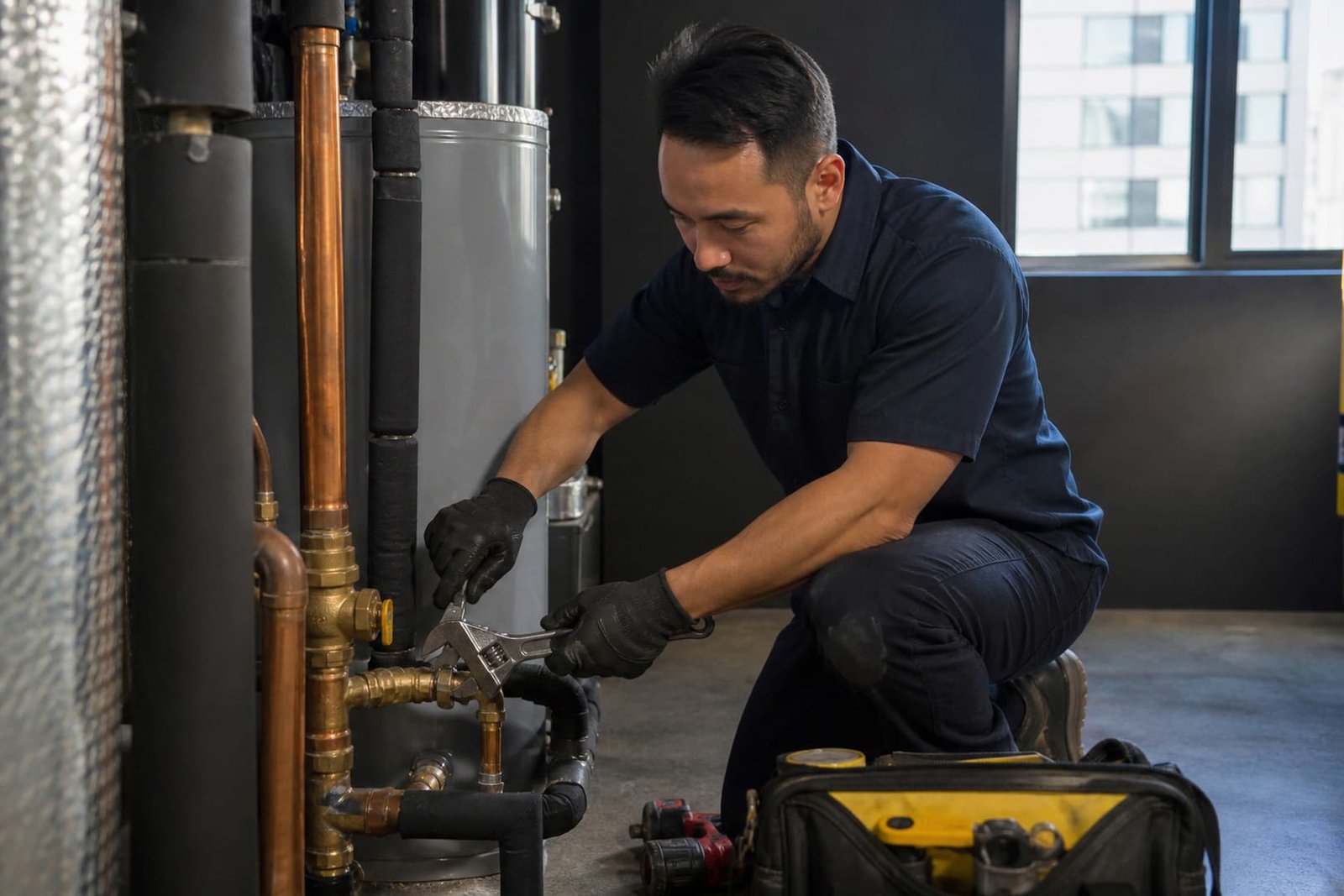
The service plan should fit the property’s operating day
The technician needs more than a service label. Property type, affected areas, shutoffs, prior work, active conditions and access shape the visit. Those details reduce avoidable return trips and keep the approved scope separate from optional future work.
Commercial Plumbing Services in San Francisco FAQ
Can you work with a not-to-exceed authorization?
Yes, when the limit and approval contact are documented before work. If diagnosis shows that the safe repair exceeds the limit, we pause for authorization.
Can work be scheduled around business hours?
Scheduling depends on scope, access and urgency. Planned shutdowns and disruptive work can be coordinated around the property’s operating needs.
Do you provide COI and service documentation?
Tell us the property’s insurance and documentation requirements during scheduling so they can be confirmed before dispatch.
Do you maintain apartment and HOA plumbing?
Yes. Shared systems, unit access, notices, building shutoffs and management communication are built into the work plan.
Can recurring drain service be scheduled?
Yes. The interval and method should be based on actual use, buildup, access, pipe condition and service history.
Send the affected area, operating impact and approval path
Include the address, property type, affected fixture or equipment, when the issue began, whether water or sewage is active, and any safe-to-take photos. You do not need to diagnose it first.