
Commercial Electrical Repair & Maintenance in San Francisco
Find the fault, restore the affected system, and leave a record the business can use. The record matters too. Max Electric troubleshoots commercial circuits, panels, lighting, controls, and equipment power in San Francisco. Maintenance is then built around the property’s actual failure history and operating schedule.
A symptom is not yet a diagnosis
A trip can come from a branch fault or overload. Damaged equipment is another possibility. A loose connection or bad breaker can look similar. Replacing the first visible part without testing can leave the business with the same outage and a second invoice.
First question: what changed? We record the affected area and when the fault occurs. We also ask what equipment was running and whether heat, odor, sound, water, or construction was involved. Reset attempts matter too. From there, the electrician defines a safe test boundary and works from the source toward the affected load.
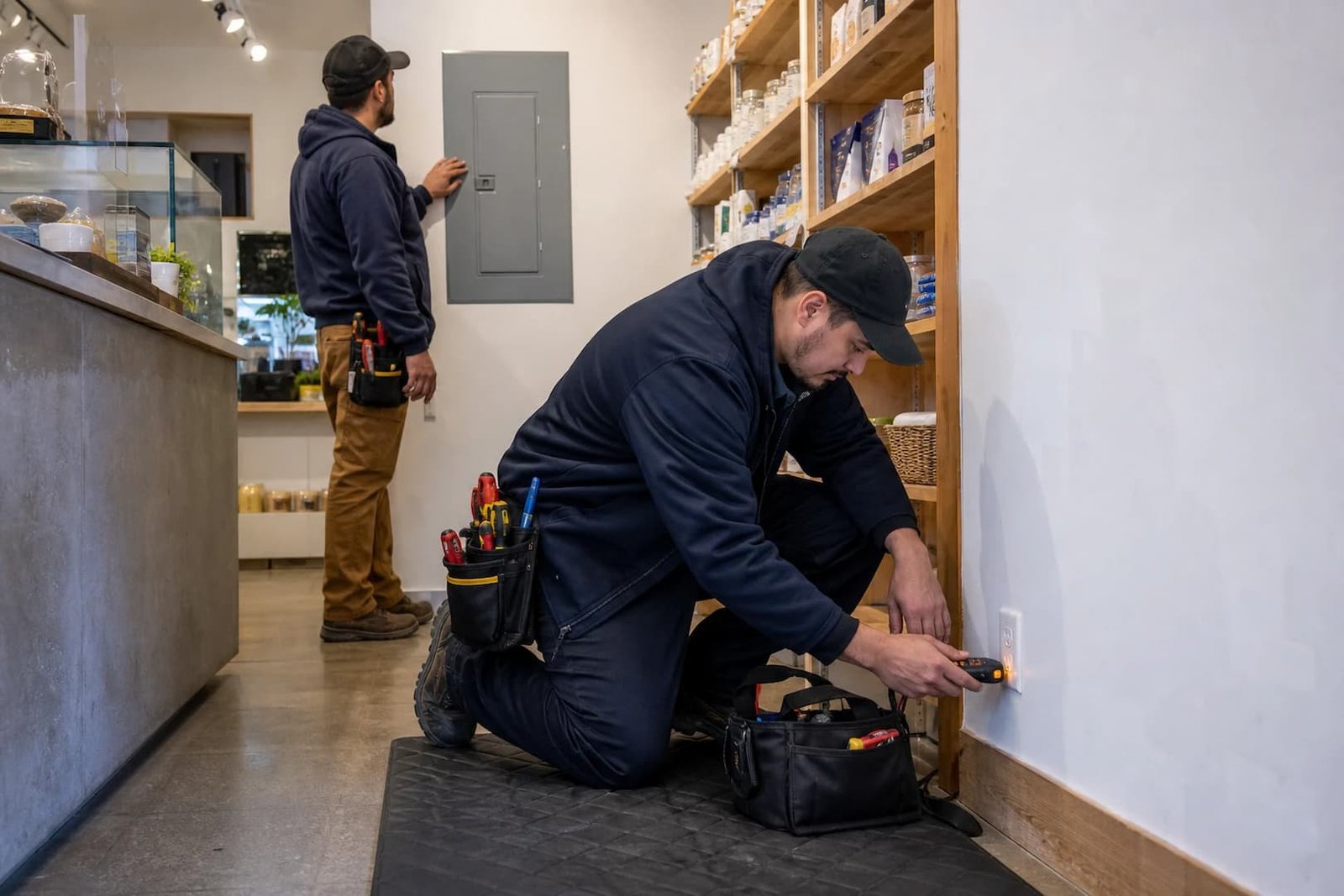
Problems we diagnose and correct
Parts come later. The repair is defined by the serving system and the business impact—not by a generic list of replacements.
Partial power loss
One room, counter, kitchen line, office area, sign, or equipment group loses power while the rest of the property remains in service.
Breaker trips & overloads
Trips tied to a specific load, time of day, simultaneous equipment use, moisture event, startup condition, or circuit fault.
Lighting and control failures
Flicker, dead zones, failed drivers, switching problems, timers, sensors, contactors, exterior lighting, and emergency-lighting concerns.
Receptacles and equipment power
Damaged devices, loose connections, GFCI issues, dedicated circuits, disconnects, and power problems at business equipment.
Panels and distribution
Heat, odor, noise, corrosion, poor labeling, damaged breakers, loose terminations, obsolete components, and feeder or subpanel faults.
Inspection and code corrections
Electrical findings from a tenant handoff, insurer, property inspection, remodel closeout, fire-safety review, or prior unpermitted work.
Planning a build-out rather than a repair?
New installations, tenant improvements, lighting redesign, panel-capacity projects, and broader commercial contracting are handled through Commercial Electrical Services in San Francisco. Repair work starts with a fault in an existing system. Maintenance starts with recurring conditions or the property’s service history.
What to record before the electrician arrives
| Observation | Useful detail | Do not do |
|---|---|---|
| What is affected? | Exact rooms, devices, lights, outlets, signs, or equipment—and what still works nearby. | Do not remove covers or reach into panels. |
| When did it start? | Time, weather, cleaning, water intrusion, construction, equipment change, utility event, or unusual load. | Do not conceal a recent change because it seems unrelated. |
| Can it be reproduced? | What turns on immediately before the trip, flicker, noise, smell, heat, or loss of power. | Do not repeatedly recreate a condition that appears unsafe. |
| What has been tried? | Breaker reset, unplugged equipment, vendor visit, temporary extension, replaced lamp, or prior electrician work. | Do not continue using a hot device, damaged cord, or improvised power arrangement. |
| What does downtime affect? | Customers, refrigeration, cooking, security, access, registers, servers, tenant spaces, or scheduled operations. | Do not promise an opening time before the failure and repair scope are known. |
A useful maintenance plan starts with the property’s equipment and failure history
Patterns matter. A restaurant with heavy cooking loads does not need the same checklist as a quiet professional office. A mixed-use building has its own pattern of tenant calls and shared equipment.
- Review service history, repeat faults, nuisance trips, and temporary repairs
- Verify panel and disconnect access, directories, clearances, damage, and environmental conditions
- Inspect selected distribution, receptacles, lighting, controls, and equipment connections within the agreed scope
- Use thermal or electrical testing when conditions, access, safety, and operating load make it useful
- Prioritize findings as immediate repair, scheduled correction, monitor, or capital planning
- Record locations, photos, test context, completed work, and follow-up responsibility
Maintenance cannot make every failure predictable.
It can reveal accessible damage, heat patterns, loose or deteriorated components, labeling gaps, recurring trouble spots, and conditions that deserve planned correction. Hidden defects, sudden equipment failures, utility events, water intrusion, and tenant alterations can still occur between visits.
Service planned around operating spaces
Restaurants & food service
Cooking, refrigeration, dishwashing, exhaust, lighting, counters, point-of-sale, and cleaning schedules create distinct loads and access windows.
Retail & customer-facing spaces
Lighting, signs, displays, registers, security, stock rooms, and safe public circulation shape work-zone and opening-hour decisions.
Offices & professional suites
Workstations, conference rooms, shared equipment, server closets, access systems, and tenant schedules influence shutdown planning.
Mixed-use and managed properties
House equipment, commercial tenants, residential areas, shared distribution, and property-management approvals can overlap.
Light industrial & workshops
Equipment starting loads, disconnects, receptacles, task lighting, ventilation, and operating procedures require equipment-specific review.
Common areas & exterior systems
Garages, corridors, stairs, storage, gates, parking, security lighting, signage, and exterior power need safe access and weather-aware planning.
From business impact to verified repair
Triage the request
Safety sets the boundary. We identify hazards, affected operations, property contacts, access, available records, and whether service can be scheduled safely.
Diagnose the circuit
The electrician first confirms the failure boundary and tests likely causes. The result shows whether the source is electrical or belongs to equipment maintained by another vendor.
Explain repair options
Where possible, the business receives the immediate correction, related condition, downtime, parts, permit, and follow-up implications.
Test and document
Completed work is tested in context, and the record identifies the location, observed cause, repair, limitations, and recommended next action.
Commercial electrical repair and maintenance FAQ
Can you troubleshoot without shutting down the entire business?
Often, diagnostics can begin with a limited area or circuit. Some tests and repairs still require safe isolation, and a feeder or service problem may affect a larger area. We define the likely shutdown boundary before planned work whenever the condition allows.
Do you repair restaurant and retail electrical problems?
Yes. We work on serving circuits, panels, receptacles, lighting, controls, disconnects, and other building electrical systems within the agreed scope. Appliance internals, refrigeration controls, kitchen equipment, signs, or proprietary systems may require the equipment vendor as well.
Can you provide service after business hours?
Scheduling depends on crew availability, property access, noise restrictions, permits, utility needs, and the work itself. Share the operating hours and required work window when requesting service so Max Electric can confirm what is feasible.
What is included in preventive electrical maintenance?
The scope can cover selected panels, disconnects, directories, visible conditions, lighting, receptacles, controls, recurring faults, and targeted testing. The property’s equipment and history determine the checklist and visit frequency.
Can you work with a property manager or facilities team?
Yes. Provide the site contact, authorization process, tenant or vendor coordination rules, required work-order format, access procedure, insurance documents, and billing requirements before the visit.
When does a repair become a larger upgrade?
When safe repair parts are unavailable, equipment is obsolete or damaged beyond a local correction, capacity is inadequate, faults repeat across the same distribution, or the proposed business load changes the system. Diagnosis should support that recommendation.
Restore power with a record of what failed
Tell us what is affected, when the issue started, and how it is disrupting the property. Clear operating details help us plan a safer diagnostic visit, bring the right test equipment, and account for access or shutdown restrictions.
- Business or property type and San Francisco address
- Affected equipment, circuits, rooms, or tenant areas
- Symptoms, timing, and effect on normal operations
- Panel photos, prior service notes, and access constraints