
Sump Pump Repair in San Francisco
A sump problem can come from the pump, float, power, basin, check valve, discharge or incoming water. We test the system in sequence before recommending repair or replacement.
The symptom tells us where to begin, not which part to buy
A pump that runs but moves little water has a different problem from one that never starts. Rapid cycling may point to check-valve backflow, float travel or an undersized basin. Continuous operation can reflect high inflow, a stuck control, a blocked route or a pump that cannot meet the actual lift.
We inspect accessible components, test operation and explain whether a focused correction restores a suitable system or whether age, damage or poor layout makes replacement the stronger option.
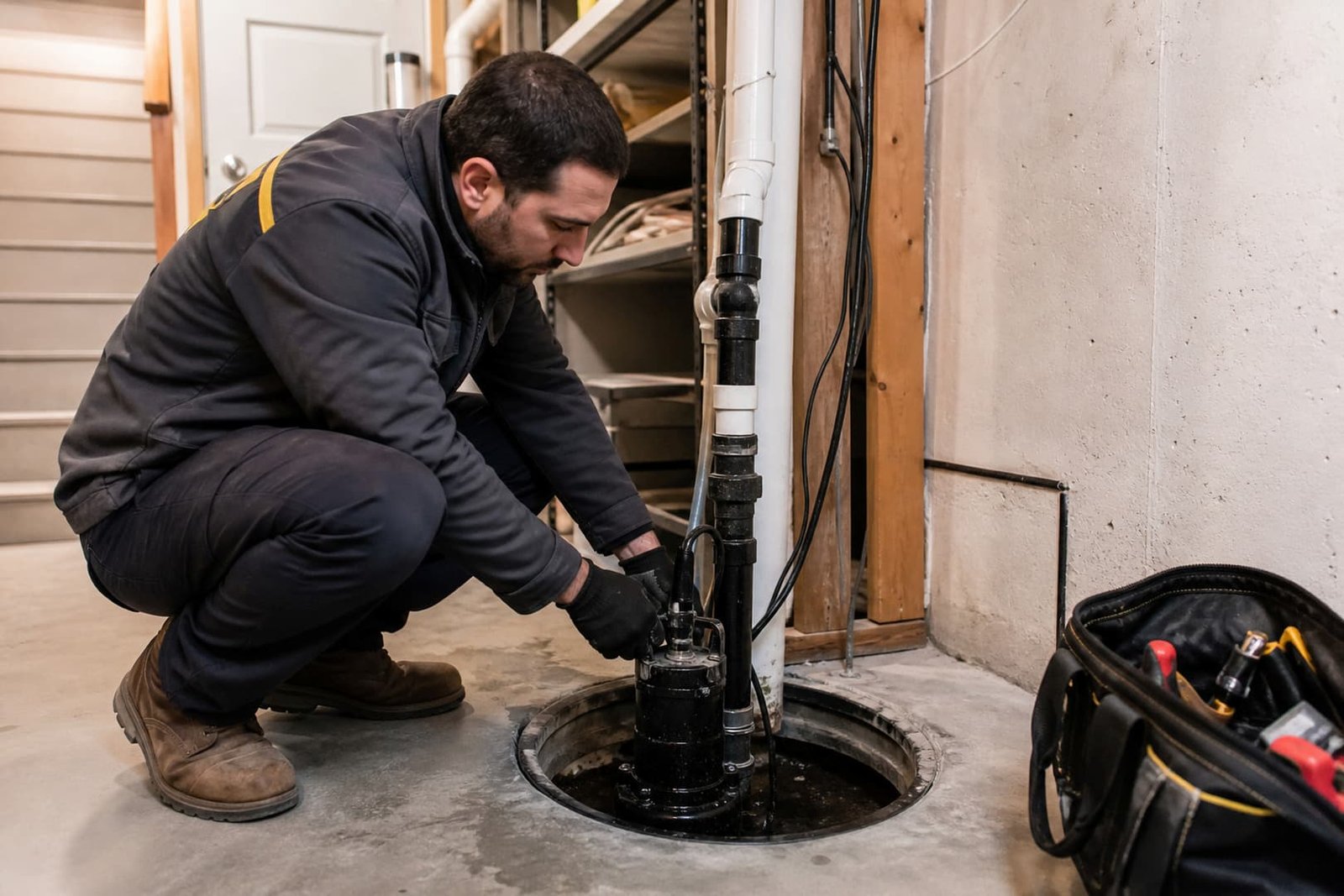
Sump pump diagnosis starts before the pump motor
A silent pump, a pump that runs constantly and a pump that starts too late are different failures. We reproduce the cycle from water entering the basin through discharge leaving the building.
Confirm the supply without defeating protection
Check the receptacle, cord, plug and available circuit condition. Repeatedly resetting a tripped device is not a repair.
Move the float through its real range
A float may bind against the basin, cable or discharge pipe even when it moves freely by hand outside the pit.
Listen and measure what the motor does
Humming, short cycling, unusual noise and no start point toward different mechanical or electrical checks.
Watch the check valve and discharge
A working motor cannot overcome a blocked outlet, a failed valve or water returning into the basin after every cycle.
Test with a controlled rise in water
The pump should start, lower the level, stop and remain off without an immediate refill from its own discharge.
Pump behavior that points toward the failed stage
Pump does not start
Check power, control, float movement, motor response and basin conditions.
Pump runs continuously
Evaluate float position, inflow, capacity, discharge restriction and check-valve operation.
Rapid on-off cycling
Look for backflow, limited basin volume, control travel or mismatched operating conditions.
Water returns after shutdown
Test the check valve and discharge arrangement.
Noise or vibration changed
Inspect mounting, debris, impeller condition, piping contact and mechanical wear.
Alarm activates
Confirm actual water level, primary pump operation, sensor condition and backup response.
Repair the component without ignoring the basin and route
| Path | When it fits |
|---|---|
| Repair a component | Reasonable when the rest of the system is serviceable and the failed part can be corrected reliably. |
| Replace the pump | Consider when the motor or housing has failed, repair value is poor or operating needs have changed. |
| Correct the layout | Needed when float clearance, basin, check valve or discharge—not the pump itself—causes repeat problems. |
| Plan a new system | Use the installation service when collection, basin or discharge must be redesigned. |
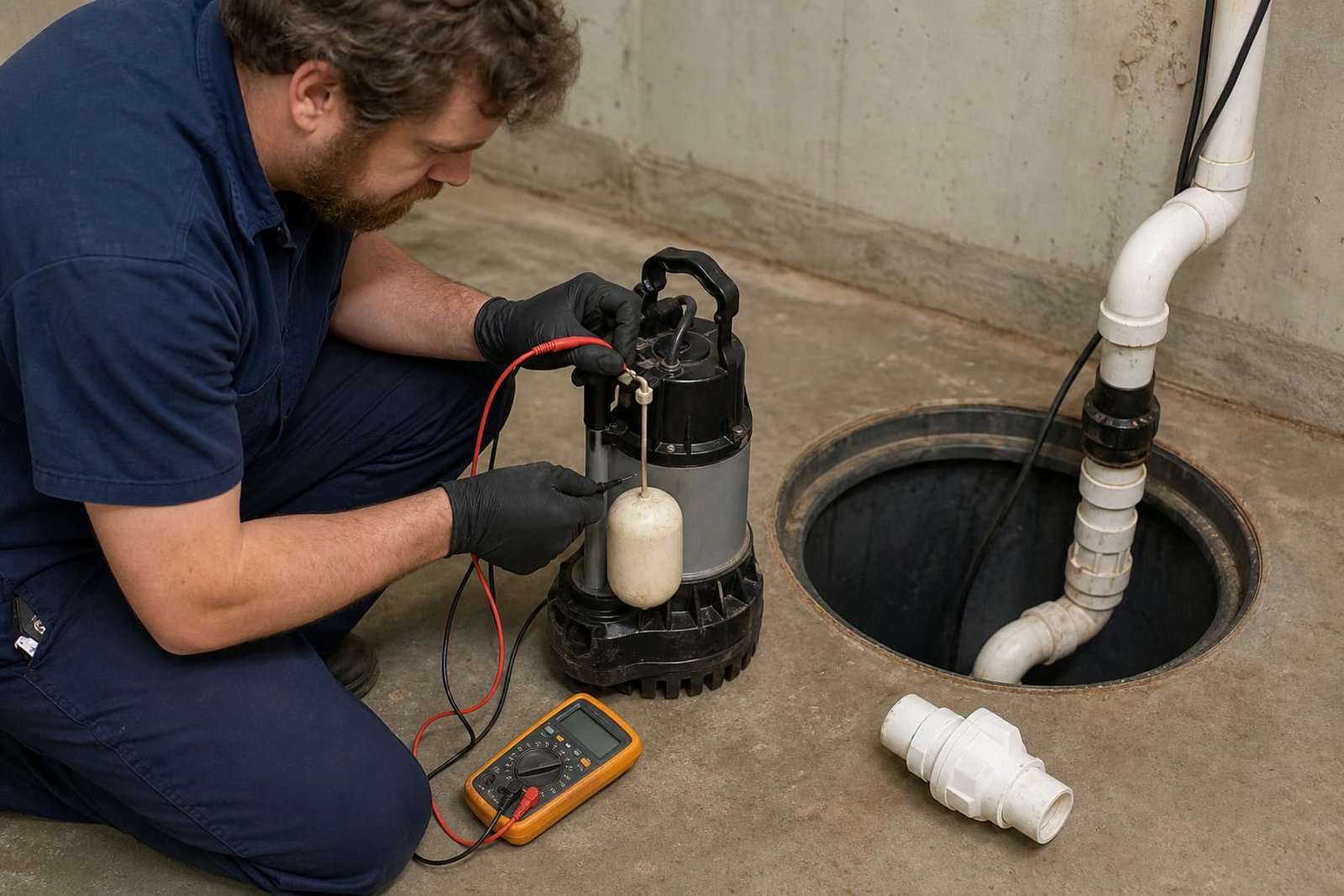
The failed part and the condition of the system both matter
A replaceable switch or check valve may justify a focused repair. A corroded pump with poor capacity and a compromised cord is a different decision, even if one component can be made to run again.
| Finding | Repair may make sense | Replacement may make more sense |
|---|---|---|
| Float or switch problem | The pump is serviceable and the switch can be replaced or repositioned safely | The switch is integral to an aging unit with other signs of failure |
| Check valve or discharge fault | The pump delivers adequate flow once the route is corrected | The pump remains weak, noisy or overheated after the restriction is removed |
| Debris in the basin | The obstruction is isolated and the impeller is undamaged | Debris has damaged the pump or the basin setup repeatedly feeds solids into it |
| Motor does not start | A separate, serviceable control or power issue is confirmed | The sealed motor or cord has failed, or the unit is no longer dependable for the inflow |
The consequence of failure matters. A marginal pump in a rarely damp utility pit is not the same risk as a primary pump protecting finished space during heavy inflow.
Reproduce the fault, correct it and run a full cycle
Record symptom and recent weather or water events
Test power, controls and basin operation
Inspect check valve and accessible discharge
Compare repair, replacement or redesign
Run a controlled test and explain maintenance
What to observe after a sump repair
A quick motor sound is not enough. The repaired system needs a complete cycle.
- Raise the basin water level through the pump’s normal operating range.
- Confirm the float moves without touching the lid, wall, cable or discharge piping.
- Watch the water level fall and listen for abnormal vibration or air locking.
- Check accessible discharge joints and the valve while the pump is running.
- Verify that water does not rush back and restart the pump immediately after shutdown.
- Test any high-water alarm or backup device separately when it is part of the installed system.
If the pump only succeeds under a light test but the property receives much faster inflow, capacity and backup planning still need attention.
Sump Pump Repair in San Francisco FAQ
Why does my pump run when it is not raining?
Groundwater, appliance discharge, plumbing leakage, a stuck float or backflow can all contribute. Observation and testing are needed.
Can you replace only the float switch?
Sometimes, if the control is separately serviceable and compatible. Integrated equipment may require a different repair.
Should I pour water into the basin to test it?
Use the manufacturer’s recommended test method and avoid electrical hazards. If access or power conditions are unsafe, schedule service instead.
When is replacement better than repair?
When the pump is damaged, unreliable, poorly matched to operating conditions or the repair would not resolve a broader layout problem.
Tell us what the pump does as water rises
Include the address, property type, affected fixture or equipment, when the issue began, whether water or sewage is active, and any safe-to-take photos. You do not need to diagnose it first.