
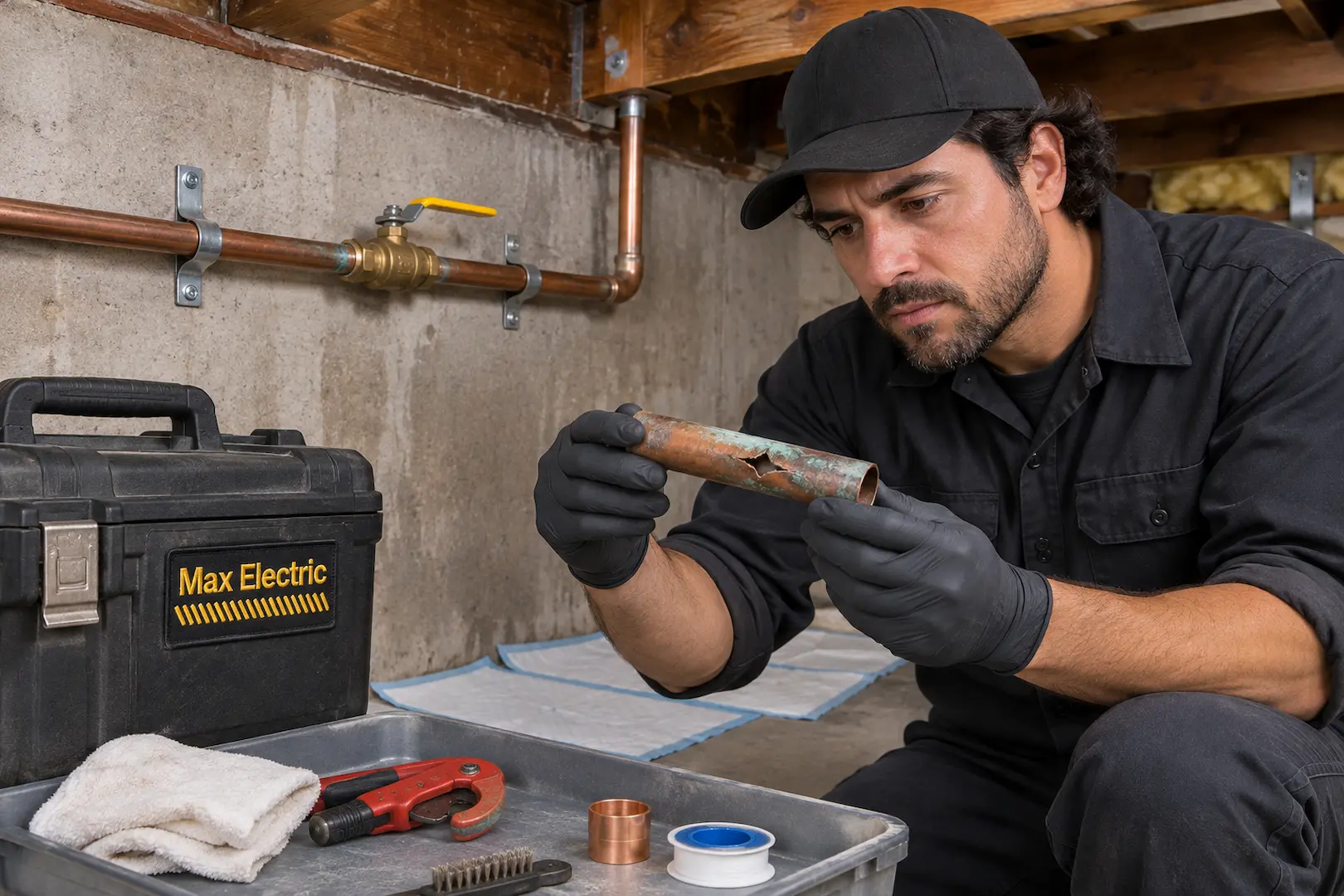
Emergency Burst Pipe Repair in San Francisco
A split pipe can continue feeding water into a wall long after the first puddle appears. Call with your location and tell us whether the water is off. A photograph of the opening or broken fitting can help if you already have one. Stay out of wet or unstable areas to make the call.
From active break to working water line
- While water is flowingKeep people away from wet electrical equipment and a bulging ceiling. Close a familiar private shutoff only when it is safely accessible from a dry area. In an apartment building, alert the manager and the unit below.
- Once the line is isolatedWe find the damaged length, inspect nearby fittings and establish whether enough sound pipe is accessible for a lasting connection. A break behind tile or cabinetry may need a carefully chosen opening.
- As service comes backWe restore the affected line in a controlled way and check the repair and nearby joints under pressure. Ask us to identify any fixtures or branches that still need to stay isolated.
Will the entire building lose water?
An accessible branch valve may protect the rest of the building. If it does not isolate the failure, the plumber may need a wider shutdown. A tenant should alert the manager promptly. For a staffed property, identify who can post the outage notice and who can verify that neighboring units have water again after the repair.
What the owner or manager can gather
- Building accessApartment number, floor, contact for the meter room and the names of any other units reporting water.
- Isolation detailsWhich private valve was used, when the flow stopped and which occupied spaces now have no water.
- Condition of finishesPhotographs of the original leak and any wet walls or ceilings, taken from safety. Confirm who coordinates drying and patching after plumbing work.
The repair may extend past the visible split
A fractured elbow at an exposed water heater is a different job from a split pipe hidden between two apartments. The first may give us room to replace a fitting. On the second we may have to trace the branch and expose sound material on both sides before we can join the new section.
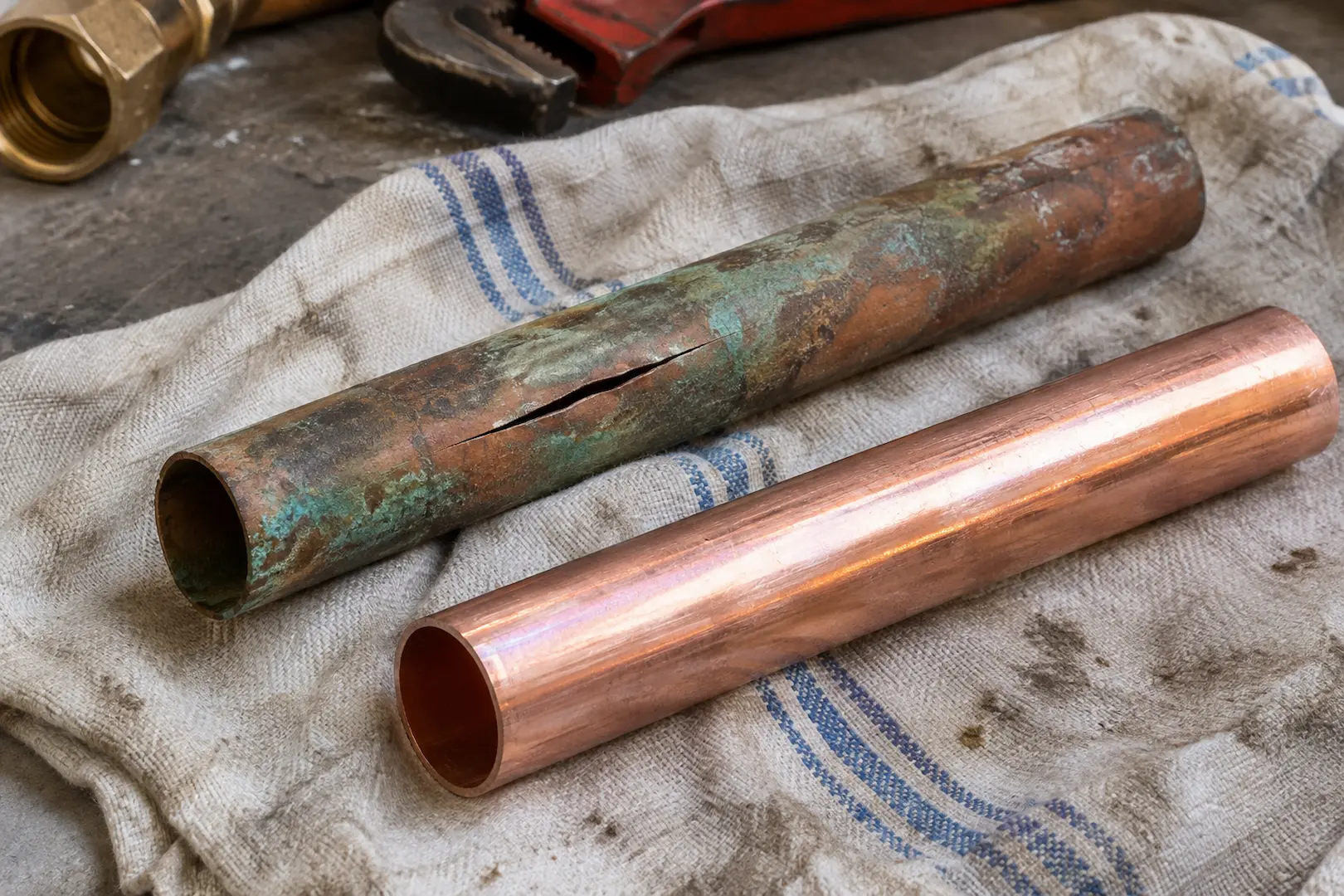
If corrosion continues beyond the break, we show you what is visible and outline the difference between restoring water to the affected branch and planning more extensive pipe replacement later.
What to keep before the wall is closed
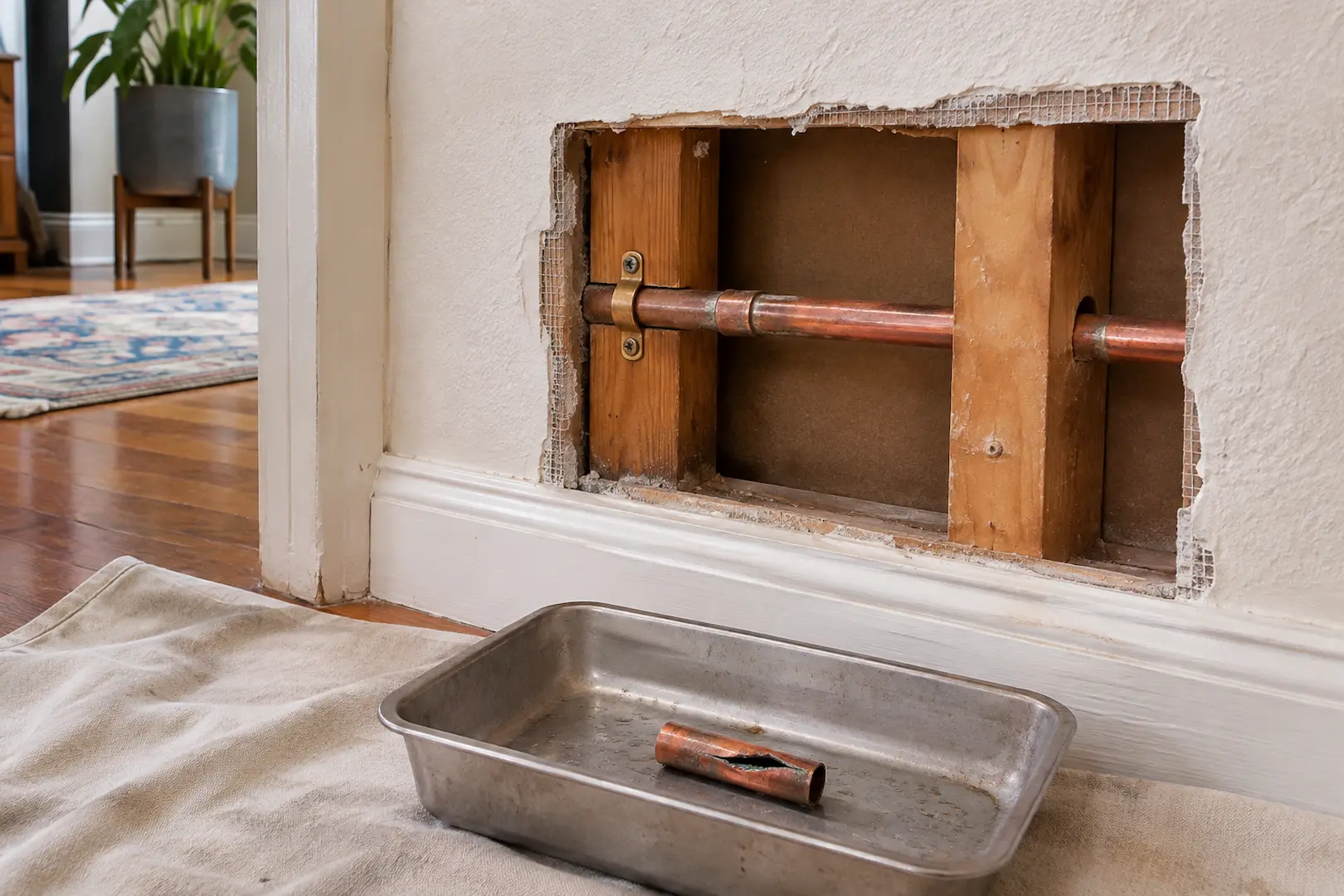
Once the broken pipe is accessible, there is a short window when the owner, plumber and restoration crew can all see what happened. Ask for a wide photo that shows which wall was opened and a close view of the failed section. A picture of a cut fitting alone can be hard to place later, especially in a building with identical bathrooms on different floors.
The repair record should identify the pipe that failed, what length was replaced and how the plumber checked it after water came back on. If one branch is still isolated, record the fixtures it serves and who will arrange the return visit. Give the drying contractor a copy before the opening is covered. The plumber can confirm that the repaired pipe holds water. The person responsible for drying the cavity can tell you when the wall is ready for new insulation and drywall.
If the source disappeared behind the wall
A spreading stain is evidence of water, but it does not tell us which fitting failed. When no break is visible and the supply is stable, leak detection helps narrow the opening before a repair is quoted.
Questions after a pipe breaks
The water is off. Does the plumber still need the location of the break?
Yes. Give the room, floor and the first place water appeared. A picture taken earlier from a safe spot is useful, especially if water ran along the ceiling before it dripped.
Can a repair be checked before the drywall crew returns?
Coordinate that with both trades. Ask the plumber which joint or section needs to stay accessible for the check, who will confirm the result and when the wall can be closed.
Call for burst pipe service
Tell us whether the break is exposed, whether the water is still on and who can authorize access to the building supply.