
Sump Pump Installation in San Francisco
A reliable sump system is more than a pump in a hole. The basin, inflow, discharge route, check valve, power, alarm and backup plan must work together for the property.
The basin, discharge and power supply do as much work as the pump
A sump pump can remove water that reaches its basin. It cannot pull groundwater through a dry slab, correct every exterior drainage problem or make an unsuitable discharge point acceptable. Design begins with the water source: seepage at a low corner, an existing perimeter drain, surface entry or another path. That tells us whether a basin alone is useful or whether drainage work must feed it.
Then comes the route out. The discharge needs a serviceable check valve, freeze- and damage-conscious routing, a destination that does not send water straight back toward the foundation and enough access to maintain the system. Power, alarm options and backup strategy belong in the same conversation. Choosing horsepower first skips most of the design.
Start with where the water comes from and where it can legally go
We review the area that collects water, the route into the basin, available depth and access, the lift and length of discharge, power availability and what happens during an outage. A larger pump does not correct a poor basin, blocked discharge or missing drainage path.
For an occupied basement, garage or crawlspace, service access and noise matter too. The final layout should allow testing and maintenance without dismantling finished spaces.
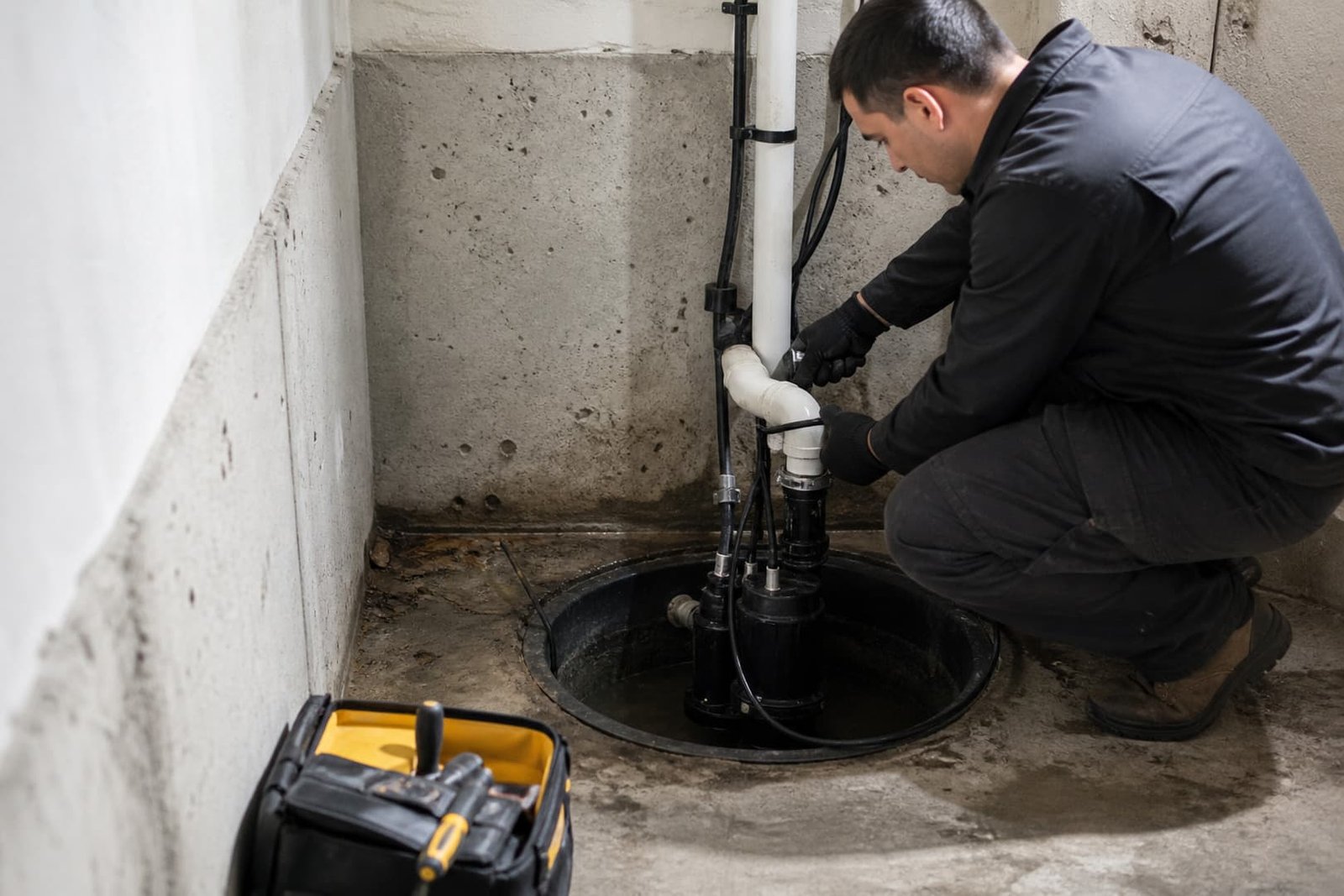
Water conditions the proposed system must handle
No existing sump system
Plan the collection point, basin, pump, discharge, power and future access as one scope.
An undersized or makeshift setup
Check inflow, duty, cycling and discharge before selecting replacement equipment.
Finished basement protection
Add alarm and backup discussions to the installation plan; keep service access practical.
Garage or low-level room drainage
Confirm the water source and approved discharge path rather than routing nuisance water blindly.
Pump replacement with layout changes
Treat piping, check valve, cover, controls and power as part of the replacement decision.
Property with outage exposure
Compare battery backup, secondary pump and alarm options against expected risk and maintenance.
Build the basin, discharge and controls as one system
| Path | When it fits |
|---|---|
| Primary pump | Selected for actual lift, discharge length, solids exposure and expected inflow—not horsepower alone. |
| Basin and cover | Sized and located for collection, pump clearance, service access and the surrounding space. |
| Check valve and discharge | Planned to prevent backflow and short cycling while sending water to an acceptable termination. |
| Alarm and backup | Chosen based on occupancy, outage risk and how quickly someone can respond to a failure. |
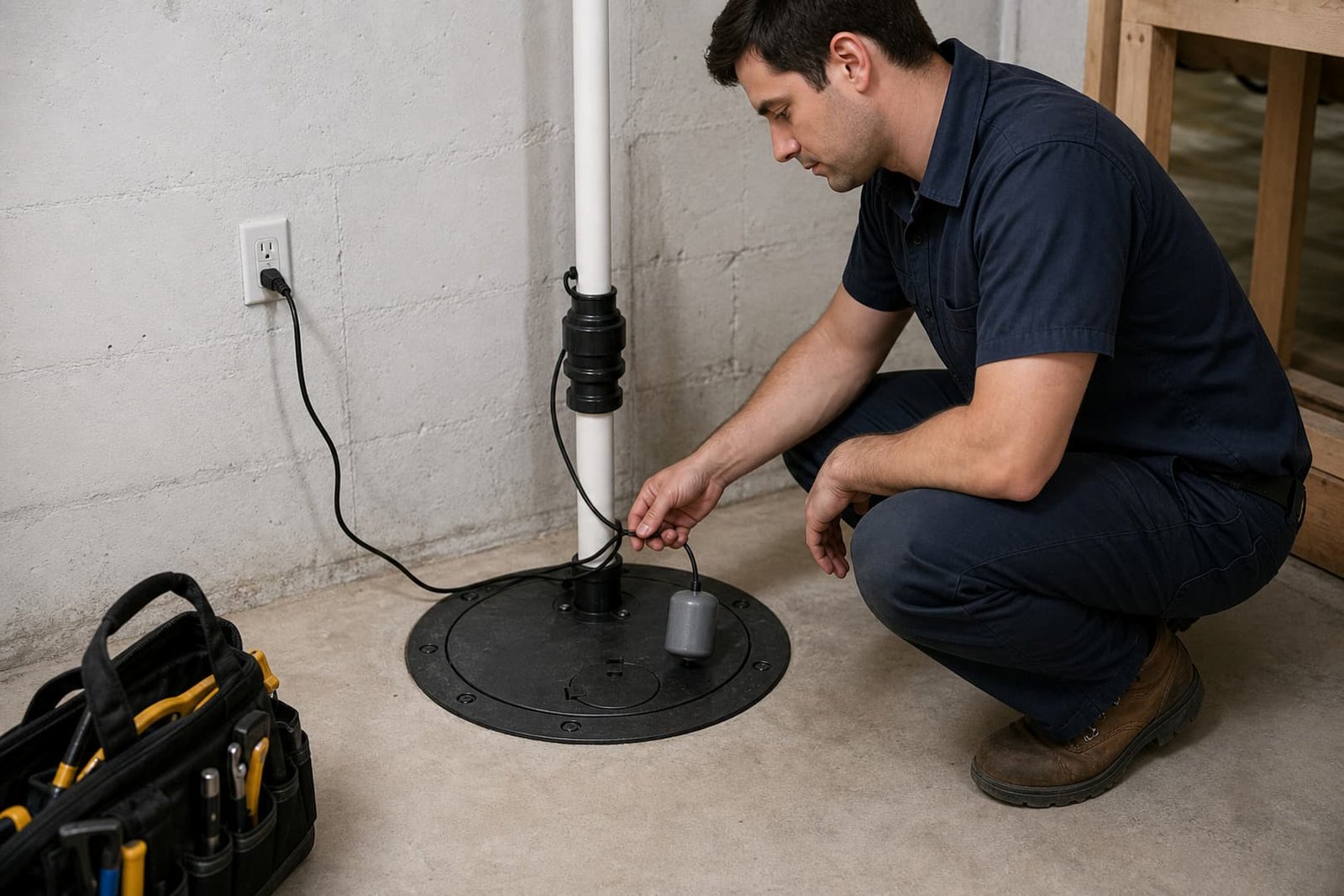
Each component answers a different failure risk
A reliable installation is a small system. The parts should be selected together rather than collected around a pump after the fact.
| Decision | What affects it | Why it matters |
|---|---|---|
| Basin location and depth | Low point, drainage path, slab and service access | Water must reach the pump, and the pump must remain removable |
| Pump capacity | Expected inflow, vertical lift, pipe length and fittings | Nameplate horsepower alone does not describe delivered flow |
| Check valve and discharge | Route, termination, noise and backflow into the pit | Poor routing can short-cycle the pump or return water to the building |
| Power and alarm | Available circuit, receptacle location and consequence of failure | The system needs safe power and a way to reveal a high-water condition |
| Backup approach | Outage risk, expected inflow and maintenance willingness | Battery or alternate backup only helps when it matches the actual scenario |
The final choice may be simple, but the reasoning should be visible. A homeowner should know what event the system is designed to handle—and what event remains outside that design.
From drainage assessment to a complete pump cycle
Assess water source, basin location and route
Calculate operating conditions and choose components
Confirm power, alarm and backup needs
Install and secure the complete system
Test float action, check valve and discharge
Situations where a sump pump may be only part of the answer
Water around a foundation can arrive by more than one route. These conditions deserve a wider look.
Water enters from a wall opening or window well
The entry point may need exterior drainage, sealing or surface-water control. A pump below can collect some water but does not stop the source.
The basin rarely receives water even though the room is damp
The drainage path may not connect to the pit, or the moisture may have another source. Test the pathway before changing pump size.
The pump runs but water returns immediately
Inspect the check valve, discharge route and termination. Returned discharge can look like inadequate pump capacity.
An outage would cause rapid flooding
Discuss alarms, backup capacity and maintenance. A backup that has not been tested or whose battery has aged may offer false comfort.
Sump Pump Installation in San Francisco FAQ
Can a sump pump solve every basement water problem?
No. It manages water that reaches the collection system. Exterior drainage, groundwater, surface entry and plumbing leaks may need different or additional corrections.
Do I need a backup pump?
It depends on outage exposure, inflow, occupancy and the consequences of failure. We can compare backup strategies during planning.
How often should the system be tested?
Test it periodically and before wet seasons according to the equipment instructions. The float, alarm, discharge and check valve all matter.
Can the pump discharge into any drain?
No. The discharge path must be evaluated for the property and applicable requirements.
Describe where water enters and where it can discharge
Include the address, property type, affected fixture or equipment, when the issue began, whether water or sewage is active, and any safe-to-take photos. You do not need to diagnose it first.