
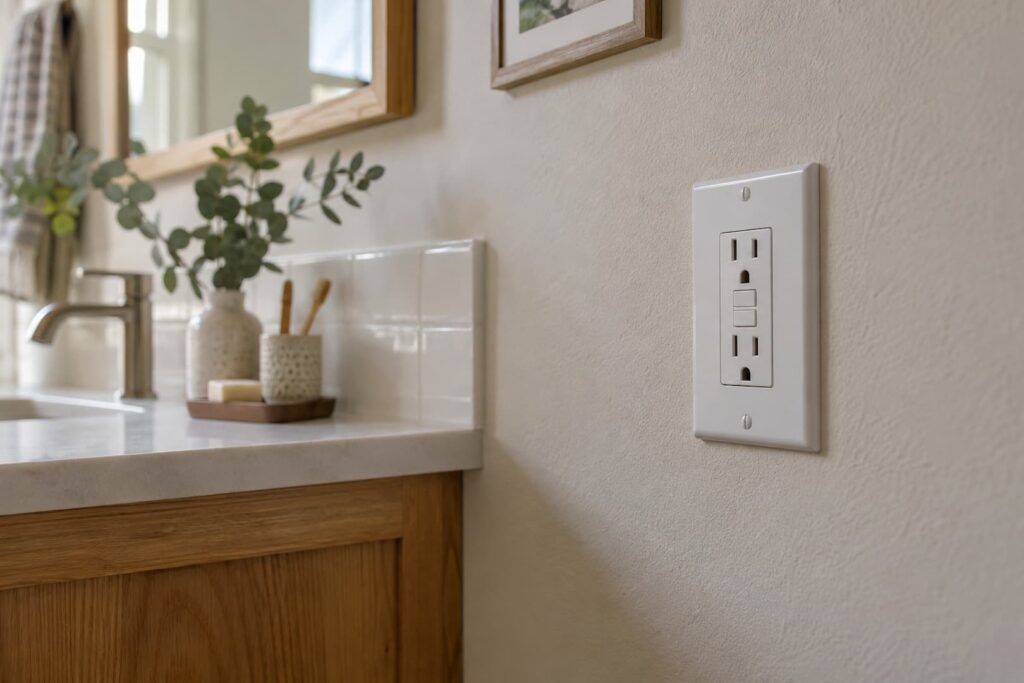
A GFCI outlet that won’t reset may have no incoming power, an unresolved ground fault, or an internal failure that prevents it from restoring power. The RESET button cannot distinguish those problems. Before you buy a replacement, check whether something upstream has interrupted the supply.
First, look for water or damage and notice any burning smell without touching the outlet. If any is present, leave it alone. Otherwise, you can safely disconnect accessible appliances, check upstream protection, and follow the device’s instructions for one reset attempt. If it trips again or refuses to reset, stop and arrange electrical service.
Why a GFCI can refuse to reset
A ground-fault circuit interrupter compares the current leaving on the hot conductor with the current returning on the neutral. If some current takes an unintended path, the GFCI opens the circuit. A defective appliance, moisture, or damaged wiring can cause that imbalance.
This is different from an ordinary circuit breaker responding to excessive current. A GFCI receptacle does not replace the breaker’s overload and short-circuit protection. A breaker marked GFCI, or a dual-function AFCI/GFCI breaker, combines additional protections; record which device actually tripped before describing the problem.
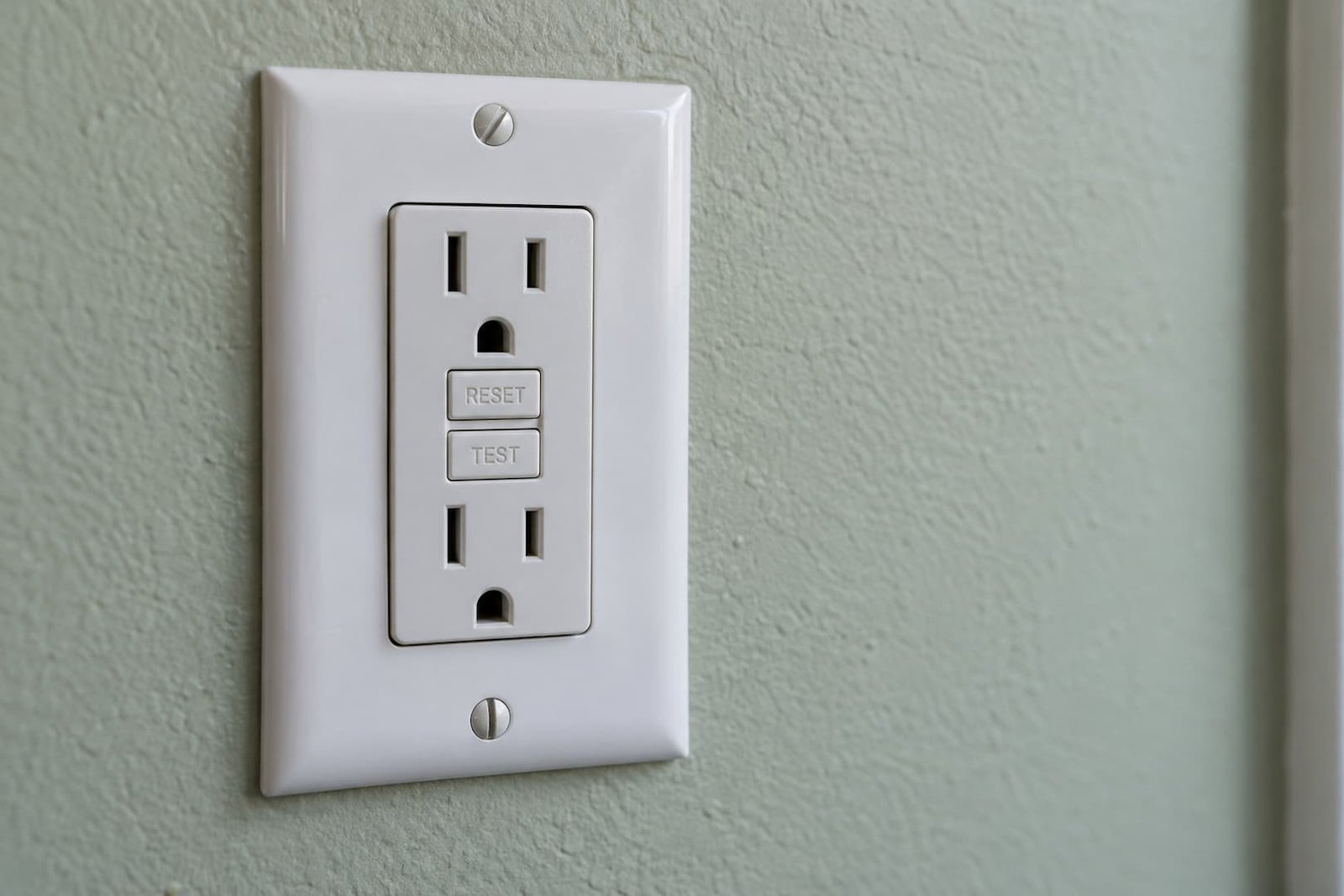
Refusing to reset can be part of the device’s safety design. The Leviton GFTR1 instructions, for example, identify three lockout conditions: no incoming power, reversed LINE and LOAD connections, or a failed internal test. Pressing harder cannot correct any of them.
Match the symptom before trying a reset
| What you notice | What it may mean | What to do |
|---|---|---|
| RESET will not latch; no indicator light | No supply power, a tripped device, or a device problem | Check accessible upstream protection; do not assume the wiring is dead. |
| RESET latches, then immediately trips | A continuing ground fault or a device fault | Stop resetting and leave the affected outlets unused. |
| Persistent red or flashing indicator | A warning defined by that particular model | Read its instructions and arrange service if the warning persists. |
| Outlet stopped working after rain or a leak | Possible water entry at this outlet or another protected point | Do not touch wet equipment or try to restore power. |
| A newly installed GFCI never worked | Missing supply, a connection error, or a defective device | Have the installer check the circuit and installation. |
What you can safely check without opening the outlet
Look for reasons to stop first
Visible scorching, a cracked face, buzzing, a burning odor, or a shock from a connected appliance calls for professional help. Do not touch the outlet to find out whether it feels hot. Keep people away from wet equipment. If you can safely reach a dry, undamaged panel, turn off the affected circuit; do not approach a wet panel or remove its cover. Smoke or active fire requires evacuation and a call to 911.
Disconnect accessible appliances
With dry hands and dry surroundings, unplug portable appliances only where the plug, cord, and receptacle show no damage. Pull by the plug, not the cord. Include accessible outlets that you know the same GFCI protects. Do not move heavy appliances, reach behind equipment, or disconnect hardwired loads to investigate.
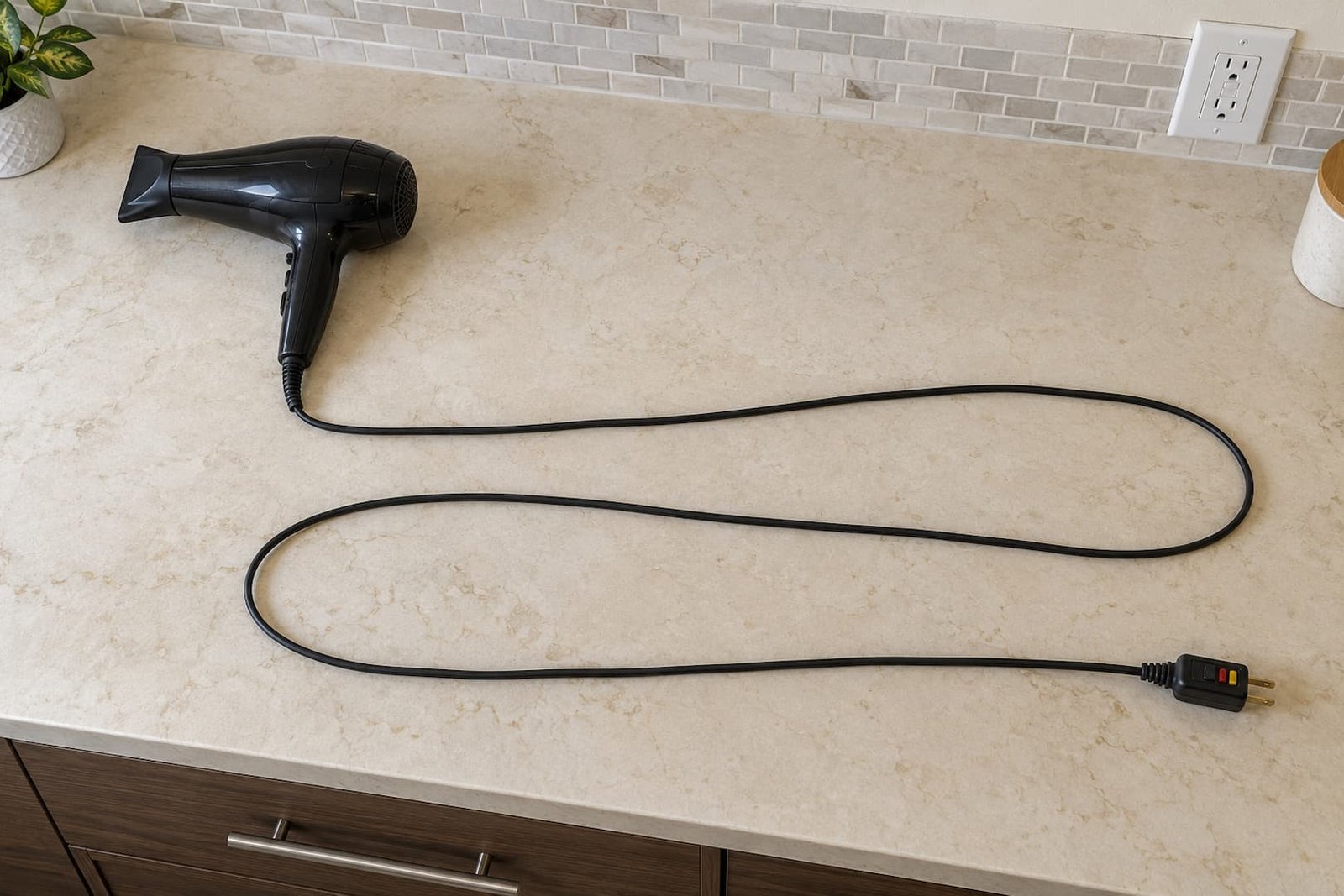
If unplugging a hair dryer allows the GFCI to reset, that is a useful clue about the dryer, not a clean bill of health. Keep any appliance associated with the trip disconnected for assessment. Moving it to another outlet to try again can carry the hazard with it.
Check whether another device interrupted the supply
One GFCI can supply additional receptacles through its protected LOAD connections. These downstream outlets may be in another room, with no TEST or RESET buttons to reveal the connection. If an upstream GFCI trips, a second GFCI farther along that circuit may lose the power it needs to reset.
Look for an accessible GFCI in the garage, bathroom, kitchen, or outdoors, and check the circuit label at the panel. Do not reset unfamiliar breakers at random. If you find the relevant upstream GFCI or branch breaker tripped, and everything is dry and undamaged with no warning signs, follow its manufacturer’s instructions for one reset. For many breakers, that means moving the handle fully OFF before ON. If it trips again, leave it off.
Try the affected GFCI once
After the safe checks above, press and release RESET as the device instructions specify. Use your finger; do not force the button with a tool or hold it in. If you have already tried this and it failed or immediately tripped again, do not repeat it. A dark indicator or an appliance that will not run is not proof that the conductors inside the box are de-energized.
What do the green, red, and unlit indicators mean?
A green light is reassuring only when you know what it means on that model. Brand, button position, and flashing patterns matter. Read the instructions for the exact device; a different outlet elsewhere in the house may use its light differently.
In Leviton’s indicator guide for the listed product families, green with RESET in indicates normal operation. Green with RESET out can indicate reversed LINE and LOAD connections. An unlit indicator can accompany a tripped state, and the device will not reset without circuit power. A persistent red indication or failure to reset requires the action specified in the instructions, which can include replacement.
Take a photo of the outlet face and note whether the light is steady or flashing. That gives an electrician more useful information than “the light looks wrong.” Never remove the receptacle to look for its model number.
Why it still trips with nothing plugged in
“Nothing plugged in” only describes the outlets you can see. The GFCI may protect another receptacle, outdoor equipment, or a load you have not identified. Moisture or damaged insulation in that part of the circuit can keep the fault present after you unplug everything nearby.
Fixed wiring and the GFCI itself remain possible causes. An unintended neutral-to-ground connection and a device that fails its self-test need different repairs; a loose supply connection can leave the GFCI without reliable power. An electrician checks the supply and isolates parts of the circuit under controlled conditions. Replacing the receptacle first may leave the actual fault untouched.
A GFCI that won’t reset after rain needs a moisture check
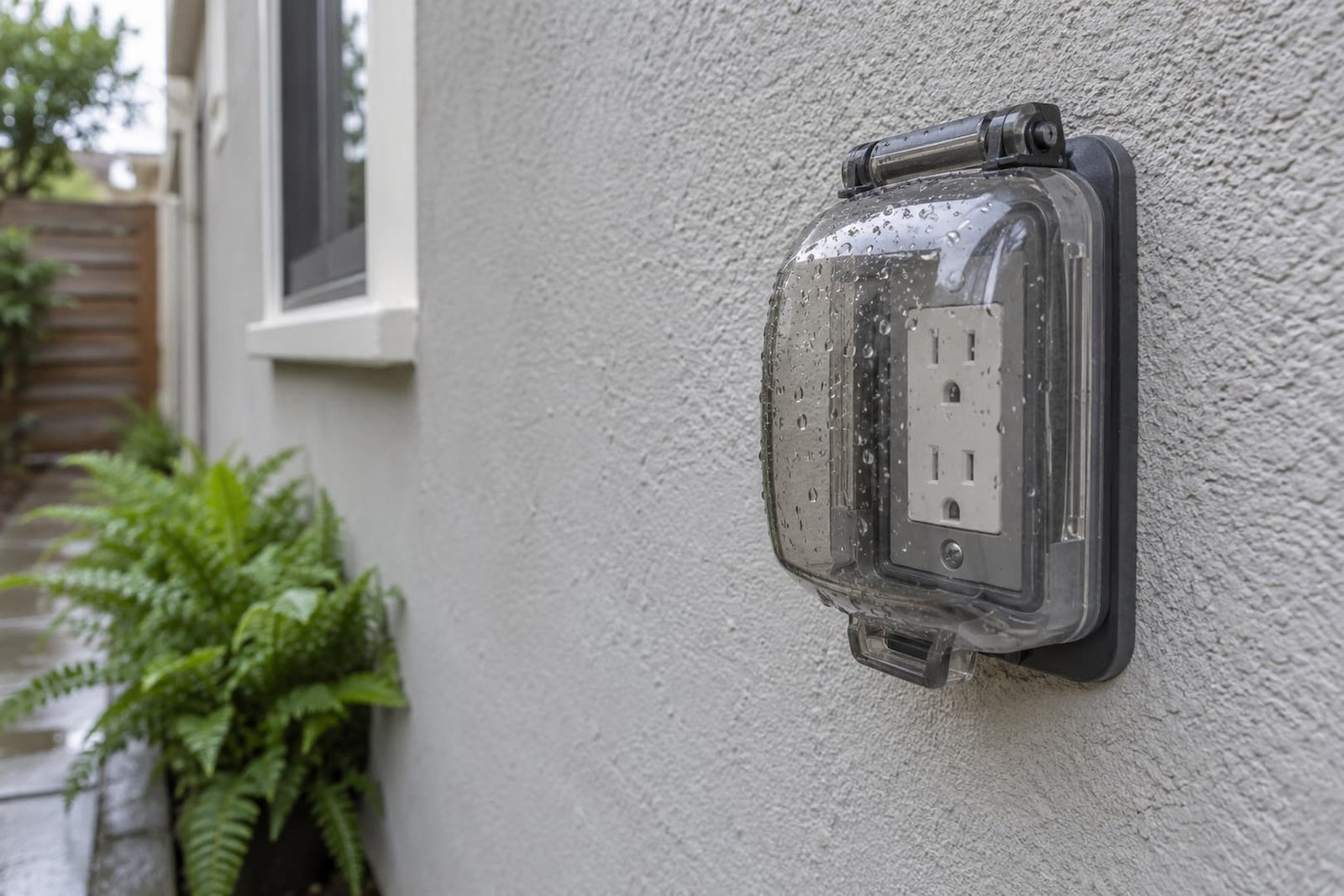
A cracked cover, failed seal, or exposed cord connection can let water reach outdoor electrical equipment. Sometimes the GFCI that trips is indoors and the wet outlet is outside. Note whether the problem began after rain, irrigation, pressure washing, or a plumbing leak; that timing can help the electrician locate the fault.
Do not touch wet plugs or receptacles, and do not use a hair dryer to dry an outlet. Waiting until the face looks dry does not establish that the device is safe. ESFI’s guidance on water-damaged equipment calls for qualified evaluation and identifies water-damaged GFCIs and receptacles among equipment that must be replaced.
New installation, older wiring, or a worn-out device?
If the GFCI has never worked since installation, have the installer verify the incoming supply and the LINE/LOAD connections. LINE receives power; LOAD can feed protected outlets farther along the circuit. These are functional connections, not interchangeable labels. Correcting them requires work inside the box and belongs with the electrician.
Older wiring raises a separate question: grounding. A GFCI can detect a current imbalance without an equipment grounding conductor, but it does not create a ground. A three-slot face therefore does not establish that an outlet is grounded. The CPSC Guide to Home Wiring Hazards discusses GFCI protection for ungrounded systems. Have an electrician assess the wiring, required markings, and suitability for the equipment you use.
GFCIs do wear out. Age alone, though, does not tell you why this one refuses to reset. Have the electrician verify the supply, check for a continuing fault, and evaluate the device before replacing it. The new receptacle needs the protection and ratings appropriate to its location. Never substitute an ordinary outlet just to stop the tripping.
When to call an electrician
Arrange service if the GFCI will not reset after the safe checks, trips again, shows a persistent failure warning, or stopped working after water exposure. The same applies when several protected outlets stay off or a new installation has never worked. Any damage, burning odor, buzzing, or shock means you should stop using the circuit immediately.
Before the visit, record which outlets lost power, what was running, and whether the problem followed rain or electrical work. Include the light color and button behavior. You do not need to open anything or perform voltage tests to collect those details.

Once the fault has been corrected, follow the manufacturer’s monthly TEST/RESET procedure. ESFI recommends monthly testing to check that protective devices function properly. Self-testing does not eliminate the manual test required by your device’s instructions. If TEST does not interrupt power as specified, stop using the outlet and arrange service.
For a GFCI that will not reset in San Francisco or the Bay Area, contact Max Electric for outlet troubleshooting and replacement. Describe the reset behavior and any affected nearby outlets so the visit can focus on finding the cause and restoring protected power.