

Induction Range Electrical Requirements: Does Your Kitchen Need a New Circuit?
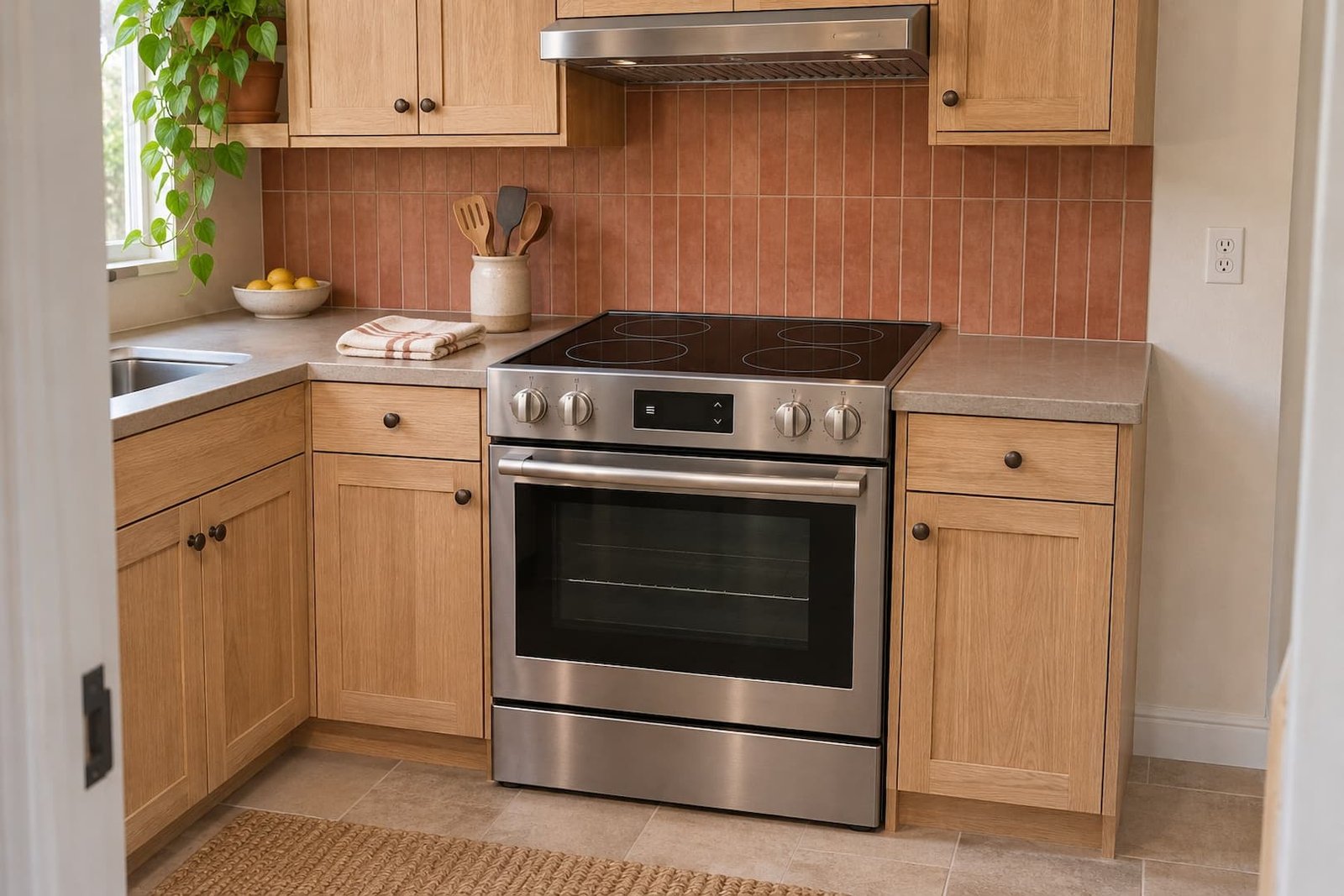
A conventional full-size induction range generally needs a dedicated 120/240-volt circuit. Many models specify 40 or 50 amps, but the installation manual for the exact range decides what your kitchen needs. Replacing an electric range may let you reuse a suitable existing circuit. Switching from gas usually means adding one.
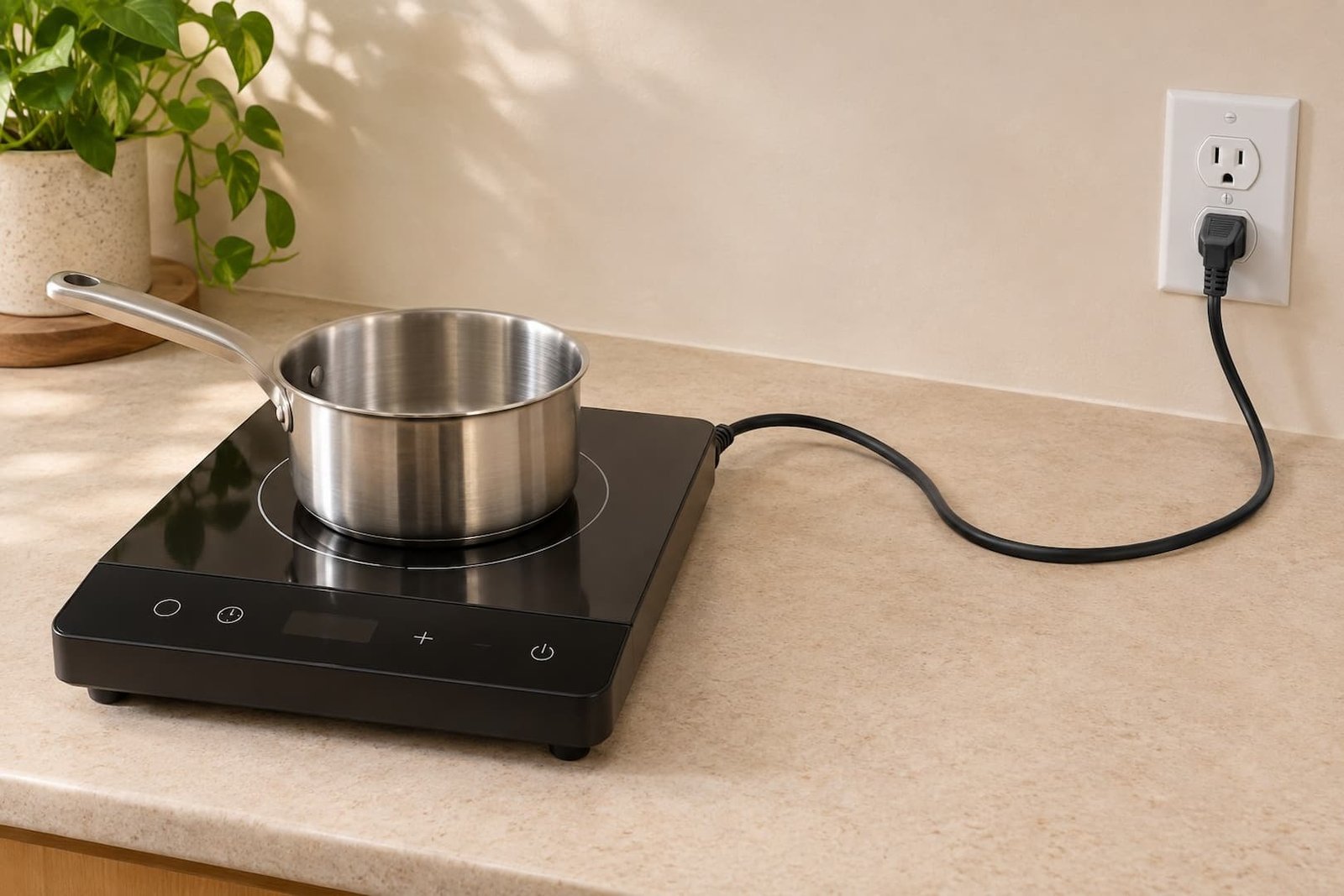
The small outlet behind a gas stove is not enough for a conventional induction range. A portable induction burner, however, normally uses 120 volts, and some battery-equipped ranges are designed for 120-volt operation. Identify the appliance first, then have an electrician assess the supply at its intended location.
First, identify the kind of induction appliance
“Induction” describes how the cooking surface heats the pan; the appliance design determines its electrical requirements. A countertop burner and a range with an oven can have very different installation requirements.
| Appliance | Typical electrical arrangement | What to verify |
|---|---|---|
| Portable countertop burner | 120-volt receptacle | Appliance rating, circuit loading, and placement instructions |
| Conventional full-size induction range | Dedicated 120/240-volt circuit; some models also support 120/208 volts | Required amperage, cord or hardwired connection, and supply voltage |
| Built-in induction cooktop | Often a dedicated 208/240-volt hardwired supply | Exact model requirements, including whether a neutral is needed |
| Battery-equipped induction range | Some models support a 120-volt supply | Manufacturer installation requirements and battery operating limits |
For a portable unit, check what else runs on the same circuit. An available receptacle does not prove there is capacity for another cooking appliance alongside a kettle or toaster. Follow the product instructions for direct connection and clearance; do not solve an inconvenient outlet location with a power strip. NYSERDA’s induction buyer’s guide distinguishes portable 120-volt units from the higher-voltage supply generally needed by full-size equipment.
Battery-equipped ranges are a separate category. For example, Copper documents 120-volt operation for its New Charlie range. Its battery allows cooking power to differ from the power drawn at the wall. That is a feature of that appliance design, not permission to connect an ordinary 240-volt range to a gas stove outlet. Check installation instructions and charging needs before assuming the existing circuit suits a battery model.
Does an induction range need 40 or 50 amps?
Both ratings are common, and neither is a rule for every induction range. Start with the installation manual, including its electrical supply table and any notes for your model. Keep the manual with your purchase documents; a retail listing may leave out an installation condition.
For example, Bosch’s electric and induction range installation instructions list 120/240-volt and 120/208-volt ratings, with 40- or 50-amp circuit requirements subject to local codes. This illustrates why the model rating and installation instructions belong in the electrician’s assessment. It does not establish the correct breaker for a different range.
A dedicated range circuit serves the range rather than the kitchen’s countertop receptacles. If you are converting from gas, ask where that new circuit will run and whether access is straightforward. Moving the planned range a few feet during a remodel can change the route and connection location.
In a building with 208-volt service, confirm that the chosen appliance supports it. Do not assume a product advertised as “240 volt” will deliver the same performance on 208 volts, or that every model permits that supply.
The advertised wattage of every cooking zone is also a poor shortcut for sizing a circuit. Boost ratings describe particular cooking modes; some appliances share power between zones. The appliance nameplate and installation instructions govern the electrical design, together with applicable code calculations. Adding every advertised burner wattage, then selecting a breaker from that total, can give the wrong answer.
House wiring needs its own assessment. Conductor material, installation method, terminal ratings, and the circuit route affect the design. GE’s guidance on cooking-appliance wire size specifically avoids a universal house-wire gauge because installation variables matter. The smaller-looking factory leads on an appliance are not a template for the cable inside your walls.
Can you reuse the circuit from an electric stove?
Often, a suitable existing electric-range circuit can serve a replacement induction range. Reuse becomes a possibility after the electrician compares the new model’s requirements with the circuit actually installed.
That review includes the breaker’s rating and compatibility with the panel, conductor size and condition, grounding arrangement, and the receptacle or junction box. The connection also has to fit the appliance’s designated installation area. A plug that fits says little about what is behind the wall.
Tell the electrician if the old range caused trips, if the receptacle feels loose, or if there has been heat discoloration. Those observations can change the work required even when the old and new ranges have the same amperage requirement. Resolve them before the new appliance arrives.
What if the old range has a three-prong plug?
Older range circuits may have a three-wire connection. A modern four-wire range connection provides a separate equipment grounding conductor and neutral. GE’s explanation of three- and four-conductor connections distinguishes new wiring from certain existing installations.
Whether an existing three-wire circuit can remain depends on the installation, applicable rules, and appliance instructions. An older three-wire arrangement is not a template for a new circuit. Have the electrician determine what is permitted; adapters or changing a cord cannot correct an unsuitable circuit.

A cooktop and a range need separate planning
A range combines the cooktop and oven in one appliance. A built-in cooktop sits in the counter, and a separate wall oven has its own electrical requirements. Do not assume that a circuit planned for one range will automatically serve both appliances.
Many built-in cooking appliances use a hardwired connection. As GE’s hardwired-appliance guidance explains, the connection method depends on the appliance. Some induction cooktops need two ungrounded conductors and equipment grounding without a neutral; other equipment needs a neutral as well. Let the exact manual settle that question. The electrician must also coordinate the junction box location with cabinet space and access.
An early electrical plan is especially helpful when cabinets are changing. It gives the cabinet installer a defined connection location before drawers, panels, or a wall oven make that location difficult to reach.
A new circuit does not automatically mean a new service
The branch circuit carries power from the panel to the range. The electrical service supplies the house. A project can require a new branch circuit while leaving a properly sized service in place.
An electrician checks available panel space and performs the appropriate load assessment for the existing and proposed equipment. Those are separate questions. An empty breaker position does not prove the service has spare capacity; a crowded panel does not, by itself, prove the home needs 200 amps.
A 100-amp home therefore needs an assessment, not an automatic upgrade recommendation. PG&E’s home electrification planning guide shows how appliance selection and suitable load management can sometimes keep a project within existing capacity. Whether those options work in your house depends on its equipment and the accepted design.
Include planned purchases in the discussion. An induction range today and an EV charger next year deserve a coordinated review. That can help you compare the immediate circuit work with a broader project while keeping future upgrades optional until their need is established.
Panel condition matters too. Damaged or unsuitable equipment may require attention even when the load calculation works. Ask the quote to distinguish a panel repair or replacement from an electrical service capacity increase. A subpanel can provide circuit space, but does not create more utility capacity.

Plan the installation before the delivery date
Choose a model, then send its installation manual to the electrician before committing to delivery. If you are choosing between two models, send both manuals so the electrician can compare them. Changing the range after the circuit is designed can change the job.
For a gas-to-induction conversion, arrange the gas disconnection and capping with a qualified licensed trade. Include removal of the old range in the plan. The electrical contractor and appliance installer may cover different parts of the project, so agree on responsibility for each step.
Ask for a written scope that identifies the circuit route, connection location, required protection, and any panel work. It should also state who handles permits, inspections, access openings, and wall repairs. A short, accessible cable run takes different work from one that requires opening and restoring finished walls.
The appliance still has to fit. Check the installation drawing for clearances, the approved outlet or junction-box area, and anti-tip requirements. Keep access to the electrical panel available during the work. In a condo, confirm building approval and access arrangements before scheduling a cable route through common areas.
In San Francisco, have the contractor confirm the permit and inspection requirements for the actual scope. Adding a circuit and replacing an appliance on an unchanged suitable connection are different projects. The city’s electrical permit service directs new applications to the appropriate permitting system. Include any required utility coordination in the schedule if the project changes the service or adds load.
Compare quotes once those details are defined. Distance from the panel, access, existing equipment condition, and finish repairs can change the cost substantially. An appliance price or a generic installation allowance cannot tell you what your particular kitchen will cost.
Will the range circuit need GFCI protection?
Have the electrician check the adopted local requirements for your installation, including the connection method and scope of work. Advice based on an older installation or another city may not apply. Confirm the required breaker and the appliance instructions before installation rather than treating GFCI protection as an afterthought.
If the installed range repeatedly trips a GFCI or another protective device, the cause needs diagnosis. Do not bypass protection or replace it with a different device merely to stop the trips. Give the electrician the model number and describe when the trip occurs.
What to send an electrician for a useful estimate
Send the exact model number and installation manual, a photo of the panel with its cover closed, and a photo of the kitchen showing the intended location. Add the approximate distance between them and say whether access is through a basement, crawlspace, garage, or finished rooms. Do not remove a panel cover or pull out a connected range to gather information.
Mention whether you are replacing gas or electric cooking, any known circuit problems, and other major electrical additions you are considering. This helps the electrician separate work that can be estimated from photos from conditions that need an on-site inspection.
MaxElectric can assess dedicated appliance circuits in San Francisco and plan the electrical work for a gas-to-electric appliance conversion. With the model details available, the assessment can establish what your kitchen needs before the new range arrives.