
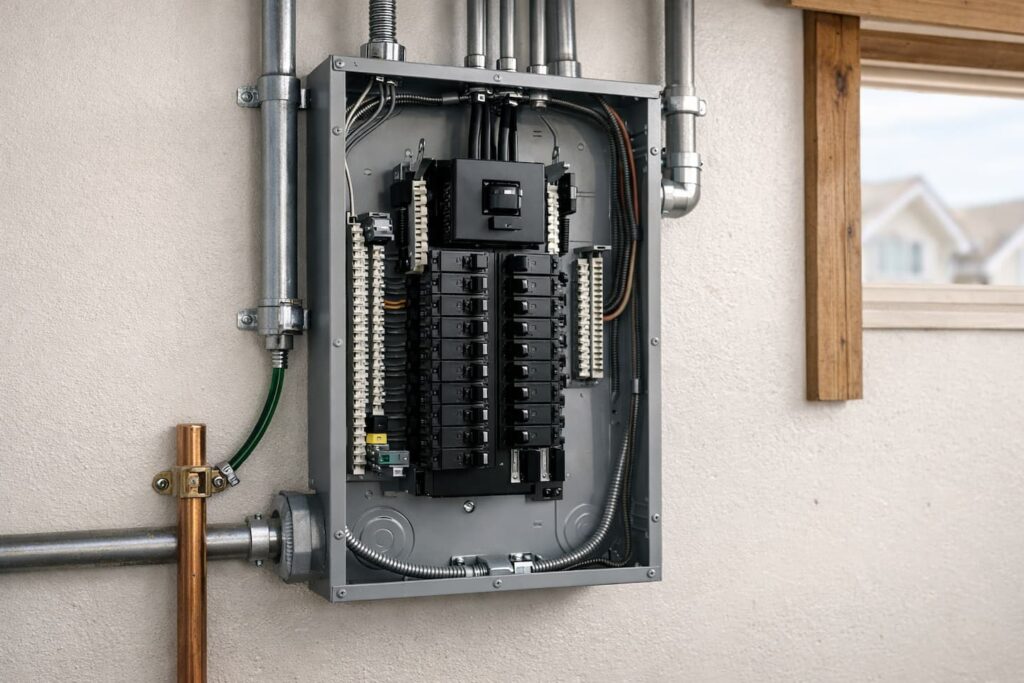
How Much Does It Cost to Replace an Electrical Panel? (San Francisco 2026 Guide)
In San Francisco, a straightforward electrical panel replacement often costs about $1,500 to $4,000+. A 100-amp to 200-amp panel and service upgrade is more likely to fall around $3,500 to $10,000+. If the job involves panel relocation, underground service, trenching, extensive corrections, multiple meters, or 320A/400A-class equipment, the total can reach $10,000 to $30,000 or more.
Those figures are planning ranges, not flat-rate prices. The phrase “replace an electrical panel” can describe anything from an in-place swap of a modern panel to a complete service rebuild involving the meter, service conductors, grounding, permits, inspection, and PG&E. That difference in scope is why two legitimate quotes for the same property may be thousands of dollars apart.
Updated July 2026. Costs below reflect broad budgeting ranges for residential work in the San Francisco area. A site assessment, load calculation, and confirmed utility scope are needed for an actual quote.
Electrical panel replacement cost at a glance
Use the table as an initial budget, then check what each estimate includes. A panel-only price is not the same as a completed, permitted service upgrade.
| Project | 2026 planning range | What the scope usually involves |
|---|---|---|
| Localized panel or breaker repair | $300–$1,200+ | Diagnosis, a compatible breaker, a damaged termination, or another limited repair; this is not a full panel replacement |
| Same-amperage panel replacement | $1,500–$4,000+ | New panel and breakers in the same location, circuit transfer, labeling, testing, permit, and ordinary corrections |
| Fuse box conversion | $3,000–$8,000+ | Removal of old fuse equipment, modern breaker panel, grounding/bonding work, and corrections uncovered during the conversion |
| 100A to 200A panel and service upgrade | $3,500–$10,000+ | New 200A equipment plus some combination of meter, service conductors, grounding, permit, inspection, and PG&E coordination |
| Complex service upgrade or relocation | $8,000–$20,000+ | New panel location, extended circuits, exterior work, difficult access, utility design, or substantial existing-system corrections |
| Underground or 320A/400A-class project | $10,000–$30,000+ | Custom service design, trenching or conduit, civil restoration, multiple panels/meters, and more extensive utility coordination |
| Subpanel installation | $1,500–$5,000+ | Additional circuit distribution where the existing main service still has enough calculated capacity |
For comparison, Angi’s current San Francisco data places a typical electrical box replacement around $795 to $3,555, with higher-amperage work reaching roughly $7,000. That range is useful for a basic replacement, but it does not capture every full-service project. Trenching, utility engineering, meter relocation, and building repairs can move the total well beyond a panel-swap estimate. See the San Francisco cost data.
Panel replacement, panel upgrade, and service upgrade are different jobs
Homeowners often use these terms interchangeably. An electrician needs to separate them before pricing the work.
Same-amperage panel replacement
A replacement keeps the home at its existing service capacity. A worn 100A panel might be replaced with another 100A panel, or an obsolete 200A panel with a new 200A model. The project may still require new breakers, grounding or bonding corrections, labeling, a permit, and inspection. What it normally avoids is an increase in the power supplied to the property.
Panel upgrade
An upgrade improves the equipment or its usable capacity. It could mean more breaker spaces, a fuse-box conversion, modern protective breakers where required, or preparation for future circuits. The service amperage may stay the same. A larger enclosure does not automatically give the home more utility capacity.
Electrical service upgrade
A service upgrade increases available power, commonly from 100A to 200A. Now the scope may reach beyond the breaker panel: meter equipment, service-entrance conductors, the mast or weatherhead for overhead service, underground conduit, the main disconnect, grounding electrodes, and PG&E review. This is the category that produces the largest price and schedule swings.
Subpanel installation
A subpanel adds spaces and puts circuit distribution closer to a garage, workshop, addition, or ADU. It does not increase the utility service. If a load calculation shows that the existing service is already at its limit, adding a subpanel alone will not solve the capacity problem.
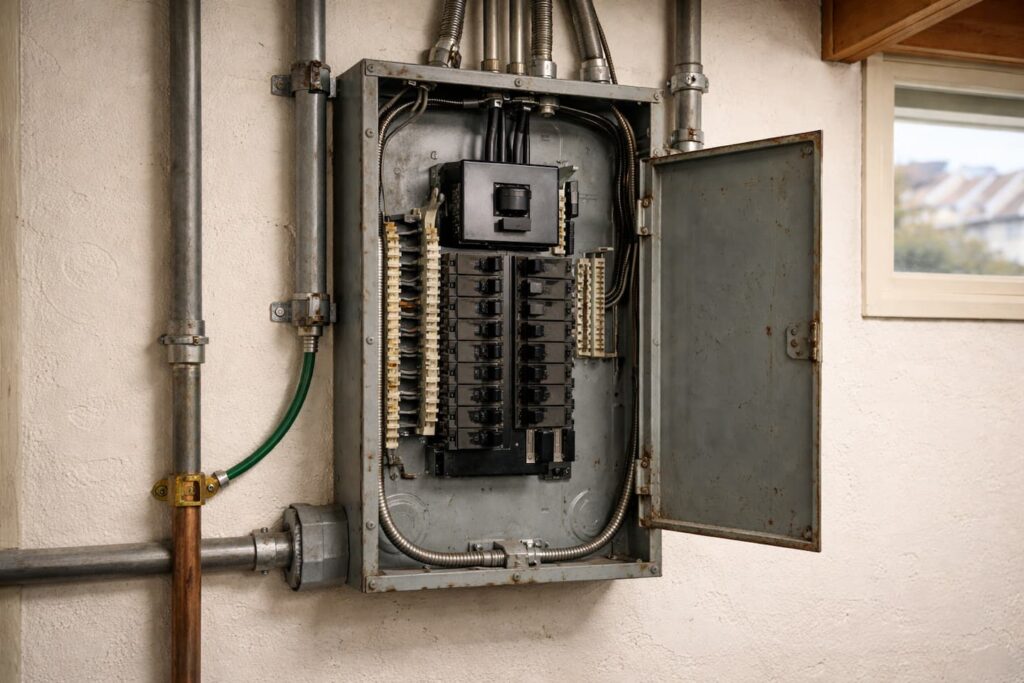
What is included in the cost of replacing an electrical panel?
The panel enclosure is only one part of the bill. Most of the cost comes from skilled labor, compatible protective equipment, approvals, and whatever is required to connect the new panel safely to the existing home.
- Panel and breakers: the load center, main breaker or disconnect arrangement, branch breakers, neutral and ground bars, filler plates, and labeling materials.
- Electrical materials: conductors, conduit, fittings, connectors, grounding components, bonding hardware, and service equipment when the scope goes beyond the panel.
- Labor: circuit identification, safe shutdown, removal, conductor preparation, terminations, torque verification, circuit transfer, troubleshooting, testing, and cleanup.
- Permit and inspection: application handling, the applicable DBI fee, inspection scheduling, and correction work if an existing condition must be addressed.
- Utility coordination: a PG&E application, load information, disconnect/reconnect scheduling, meter requirements, and infrastructure review when the service changes.
- Finish work: drywall, stucco, siding, paint, concrete, or landscaping repairs. These are often excluded unless the estimate says otherwise.
Breaker type also matters. Standard breakers cost less than AFCI, GFCI, or dual-function models. The electrician should determine which protection is required for the circuits affected by the permitted scope rather than assuming that every existing breaker must be replaced with the most expensive type.
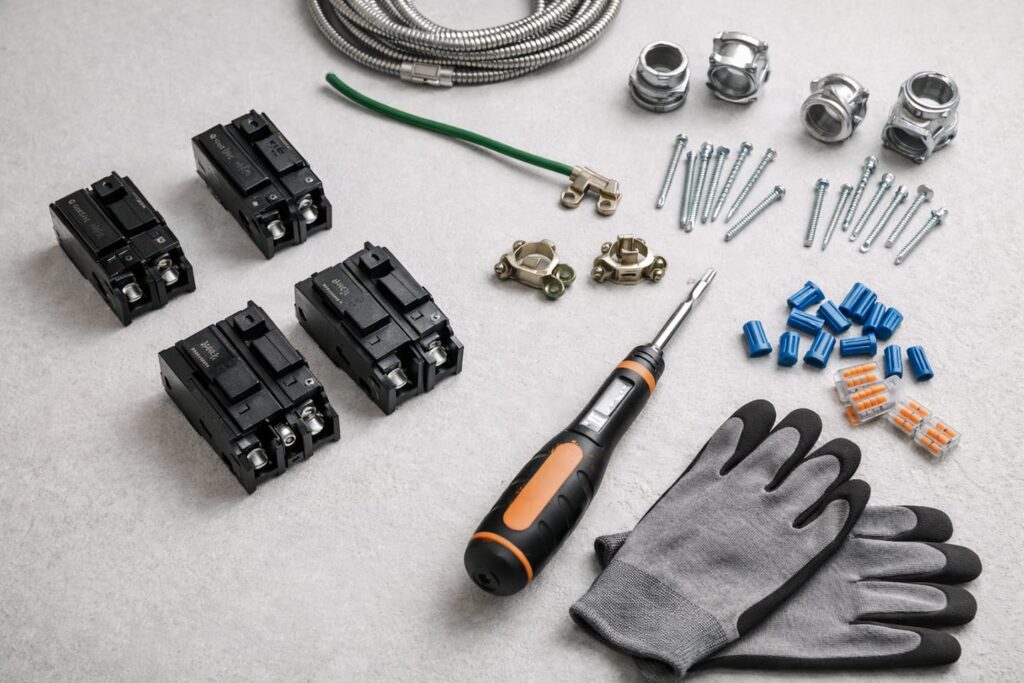
The factors that change electrical panel replacement cost the most
Existing service and target amperage. Replacing 200A equipment with a new 200A panel can be simpler than converting an old 60A or 100A service to 200A. The price rises when the meter, conductors, disconnect, or utility connection must also support the higher rating. A 320A/400A-class service is a designed system, not merely a larger breaker in the same cabinet.
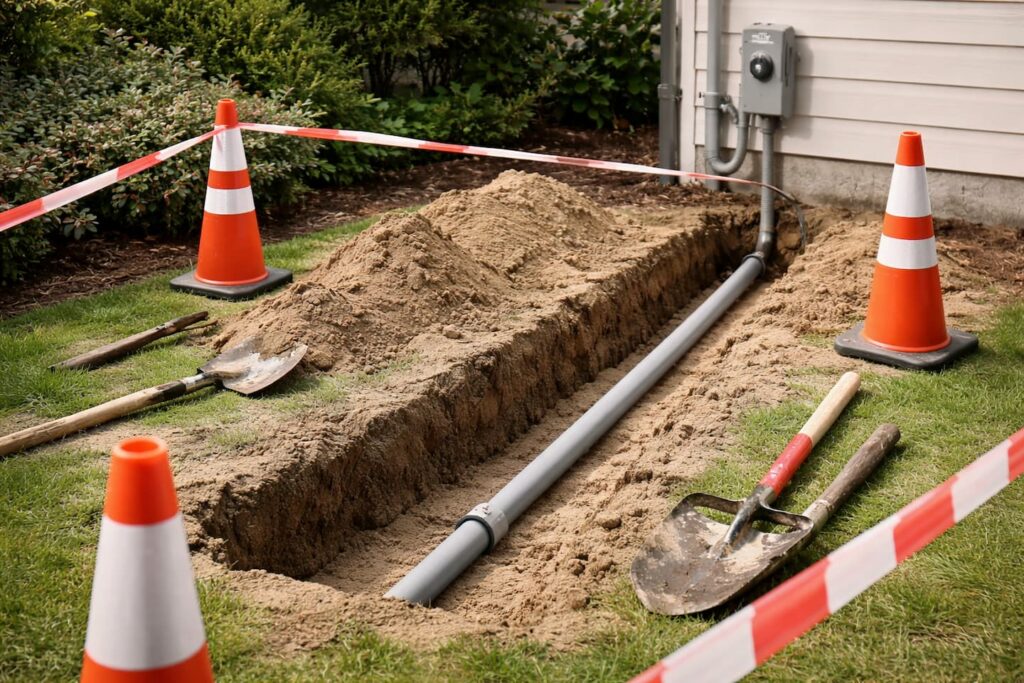
Overhead or underground service. Overhead equipment is usually easier to reach, though the mast, weatherhead, attachment point, and clearances may need work. Underground service can be straightforward when the existing conduit and conductors are suitable. It becomes expensive when crews must trench, replace conduit, cross concrete, restore a driveway or sidewalk, or wait for a utility design.
Panel location and working clearance. An accessible garage wall is one thing. A narrow side yard, finished interior, closet, shared utility room, or location that conflicts with current clearance and meter requirements is another. Relocation means rerouting or extending many conductors, not simply mounting the new box a few feet away.
Number and condition of circuits. A clean 12-circuit panel transfers faster than a crowded panel with poorly identified circuits, damaged insulation, incompatible breakers, abandoned wiring, or years of undocumented alterations. Existing defects are not automatically part of a basic swap. A good estimate explains which visible corrections are included and how concealed problems will be handled if they appear.
Grounding, bonding, and service equipment. Older installations may need grounding-electrode work, water-pipe bonding where applicable, corrected neutral and equipment-ground separation, or a new meter-main arrangement. These items are easy to miss when comparing photographs of new panels, yet they are part of making the overall installation safe and inspectable.
New loads added with the project. An EV charger, heat pump, electric water heater, induction range, dryer, hot tub, battery system, or ADU changes the load calculation and often adds circuits. The quote should separate the panel work from those new branch circuits. Otherwise, a panel-only proposal and an electrification proposal may look comparable when they are not.
Property type. Condominiums, tenant-occupied properties, and multi-unit buildings may involve shared electrical rooms, multiple meters, access coordination, common-area approvals, and a service that serves more than one dwelling. Those projects need a building-level plan before anyone chooses a panel size.
Cost by common project type
Same-amperage electrical panel replacement: $1,500–$4,000+
This is the closest match to a true “panel swap.” The service is already adequate, the panel stays in a workable location, and the electrician transfers the existing circuits to compatible new equipment. Costs move toward the upper end when there are many circuits, specialty breakers, corrosion, poor labeling, or grounding corrections.
A same-amperage replacement can make sense when the equipment is damaged or obsolete but the home does not need more power. It is usually a poor shortcut when a planned EV charger, heat pump, or addition will soon push the existing service beyond its calculated capacity.
Fuse box to breaker panel conversion: $3,000–$8,000+
Fuse equipment often comes with an older service arrangement and decades of changes. The conversion may uncover undersized conductors, improper fuse sizing, limited grounding, or circuits that need to be reorganized. If the existing service is still adequate, the job may remain a same-capacity conversion. If not, it becomes a service upgrade.
100A to 200A service upgrade: $3,500–$10,000+
This is the most common capacity increase for a single-family home. A straightforward overhead project with an acceptable location costs less than a relocation or underground project. The estimate may include a new 200A panel, meter or meter-main equipment, service conductors, grounding and bonding, permits, inspection, and PG&E coordination. Ask whether every one of those items is actually included.
If the goal is additional capacity rather than replacement of unsafe equipment, review MaxElectric’s electrical service upgrade and power increase information.
320A/400A-class and multi-meter service: $10,000–$30,000+
Homeowners often call this a “400-amp upgrade,” although residential equipment in this class is commonly rated for 320 amps of continuous load. Large homes, multiple dwellings, several EVs, major additions, or unusually heavy electric loads may justify it. Plenty of homes do not. A load calculation and utility review should come before a commitment to this size because a well-designed 200A system with load management may solve the same problem for less.
San Francisco permits, inspections, and PG&E coordination
Permit and utility work are not vague “administrative fees.” They are defined parts of the job, and each has a different owner.
San Francisco electrical permit
The current 2026 SF DBI electrical fee schedule lists $580 for residential general wiring of up to 40 outlets or devices, a category that includes a service upgrade up to 200 amps and up to three inspections. That figure is a published category fee, not a promise that every panel project has one $580 permit charge. Additional devices, reinspection, plan review, or a different project category can change the total. See the 2026 electrical permit fee schedule and San Francisco’s instructions to apply for an electrical permit.
When PG&E becomes involved
A like-for-like replacement may use a disconnect/reconnect process. Added load or a service change can require a project application and infrastructure assessment. PG&E’s panel-upgrade roadmap says the load assessment can take up to 30 days. It also notes that an initial assessment advance for a single-family home may be as high as $5,000; that amount is refunded or credited toward a balance owed. If lines, transformers, or other infrastructure need work, PG&E develops the design and project-specific estimate.
After the new panel is installed and the city inspector approves it, PG&E says reconnection and energization typically occur within one day. That statement applies to the final reconnection step, not the entire project. Planning, permits, design, equipment, and infrastructure work can take weeks or months. Read PG&E’s electrical panel upgrade roadmap.
PG&E handles permits for its outside infrastructure. The homeowner remains responsible for the electrical work and permits at the property, normally through the licensed contractor. PG&E also states that it covers certain utility-side upgrades, including qualifying transformer, metering, and distribution-conductor work. Customer-side trenching, conduit, panel equipment, repairs, and other project costs can still be substantial, so the written scope matters more than a general statement about what the utility pays.
How long the work takes
A straightforward in-place replacement is often installed in one working day, with the home without power for several hours. The calendar timeline is longer because the permit, inspection, and any PG&E appointment must be ready. A service upgrade that needs utility design, relocation, trenching, or infrastructure changes should be planned as a multi-stage project rather than a one-day appointment.
Do you actually need a 200-amp panel?
Maybe, but panel size alone does not answer the question. A smaller home with gas heat, gas water heating, and no large new electrical loads may operate safely on 100A service. Another home can strain 200A once it adds electric space heating, water heating, cooking, two EV chargers, an ADU, and a battery system.
The decision should come from a load calculation and a realistic equipment plan. Include what you expect to add during the next several years, not every hypothetical appliance someone might install someday.
When the existing service is healthy but close to its limit, there may be alternatives:
- Choose an EV charging rate that fits the home’s actual overnight charging needs.
- Use listed energy-management equipment that prevents selected loads from running at the same time.
- Install a subpanel when the issue is breaker space or circuit location rather than service capacity.
- Sequence electrification work instead of designing around all maximum loads operating simultaneously.
PG&E now publishes a homeowner guide about evaluating capacity and electrifying without a panel upgrade. These strategies do not address damaged or obsolete equipment. They can, however, prevent an unnecessary service increase when the existing panel is safe and the load can be managed.
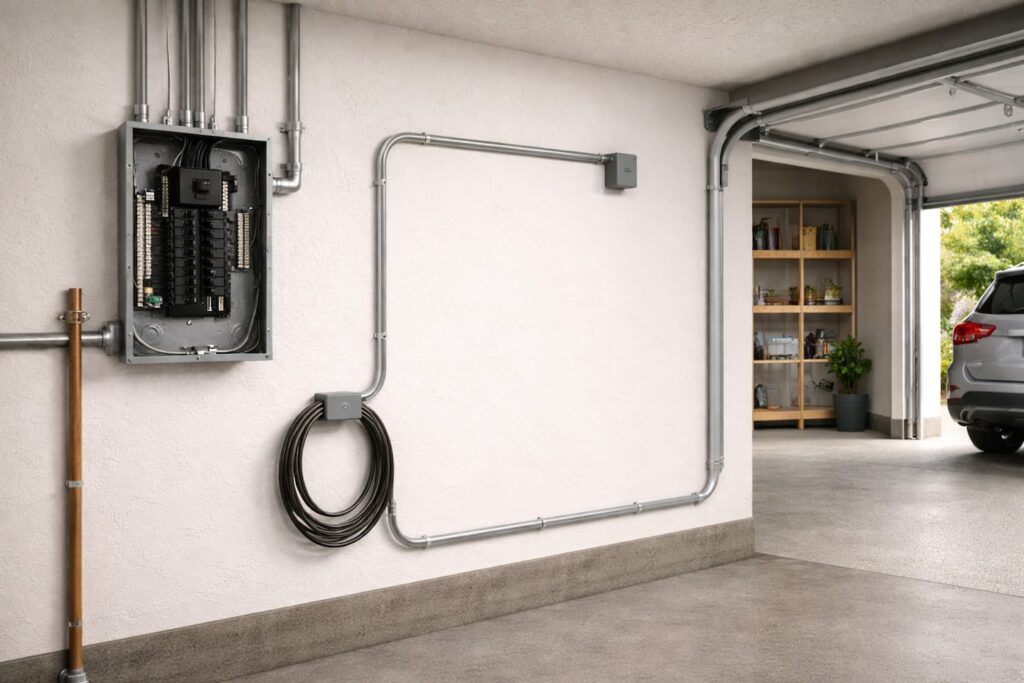
If an EV charger is the reason you are considering an upgrade, start with an EV charger installation assessment. Some homes need a service upgrade; others need a dedicated circuit, lower charging output, or load management.
When can the panel be repaired instead of replaced?
Not every tripping breaker means the whole panel has failed. The problem may be an overloaded circuit, a damaged appliance, a ground fault, a loose connection, or one faulty compatible breaker. In those cases, circuit diagnosis and a targeted repair may be enough.
Replacement becomes more likely when the enclosure or bus is damaged, the panel has significant corrosion or heat damage, compatible listed breakers are no longer practical to source, the equipment is obsolete, the panel is badly overcrowded, or the service cannot support planned loads. Federal Pacific and Zinsco equipment also deserves brand-specific evaluation rather than an assumption that a new breaker will solve the underlying concern. MaxElectric has separate information about Federal Pacific panel replacement and Zinsco panel replacement.
For a breaker that repeatedly trips, will not reset, or feels unusually warm, see fuse box and circuit breaker repair services. If there is smoke, active arcing, a burning smell, or strong heat at the panel, keep away from the equipment and arrange urgent professional help. Do not remove the cover or attempt to tighten energized components. MaxElectric also provides 24/7 emergency electrical service.
How to compare panel replacement quotes fairly
Put the estimates side by side and compare the scope line by line. A low number is not useful if it leaves out the work needed to pass inspection and restore power.
- Is the job a same-amperage replacement or a service-capacity increase?
- What are the panel rating, main-breaker rating, and number of usable spaces?
- Which breakers are included, and which circuits may require AFCI, GFCI, or dual-function protection?
- Are the meter, service conductors, mast, weatherhead, disconnect, grounding, and bonding included where applicable?
- Who files the SF permit, schedules inspection, and responds to ordinary correction items?
- Who submits the PG&E application and manages disconnect/reconnect?
- Are new circuits for an EV charger, heat pump, range, ADU, or other equipment included or separate?
- Does the price include drywall, stucco, paint, concrete, landscaping, or debris removal?
- How will concealed wiring defects or inspector-required corrections be priced?
- What workmanship warranty applies, and who will label and test the completed panel?
If one estimate says “200A panel upgrade” and another lists the meter-main, service conductors, grounding, permit, utility coordination, and finish-work exclusions, they are probably not quoting the same job. Ask the first contractor to clarify before comparing totals.
Ways to control the cost without cutting safety work
- Plan before the panel fails. An inspection leaves time to confirm the design, permit, equipment, and PG&E steps instead of making decisions during an outage.
- Keep the panel in place when the location is acceptable. Relocation can add conductor extensions, junction points, wall work, and utility review.
- Size the project from a load calculation. Do not buy a larger service solely because the existing panel is full; do not keep an undersized service solely to save on the first estimate.
- Bundle work that is genuinely ready. Surge protection, an approved EV circuit, or conduit for a near-term project may cost less while the electrical work is already coordinated. Avoid adding speculative circuits with no defined use.
- Consider load management. It may avoid a service upgrade when capacity, rather than panel condition, is the only problem.
- Compare complete scopes. Removing permits, grounding, required breakers, or inspection support from a quote does not reduce the real cost; it moves it somewhere else.
If whole-home surge protection is part of the plan, ask whether it is included in the panel proposal or priced separately. MaxElectric’s surge protection installation page explains the purpose of a panel-mounted protective device.
Panel upgrade rebates and tax credits in 2026
Do not subtract an old incentive from the project budget until current eligibility is confirmed. The IRS states that the Section 25C Energy Efficient Home Improvement Credit is not available for property placed in service after December 31, 2025. A panel project completed in 2026 should not be budgeted around that former federal credit. See the IRS termination-date guidance.
California’s HEEHRA single-family reservations were fully reserved statewide as of February 24, 2026, and the state says availability for a later phase will be announced separately. Some financing or equipment-specific programs may still exist, especially when electrical work supports a qualifying electrification project. Program status changes, though, so check the California Energy Commission rebate page before signing a contract. A standalone safety replacement and a panel upgrade tied to eligible equipment may be treated differently.
Frequently asked questions
How much does it cost to replace an electrical panel in San Francisco?
A straightforward same-amperage replacement often falls around $1,500 to $4,000+. A 100A-to-200A panel and service upgrade is more likely to cost $3,500 to $10,000+, while relocation, underground work, multiple meters, or larger service equipment can push the project above $10,000. Only a site-specific scope can turn that range into a dependable quote.
How much does it cost to upgrade from 100 amps to 200 amps?
Use $3,500 to $10,000+ as a broad San Francisco planning range. A simple overhead upgrade may cost less than a project that needs a new meter location, panel relocation, underground conduit, grounding corrections, or utility infrastructure work.
Does replacing the panel automatically increase the home to 200 amps?
No. A new panel can keep the existing 100A, 125A, or 200A service. Increasing service capacity requires equipment and conductors rated for the higher load and may require PG&E review. The contract should state both the panel rating and the service rating.
Do I need a permit to replace an electrical panel in San Francisco?
Panel replacement and service-upgrade work normally requires an electrical permit and inspection. The exact category and fee depend on scope. A licensed contractor registered with San Francisco can apply online, and the estimate should say who handles the permit and inspection.
How long will the power be off?
For a straightforward replacement, the installation and outage often fit within one working day. That is different from the full project timeline. Permit scheduling, PG&E review, equipment lead times, and utility construction may add weeks or months before the installation day.
Does an EV charger require a 200-amp panel?
Not always. The answer depends on the home’s calculated load, panel condition, available breaker space, charger output, and charging needs. A lower charging rate or listed load-management system can sometimes work with an existing safe service.
Is a subpanel cheaper than a main-panel upgrade?
It can be when the main service has enough capacity but lacks spaces or is far from the new circuits. A subpanel does not add utility capacity and will not correct an unsafe or obsolete main panel.
Can I replace only a bad breaker?
Yes, if diagnosis confirms that the breaker is the problem and the panel is safe, undamaged, and listed for an available compatible replacement. Repeated tripping is often caused by the circuit or connected equipment, so swapping the breaker without testing can miss the fault.
Can a homeowner replace an electrical panel as a DIY project?
No. Panel work involves service conductors, high fault current, grounding and bonding, permits, inspection, and sometimes utility-controlled equipment. Turning off branch breakers does not make every part of the service equipment safe to touch.
Will a new electrical panel increase home value?
It may remove an objection during inspection, insurance review, or sale and make future electrification easier. It should not be treated as a guaranteed dollar-for-dollar return. The clearest benefits are safer serviceable equipment, documented permitted work, and capacity that matches the property’s actual needs.
Get an electrical panel price based on the actual scope
The fastest way to narrow the cost is to identify four things: the existing service rating, the condition and location of the panel, the loads you plan to add, and whether PG&E must change anything outside the home. Photographs help with an initial conversation, but they do not show conductor condition, grounding, access, or calculated load.
MaxElectric evaluates outdated, damaged, crowded, and undersized panels throughout San Francisco. The written proposal should make clear whether you are buying a same-amperage replacement, a panel upgrade, or a complete service increase—and what permits, utility work, corrections, and finish repairs are included. Learn more about electrical panel replacement and upgrade in San Francisco.